
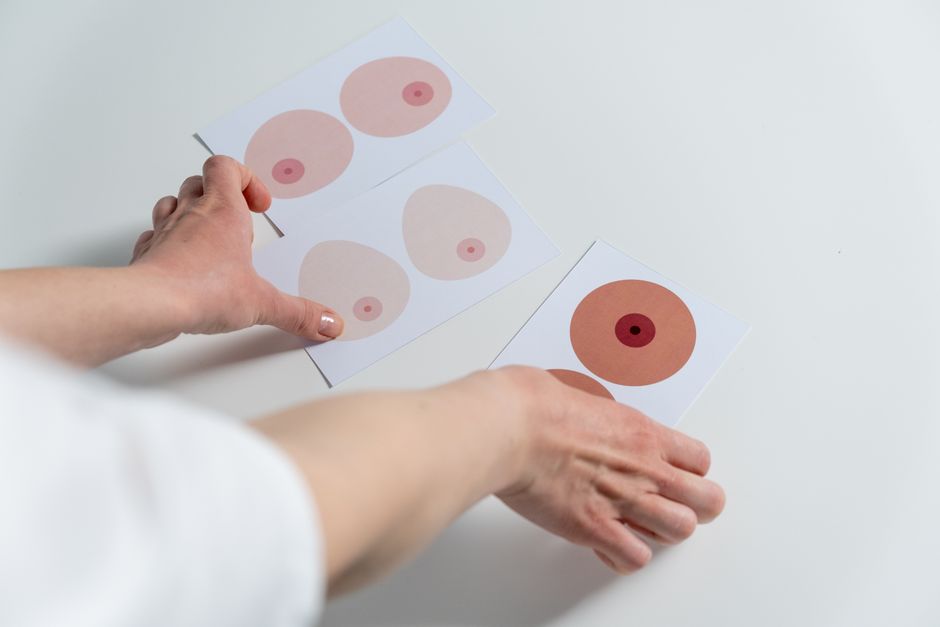
Getting a nipple shield size right comes down to one measurement: the diameter of your nipple at its base, not the width of your areola. A shield that matches that measurement lets your baby draw milk without the shield pinching, slipping, or collapsing. Most people start with a 16 mm or 20 mm shield, but the correct size is the one that fits your nipple, and many parents need a different size on each breast.
Nipple shields are thin silicone covers worn over the nipple during breastfeeding. They are commonly used for flat or inverted nipples, for babies who struggle to latch, or during temporary nipple pain. They are a tool, not a default. Getting the size wrong is one of the most common reasons they fail or cause new problems.
How To Size Nipple Shields For A Comfortable Fit
Measure your nipple just before a feeding, when it is at its fullest and most erect. Use a tape measure or a printable sizing tool and record the width across the base of the nipple in millimeters. That number is your starting size.
Nipple shields are sold by internal tunnel diameter, usually in 4 mm steps. Common sizes are 16 mm, 20 mm, and 24 mm, with some brands offering 12 mm or 28 mm. The shield’s tunnel should sit snugly around your nipple base with a small amount of room, not squeeze it and not leave a wide gap.
A few practical points:
- Measure both nipples separately. They are often different sizes.
- Measure when erect, since a nipple changes shape dramatically between feeds.
- If you are between two sizes, the larger size is usually the safer starting point, because a shield that is too small can compress the nipple and block milk flow.
- Recheck the size in the first week or two. Nipple size can change as swelling settles and as feeding becomes established.
This is the single most important step, and it is the one most parents skip. A shield chosen by guesswork or by whatever was handed to them at the hospital is often the wrong size.
Why Does Nipple Shield Size Matter So Much?
A nipple shield works by giving the baby a firmer, more predictable shape to latch onto. It creates a tunnel that your nipple sits inside, and milk flows through openings at the tip. For that to work, the tunnel has to match your nipple.
If the shield is too small, it pinches the base of the nipple. That can reduce milk transfer, cause pain, and lead to nipple damage. If it is too large, the baby may not be able to create a seal, the shield may slip off, and milk can pool inside the tunnel instead of flowing well. In both cases, the baby may get less milk than they need.
There is a second, less obvious issue. Nipple shields can reduce how much milk a baby transfers compared with feeding directly at the breast. This is a well-documented limitation, not a rare one. When the size is wrong, that reduction gets worse. When the size is right, the shield is more likely to work as intended.
This is why sizing is not a minor detail. It is the difference between a shield that helps and one that quietly undermines feeding.
How Do You Know If Your Nipple Shield Fits Correctly?
A correctly sized shield stays in place through a full feed without you holding it, and your nipple fills the tunnel without being compressed. You should be able to see your nipple move freely inside the shield as your baby sucks.
Signs the fit is right:
- The shield stays on without constant repositioning.
- Your nipple is not pinched, blanched, or creased at the base after feeding.
- You can see or hear your baby swallowing milk.
- Feeding is not painful at the nipple.
- Your baby seems satisfied after feeds and is gaining weight appropriately.
Signs the fit is wrong:
- The shield keeps falling off or your baby pulls it away.
- Your nipple looks flattened, white, or creased after a feed.
- Pain during feeding that does not improve.
- Long feeds with a baby who still seems hungry.
- Poor weight gain or fewer wet diapers.
Any of the second group is a reason to recheck the size rather than push through. Poor weight gain in a newborn is a medical issue, not a sizing inconvenience, and it needs prompt attention from a pediatrician or lactation professional.




Can You Use a Nipple Shield That Is Slightly Too Big or Too Small?
A shield that is slightly too big is usually more workable than one that is too small, but neither is ideal. A small amount of extra room in the tunnel often does not stop a baby from feeding effectively. A shield that is too small is more likely to cause pain and reduce milk flow, because it compresses the nipple directly.
If you are between sizes and cannot get an exact match, the general approach is to size up rather than down. Then watch how feeding actually goes. If the baby feeds well, swallows, and gains weight, the fit is likely close enough. If the shield slips, if the baby seems to get little milk, or if you are in pain, the size is still off.
Some brands run differently from others, even when the stated size is the same. A 20 mm shield from one manufacturer may fit differently than a 20 mm from another. If one brand does not work, trying a different brand in the same size is a reasonable step before assuming your measurement was wrong.
When Should You Get Help With Nipple Shield Sizing?
Get help if you are unsure about your measurement, if feeding is painful, if your baby is not gaining weight, or if the shield keeps failing despite your best efforts. These are situations where an in-person assessment adds something a tape measure cannot.
A lactation consultant or breastfeeding medicine clinician can watch a full feed and assess the latch, the shield fit, and milk transfer together. That combination matters, because a shield that fits perfectly can still fail if the latch or positioning is off, and a good latch can be undermined by a shield that is the wrong size.
It also helps to know when a shield may not be the right tool at all. Nipple shields are often used for a short period while a problem resolves, such as during early nipple pain or while a baby learns to latch. Some parents use them longer. There is no single correct timeline, and guidance on weaning off a shield varies. A lactation professional can help you decide whether to keep using it, adjust it, or work toward feeding without it.
One thing worth being clear about: nipple shields are widely used in hospitals and clinics, but the evidence on how well they work across different situations is mixed. They help some parents and babies a great deal. For others, they do not solve the underlying problem. Sizing is a real and fixable variable, but it is not the only one.
What Else Affects Whether a Nipple Shield Works?
Size is the starting point, not the whole picture. Several other factors shape whether a shield helps.
- Latch and positioning. A shield cannot fix a latch that is fundamentally off. How the baby takes the breast still matters.
- Milk supply. Shields can reduce milk transfer, so supply needs to be monitored, especially in the early weeks.
- Baby’s oral anatomy. A tongue-tie or other oral restriction can affect feeding with or without a shield.
- How long it is used. Extended use without reassessment can mask problems that need attention.
- Cleaning and condition. Shields should be cleaned per the manufacturer’s instructions. A damaged or cloudy shield may not seal well.
The common thread is that a shield is one part of a feeding system. Sizing it correctly removes one obstacle. It does not remove all of them, and treating it as a complete solution can delay getting help for a problem that needs it.
Frequently Asked Questions
How do I measure my nipple for a shield?
Measure across the base of your nipple in millimeters while it is erect, just before a feed. Use that number to pick the shield whose tunnel diameter matches it most closely.
What size nipple shield should I start with?
Most people start with 16 mm or 20 mm, since those are the most common sizes. The right size depends on your own measurement, and many parents need a different size on each breast.
What happens if my nipple shield is the wrong size?
A shield that is too small can pinch the nipple, cause pain, and reduce milk flow. One that is too large may slip off and prevent a good seal, so the baby gets less milk.
Should I size up or down if I am between sizes?
Sizing up is generally the safer choice, because a shield that is too small is more likely to cause pain and block milk flow. Then watch how feeding actually goes and adjust if needed.
