
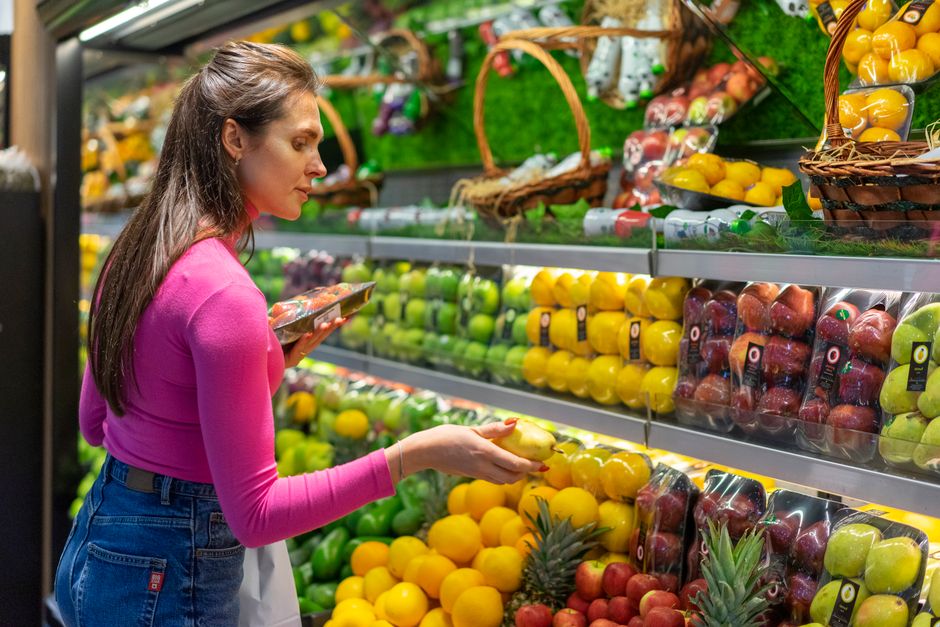
Shopping for healthy food starts with the perimeter of the store, where produce, meat, dairy, and whole grains usually live. Fill most of your cart from those sections, then read the Nutrition Facts label on anything in a box. The single most useful habit is comparing products by serving size, added sugar, sodium, and fiber rather than by front-of-package claims.
That is the short answer. The longer answer is that food packaging is designed to sell, not to inform. Learning a few concrete rules turns a confusing aisle into a manageable one.
How To Shop For Healthy Food What To Look For?
Look at the Nutrition Facts panel, not the front of the package. The front is marketing. The panel is regulated and must state amounts per serving for calories, fat, sodium, carbohydrates, fiber, added sugars, and protein.
Start with serving size. A bag of chips listing 150 calories often contains three or more servings. If you eat the whole bag, you eat three times the numbers on the label. This is the most common labeling trap and the easiest to avoid once you notice it.
Then check four numbers in this order:
- Added sugars — listed in grams on the current label. The Dietary Guidelines for Americans recommend keeping added sugars under 10% of daily calories. For a 2,000-calorie diet that is 50 grams.
- Sodium — the same guidelines recommend less than 2,300 mg per day for most adults. Canned soups, bread, and deli meat are common hidden sources.
- Fiber — most adults fall short of the recommended 25 to 30 grams per day. A product with 3 or more grams per serving is doing real work.
- Saturated fat — the guidelines recommend keeping it under 10% of daily calories.
Ignore front-of-package words like “natural,” “wholesome,” and “made with real fruit.” None of these have a strict legal definition that guarantees nutritional quality. “Natural” on a label does not mean low in sugar or salt.
Why Is the Ingredient List More Useful Than the Front Label?
The ingredient list tells you what is actually in the food, in descending order by weight. If sugar appears in the first three ingredients, the product is sugar-heavy regardless of what the front claims.
Watch for sugar under other names. Manufacturers split sweeteners across several ingredients so no single one tops the list. Look for cane sugar, brown rice syrup, corn syrup, dextrose, maltose, fruit juice concentrate, and agave. All count as added sugar on the label even when they sound wholesome.
A short ingredient list is not automatically healthier. Some nutritious foods have long lists — fortified cereals, for example. But a long list on a product marketed as a simple snack is worth a second look.
One clarification that surprises many shoppers: “no added sugar” means no sugar was added during processing. It does not mean the food is low in sugar. A product can contain plenty of naturally occurring sugar from fruit or dairy and still carry that claim.
Which Sections of the Store Should Fill Most of Your Cart?
Whole and minimally processed foods should make up the bulk of what you buy. That generally means fresh produce, plain meat and fish, eggs, plain dairy, dried or canned beans, nuts, and whole grains.
These foods usually sit around the store’s perimeter, but not always. Frozen vegetables and fruit are just as nutritious as fresh and often cheaper. Canned beans and tomatoes are staples. The perimeter rule is a useful starting point, not a law.
Center aisles hold plenty of healthy options too — oats, brown rice, olive oil, canned fish, and frozen produce. The point is not to avoid aisles. It is to avoid products where the package is doing more work than the food.
How Do You Read Bread, Cereal, and Snack Labels Without Getting Fooled?
Bread, cereal, and snacks are where labels mislead most. These products compete on health claims, and the claims often do not match the numbers.
For bread, look for a whole grain as the first ingredient. “Wheat bread” and “multigrain” do not guarantee whole grain. “Made with whole grains” can mean a small amount. The word “whole” before the grain name is the reliable signal.
For cereal, compare fiber to added sugar. A cereal with 5 grams of fiber and 15 grams of added sugar per serving is a dessert in disguise. Aim for higher fiber and lower added sugar. Plain oats are the simplest benchmark.
For snacks, check serving size first, then sodium and added sugar. Many “protein” bars carry as much added sugar as a candy bar. Protein content alone does not make a snack healthy.
What Do Common Food Labels Actually Mean?
Some label terms are tightly regulated and some are nearly meaningless. Knowing the difference saves money and confusion.
| Label term | What it means |
|---|---|
| Organic | Regulated by the USDA. Produced without synthetic pesticides and fertilizers under defined standards. Does not mean more nutritious. |
| Natural | Loosely defined for most foods. Does not address sugar, sodium, or processing. |
| No added sugar | No sugar added during processing. May still be high in naturally occurring sugar. |
| Whole grain | Contains the entire grain kernel. “Made with whole grains” may contain very little. |
| Low sodium | Regulated: 140 mg or less per serving. |
| Excellent source of fiber | Regulated: at least 5 grams per serving. “Good source” means at least 2.5 grams. |
Organic food is not automatically more nutritious. Studies comparing organic and conventional produce have generally found similar nutrient content. The case for organic is mainly about farming practices, not personal health gains.
How Can You Shop Healthy on a Budget?
Healthy eating does not require specialty stores or expensive products. Some of the most nutritious foods are among the cheapest.
Beans, lentils, oats, brown rice, eggs, canned fish, frozen vegetables, and plain yogurt deliver strong nutrition per dollar. Frozen produce is picked and frozen at peak ripeness, so its nutrient content holds up well. It also wastes less because it does not spoil quickly.
Buy whole foods and do the processing yourself. Pre-cut vegetables, pre-cooked grains, and single-serve packs cost more for convenience, not nutrition. A bag of dried lentils costs a fraction of a prepared meal and provides more fiber per serving.
Store brands are often nutritionally identical to name brands. Compare the Nutrition Facts panels side by side. The cheaper product frequently wins.
What Should You Ignore on the Package?
Ignore any claim that sounds like a promise. “Supports immunity,” “boosts metabolism,” and “detoxifies” are marketing language with no regulated meaning on food labels.
Be skeptical of products that advertise one healthy ingredient while hiding problems elsewhere. A granola bar with chia seeds may still carry 14 grams of added sugar. A “veggie” chip may contain mostly potato starch and salt. The single healthy ingredient is the story; the label tells the truth.
Also ignore the word “light” unless you check what it refers to. “Light” can mean fewer calories, less fat, less sodium, or lighter color. The label must specify, and the reduction may be small.
Finally, treat health claims on packaging as advertising until the Nutrition Facts panel confirms them. That habit alone will improve most shopping carts.
Frequently Asked Questions
What is the most important thing to check on a food label?
Serving size, because every other number depends on it. Once you know the serving size, check added sugars, sodium, and fiber.
Is organic food healthier than regular food?
Research has generally found similar nutrient content in organic and conventional foods. Organic refers to farming practices, not proven health benefits.
Does “no added sugar” mean a food is low in sugar?
No. It only means no sugar was added during processing, and the food may still contain a lot of naturally occurring sugar.
How many grams of fiber should I look for per serving?
A product with 3 or more grams of fiber per serving is a solid choice. The label term “excellent source of fiber” means at least 5 grams per serving.
