
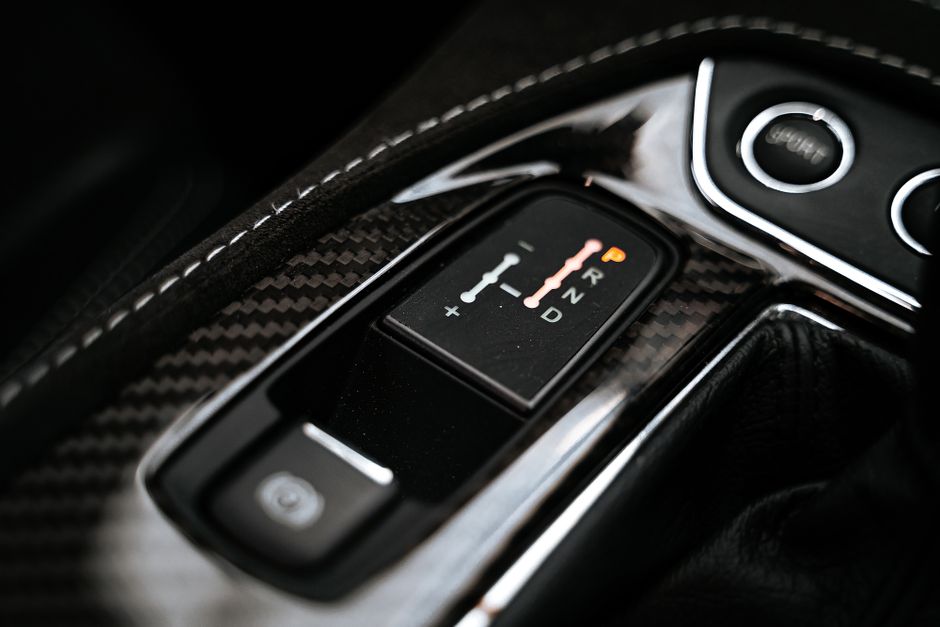
An automatic transmission does the shifting for you, but that does not mean the driver has no role. The correct way to shift an automatic is to keep the car fully stopped before moving the lever between Park, Reverse, and Drive, and to use the numbered or lettered positions only for their intended purpose. For everyday driving, you put the lever in Drive and let the transmission manage the gears. The driver’s job is to select the right range at the right time, hold the brake when needed, and avoid forcing the lever while the vehicle is still rolling.
What Do the Letters and Numbers on the Shifter Actually Mean?
The letters on an automatic shifter are not suggestions. Each position tells the transmission to do a specific job, and using the wrong one at the wrong time is where most damage happens.
P (Park) locks the transmission output shaft, which holds the vehicle in place. It is not a substitute for the parking brake. The parking brake holds the car; Park is a backup. Using Park alone on a steep hill puts load on a small metal parking pawl inside the transmission, and over time that part can wear or, in rare cases, break.
R (Reverse) engages the reverse gear set. The car must be completely stopped before you select it.
N (Neutral) disconnects the engine from the wheels. The car can roll freely. Neutral is for towing, for rolling through a car wash if the instructions call for it, or for a brief stop where you need the engine running but the wheels disengaged.
D (Drive) is the normal driving position. The transmission shifts through all forward gears on its own.
L, 1, 2, 3, or S are limited-range or manual-shift modes. Depending on the car, these either cap the highest gear the transmission can use or let you shift up and down yourself. They exist for engine braking on long descents and for towing, not for routine driving.
How To Shift An Automatic Transmission Correctly in Normal Driving
The sequence for everyday driving is simple and it protects the transmission. Foot on the brake, engine running, then move the lever from Park to Drive in one smooth motion. Release the brake when you are ready to move.
When you park, reverse the order. Come to a full stop, keep your foot on the brake, shift into Park, then set the parking brake. On a hill, set the parking brake before you take your foot off the brake pedal and before you shift into Park. That way the parking brake carries the weight of the car, not the transmission’s internal parking pawl.
A common mistake is shifting from Drive to Reverse, or Reverse to Drive, while the car is still rolling. Even a slow roll puts the transmission’s internal clutches and bands against motion they were not designed to fight. Do it often enough and you shorten the life of the unit. The fix is easy: stop completely, then shift.
Another habit worth dropping is resting your hand on the shift lever while you drive. On many cars the lever connects mechanically or electronically to the transmission, and constant pressure can nudge it toward another range without you noticing.
Why You Should Not Coast in Neutral
Coasting downhill in Neutral feels like it saves fuel. It does not, in modern cars with electronic fuel injection. When you coast in gear with your foot off the gas, the engine management system cuts fuel to the injectors. In Neutral, the engine has to burn fuel to stay idling. So coasting in Neutral typically uses more fuel, not less.
It is also less safe. In Neutral you lose engine braking, which is the drag that helps hold your speed on a descent. You also lose the ability to accelerate instantly if you need to avoid something. And in many places, coasting in Neutral is against the law. The correct move on a long downhill is to stay in Drive, or drop into a lower range if the car offers one, and let engine braking share the work with your brakes.





When Should You Use the Lower Gears or Manual Mode?
The lower ranges exist for two jobs: controlling speed on long descents and managing load while towing.
On a long, steep downhill, riding the brakes the whole way can overheat them. Brake fade is a real failure mode, and it means your brakes stop working well just when you need them most. Selecting a lower gear lets the engine hold the car back so your brakes stay cooler. This is the single most useful reason to touch anything other than Drive.
When towing or carrying a heavy load up a grade, a lower range can stop the transmission from hunting between gears. That constant shifting builds heat. Holding a lower gear keeps things steadier.
Manual mode, sometimes labeled with plus and minus signs, lets you pick gears yourself. It is fine for the situations above. It is not needed for normal driving, and shifting it like a race car does not make the car faster or the transmission last longer.
What Happens If You Shift Into the Wrong Gear?
Modern automatic transmissions have protection built in. Most will refuse to shift into Reverse or Park if the car is moving too fast, or they will simply not engage until conditions are safe. That said, protection is not a license to be careless, and older cars have far less of it.
Shifting into Park while moving is the worst case. The parking pawl is a small metal tooth. Forcing it against a spinning shaft can break it, and a broken pawl can leave the car unable to hold itself in Park. Shifting into Reverse while rolling forward is less dramatic but still wears the internal clutches.
If you do shift into the wrong range by accident, do not panic and do not slam it back. Come to a stop, then select the range you actually want. If the car makes a grinding noise or refuses to move, stop driving and have it checked.
Does Shifting an Automatic Hurt the Transmission Over Time?
Normal, correct shifting does not wear out a transmission. What wears it out is heat, contaminated fluid, and abuse like rolling shifts and towing beyond the vehicle’s rating.
Transmission fluid does two jobs: it lubricates and it carries heat away. Over time it breaks down and picks up debris. Most manufacturers specify a fluid service interval in the owner’s manual, and following it is one of the few things a driver can do that clearly matters. The interval varies widely by make and model, so the manual is the only reliable source for your car.
Heat is the main killer. Stop-and-go traffic, heavy towing, and long climbs all raise transmission temperature. This is part of why the lower gears matter on grades and why staying within your towing limit matters.
One point that surprises people: the “lifetime fluid” some manufacturers advertise does not always mean the fluid never needs changing. It often means the fluid is expected to last the warranty period under normal use. If your driving is mostly short trips or towing, that is not normal use. Check your manual rather than assuming.
Common Shifting Mistakes to Avoid
- Shifting between Drive and Reverse while the car is still rolling.
- Using Park instead of the parking brake on a slope.
- Coasting in Neutral to “save gas.”
- Resting your hand on the shift lever while driving.
- Riding the brakes down a long hill instead of using a lower gear.
- Ignoring the fluid service interval in the owner’s manual.
- Towing more than the vehicle is rated for.
Frequently Asked Questions
Can you shift an automatic while the car is moving?
You can shift between forward ranges like Drive and a lower gear while moving, and the transmission is designed for that. You should not shift into Park or Reverse until the car is fully stopped.
Should you put an automatic in Neutral at a red light?
No, there is no benefit. Staying in Drive with your foot on the brake is the normal and correct approach, and shifting in and out of Neutral repeatedly adds needless wear.
Does coasting in Neutral save gas in an automatic?
It usually does not, and it can use more fuel than staying in gear. Modern engines cut fuel when you coast in gear, while idling in Neutral keeps burning fuel.
How often should automatic transmission fluid be changed?
It depends entirely on your vehicle, so check the owner’s manual for the interval that applies to your car. Intervals vary widely, and some manufacturers specify different schedules for normal versus heavy use.
