
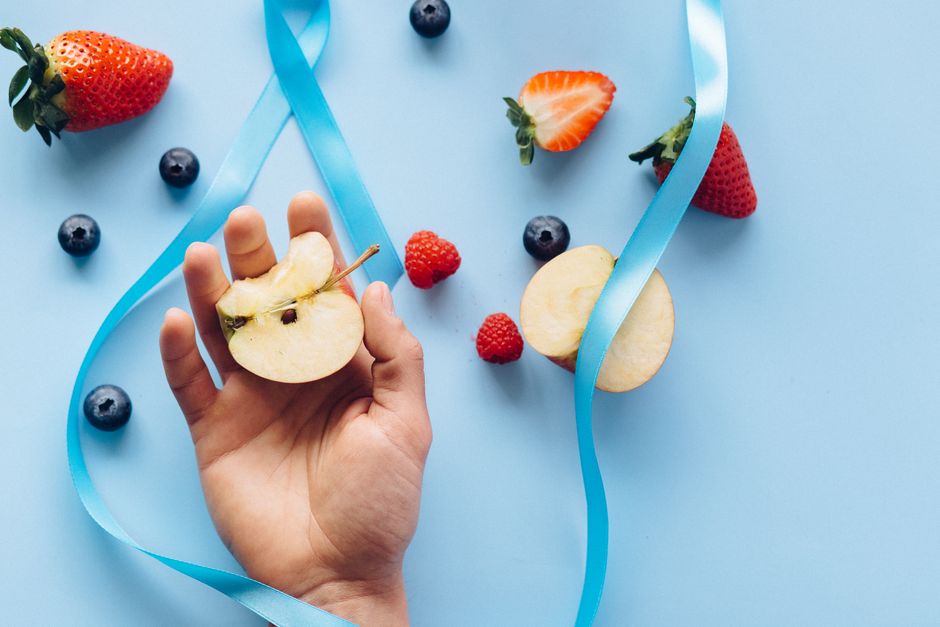
Apples are one of the most common choking hazards for babies, but they are also easy to make safe. The single most important rule: never give a 10-month-old raw, hard pieces of apple — no wedges, no cubes, no slices, no “just a small bite.” A 10-month-old’s airway is roughly the width of a drinking straw, and raw apple is hard and snaps into firm chunks. Cook it soft, grate it fine, or serve it as a thin spread. When it is soft enough to mash easily between your thumb and forefinger, it is safe to offer.
Why Is Raw Apple So Risky For A 10 Month Old?
Choking happens when food blocks the airway rather than the food pipe. In babies, that airway is narrow, and they are still learning to move food around their mouth and chew.
Raw apple has two features that make it a known hazard. It is hard, and it breaks off in firm, angular pieces. A baby’s molars — the teeth used for grinding — do not usually come through until well after the first year. So a 10-month-old mostly gums and mashes with the front of the mouth. A hard chunk of raw apple can slip back before it is broken down.
This is why whole grapes, hard raw vegetables, and chunks of raw apple appear on choking-hazard lists from pediatric and child-safety sources. The problem is not the apple itself. It is the texture and the size of the piece.
How Do You Know When Apple Is Soft Enough?
Use the “squish test.” Pick up the piece of cooked apple and press it between your thumb and index finger. If it flattens easily with light pressure, it is soft enough for a 10-month-old. If it holds its shape or feels firm, cook it longer.
This finger test is the same standard many feeding specialists use for any food offered to a baby learning to eat. Texture matters more than the specific food. A soft piece of apple and a soft piece of cooked carrot are handled the same way by a baby’s mouth.
Baking, boiling, steaming, or microwaving all work. Cook until a fork slides through with almost no resistance. Then let it cool before serving.
What Are The Safest Ways To Serve Apple To A 10 Month Old?
There are several reliable methods. Each one removes the hard, chunky texture that causes trouble.
- Stewed or baked apple: Cook peeled apple pieces until very soft, then mash or leave as soft, small lumps. This is the most straightforward safe option.
- Grated raw apple: Use the fine side of a box grater. The shreds are thin and soft enough to gum. Serve right away, since grated apple browns and can dry out.
- Unsweetened applesauce: A smooth, thin puree. You can spread it on soft toast strips or let your baby spoon it up.
- Apple puree mixed into other foods: Stir into oatmeal, yogurt, or soft cereal to add flavor and moisture.
- Cooked apple as a soft finger food: Cut cooked apple into pieces about the size of two adult fingers side by side, or into thin soft strips, so your baby can grip them. Soft enough to squash, they are safe to hold and mouth.
Avoid added sugar and honey. Honey is not safe for babies under 12 months because of the risk of infant botulism, a rare but serious condition. Plain cooked apple is naturally sweet enough.




Can A 10 Month Old Have Raw Apple At All?
Raw apple is not recommended as a finger food or in chunks at this age. The risk comes from the hard texture, not from the apple being raw in principle.
If you want to offer raw apple, grating it very finely is the usual way to make it manageable. Thin grated shreds are far softer than a cut piece. Even then, watch closely while your baby eats.
Some parents try thin raw slices or matchsticks, hoping the shape makes them safer. Shape does not fix hardness. A thin raw slice can still be firm and can still break off. Softness is the factor that matters.
What About Apple Skin, Seeds, And Cores?
Peel the apple for a 10-month-old. Apple skin is tough and can be hard to chew, and it can separate from the soft flesh in the mouth. Peeling removes that problem.
Remove all seeds and the core. Apple seeds contain a compound that releases small amounts of cyanide when chewed, though swallowing a few whole seeds is generally not harmful because the hard seed coat passes through. The bigger practical concern for a baby is that seeds and core pieces are hard and are a choking risk. Take them out.
Cut away any bruised or damaged spots too. They can be firmer or have an off texture.
How Should You Set Up For Safe Eating?
How you serve the apple is only part of the picture. The feeding situation matters just as much.
- Have your baby sit upright in a high chair. Never let a baby eat lying down, walking, or in a moving car.
- Stay within arm’s reach the whole time. Choking is often silent, so watching closely matters.
- Offer one or two pieces at a time rather than a full plate, so your baby is not stuffing the mouth.
- Skip distractions like screens during meals, which can pull attention away from chewing and swallowing.
- Know the difference between gagging and choking. Gagging is loud, involves coughing and sputtering, and is a normal protective reflex. Choking is quiet, and the baby may not be able to breathe, cough, or make sound.
If you have not taken an infant CPR and choking course, it is worth doing. These skills are for emergencies, and knowing them in advance is far better than learning them in the moment.
Is Cooked Apple Nutritious For A Baby?
Yes. Apple provides fiber, vitamin C, and small amounts of other nutrients. Cooking reduces some vitamin C, but apple is not a major source of it to begin with, so the loss is minor.
Apple is a good first food because it is easy to digest and rarely causes allergic reactions. It is not, however, a nutritional powerhouse on its own. Think of it as one part of a varied diet that includes iron-rich foods, vegetables, and other fruits.
One note on juice: apple juice is not the same as eating apple. It is low in fiber and high in sugar, and pediatric guidance generally discourages juice for infants. Whole or pureed apple is the better choice.
What If Your Baby Has Trouble With Texture?
Some babies take to soft lumps quickly. Others gag more and need a slower pace. Gagging during learning to eat is common and usually decreases with practice.
If your baby consistently gags, spits out, or refuses textured foods, keep offering soft options and give it time. If feeding seems painful, if your baby is not gaining weight well, or if you are worried about swallowing, talk to your pediatrician. Some babies benefit from a feeding evaluation.
Frequently Asked Questions
Can a 10 month old eat raw apple?
Not in chunks, slices, or wedges, because raw apple is hard and can break off into firm pieces that block the airway. Finely grating raw apple is the usual way to make it manageable, and it should still be eaten with close supervision.
How do I know if cooked apple is soft enough for my baby?
Press a piece between your thumb and forefinger. If it squashes easily with light pressure, it is soft enough; if it holds its shape, cook it longer.
Is applesauce safe for a 10 month old?
Yes. Unsweetened applesauce is smooth and soft, making it a safe option, and it can be served on a spoon or spread on soft toast strips. Choose plain versions without added sugar.
Should I peel apples for my baby?
Yes. Apple skin is tough and can be hard for a baby to chew, so peeling it removes a texture problem. Remove seeds and the core as well, since both are hard and pose a choking risk.
