
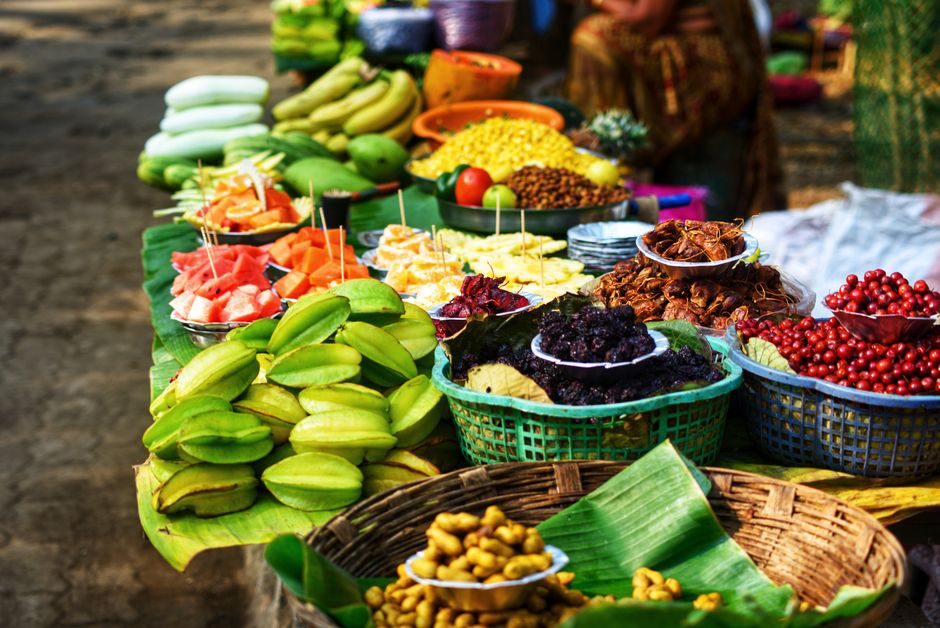
Selling fruits and vegetables legally requires a business license, proper permits from your local health department, and compliance with state-specific agricultural regulations. To sell profitably, you need to source directly from farms, price competitively based on local market rates, and manage spoilage carefully by rotating stock daily. The key is treating it like a real business from day one — with proper accounting, insurance, and food safety practices — rather than a casual side hustle.
What Licenses and Permits Do You Need to Sell Fruits and Vegetables?
The specific licenses depend on where and how you sell. A farmers market vendor typically needs a business license from the city or county, a seller’s permit for collecting sales tax, and a food handler’s card. The rules shift significantly if you process anything — cutting melons or making salads triggers commercial kitchen requirements.
State departments of agriculture often oversee produce sales directly. California’s California Department of Food and Agriculture requires a Certified Producers Certificate for farmers selling direct. Texas requires a Produce Safety Rule compliance letter for operations over a certain size. You must check your own state’s agricultural extension office website — they publish the exact requirements.
Many new sellers overlook liability insurance. Farmers markets increasingly require proof of $1 million to $2 million in general liability coverage before they approve a vendor application. The cost runs roughly $300 to $600 per year through specialty insurers like the Farmers Market Federation or state farm bureau programs.
How Do You Source Produce That Actually Makes Money?
Profit margins on produce are thin — typically 30 to 50 percent markup from wholesale. The real money comes from volume, repeat customers, and reducing waste. Sourcing directly from local farms cuts out the distributor markup, which can add 20 to 30 percent to your cost.
Building relationships with multiple farms protects you when one crop fails or runs short. Most small farms will negotiate wholesale prices if you commit to a weekly minimum order. The USDA Agricultural Marketing Service publishes weekly wholesale produce prices by region — use this data to verify you are paying fair wholesale rates.
| Sourcing Method | Typical Cost per Pound | Profit Margin | Risk Level |
|---|---|---|---|
| Direct from farm (wholesale) | $0.50 – $1.50 | 40-60% | Medium |
| Local food hub | $0.75 – $2.00 | 30-45% | Low |
| Wholesale distributor | $1.00 – $2.50 | 20-35% | Very Low |
| Grow your own | $0.20 – $0.80 | 60-80% | High |
Grow-your-own offers the highest margin but carries crop failure risk from weather, pests, or disease. Most profitable sellers combine two sources — a primary farm for staples and a backup for specialty items customers request.
What Food Safety Regulations Apply to Produce Sales?
The FDA’s Food Safety Modernization Act (FSMA) sets baseline requirements for produce sold across state lines. For local sales within your state, the rules come from your state health department and agricultural agency. The Produce Safety Rule under FSMA applies if your operation averages over $25,000 in annual produce sales adjusted for inflation.
Key requirements include washing produce in potable water, preventing cross-contamination between raw and ready-to-eat items, and maintaining proper temperature control for cut produce. The FDA requires cut melons, tomatoes, and leafy greens to stay below 41 degrees Fahrenheit. Whole uncut produce at a farmers market generally does not require refrigeration, but you must protect it from customer contact and pests.
Some states require a certified food protection manager on staff. The National Restaurant Association’s ServSafe certification or the American National Standards Institute (ANSI) accredited programs meet this requirement. The cost is roughly $150 for the course and exam, which you renew every five years.





How Do You Price Produce to Compete and Still Profit?
Pricing produce requires understanding your local market deeply. Walk every farmers market and grocery store within a five-mile radius. Note what competitors charge for the same items. The USDA reports that organic produce typically commands a 30 to 50 percent premium over conventional at retail.
Price by the piece for high-value items like avocados, mangoes, and specialty peppers. Price by the pound for bulk items like potatoes, onions, and apples. Bundling — three bell peppers for $5 instead of $2 each — increases average transaction size and moves more volume.
Build a 15 to 20 percent spoilage allowance into your prices. If a case of tomatoes costs you $30 and you expect to lose 20 percent to spoilage, your effective cost is $36 per case. Price accordingly. The USDA Economic Research Service reports that produce retailers average 5 to 10 percent shrink on dry items and 15 to 25 percent on highly perishable items like berries and leafy greens.
One non-obvious insight: selling smaller quantities at a higher per-unit price often works better than bulk discounts for new sellers. A single apple priced at $1.50 yields better margin than a bag of six for $6. Customers at farmers markets value freshness over volume discounts.
How To Sell Fruits And Vegetables Legally And Profitably Through Different Channels
Farmers markets remain the most accessible entry point. Startup costs run $500 to $2,000 for a canopy, tables, scales, signage, and inventory. Market fees range from $25 to $100 per day depending on location and market size. The USDA’s Farmers Market Directory lists over 8,000 markets nationally — check which ones have waitlists versus open availability.
Community Supported Agriculture (CSA) programs offer higher predictability. Customers pay upfront for a season of weekly boxes. This shifts the spoilage risk away from you and provides working capital before the growing season starts. The challenge is logistics — you need reliable weekly supply and a system for packing and distribution.
Online ordering with pickup or delivery has grown significantly since 2020. Platforms like Barn2Door or Local Line integrate directly with farms and handle payment processing. The fees run 2 to 5 percent per transaction. The USDA reports that direct-to-consumer online produce sales grew 30 percent annually from 2020 to 2024.
Wholesale to restaurants and schools offers volume but lower margins. Restaurants typically pay 25 to 35 percent above wholesale. The advantage is predictable weekly orders and lower spoilage since you are moving larger quantities. The disadvantage is payment terms — restaurants often pay net 30 or net 60 days, which strains cash flow for a small operation.
What Tax and Accounting Requirements Do Produce Sellers Face?
The IRS treats produce sales as self-employment income. You must report all revenue on Schedule C of your personal tax return. If you earn over $400 in net profit annually, you owe self-employment tax of 15.3 percent on that amount. Keep every receipt for seeds, soil, equipment, market fees, transportation, and packaging — these are deductible business expenses.
Sales tax rules vary wildly by state. Some states exempt unprocessed produce from sales tax entirely. Others require you to collect tax on all sales. The Streamlined Sales Tax Project provides a state-by-state guide. You must register for a sales tax permit in your state before making your first sale. Failing to collect and remit sales tax can result in penalties plus interest on the unpaid amount.
Most states require quarterly sales tax filings even if you collected zero tax. The penalty for late filing ranges from $50 to $200 per quarter depending on the state. Set calendar reminders for the 15th of January, April, July, and October.
Common Misconceptions About Selling Produce
Many people believe they can sell produce from their home without any permits. This is false in nearly every jurisdiction. Zoning laws, health codes, and business licensing requirements apply even for a roadside stand. Selling from your driveway without permits risks fines of $500 to $5,000 per day in many municipalities.
Another widespread myth is that organic certification is required to sell organic produce. The USDA National Organic Program requires certification only if your annual organic sales exceed $5,000. Below that threshold, you can label produce as organic if you follow organic practices, but you cannot use the official USDA Organic seal. You must still keep records proving your practices.
Some new sellers believe they can sell any produce they find at wholesale prices for a profit. This ignores the reality that wholesale produce has short shelf life — typically 3 to 7 days for most items. Buying a pallet of ripe avocados without a guaranteed sale within 48 hours is a recipe for total loss. Successful sellers buy based on confirmed demand, not speculation.
Frequently Asked Questions
Do I need a food handler’s permit to sell whole fruits and vegetables?
Most states require a food handler’s card for anyone handling produce sold to the public. Some states exempt whole uncut produce but require the permit for cut items.
Can I sell produce from my backyard garden without a license?
Most cities and counties require at least a temporary business license even for small home garden sales. Check with your local planning department before selling anything.
How much money can I make selling fruits and vegetables?
The USDA reports that small-scale direct-market produce sellers average $15,000 to $50,000 in annual revenue. Profit margins typically range from 20 to 40 percent after all expenses.
What insurance do I need to sell produce at a farmers market?
Most markets require general liability insurance with $1 million to $2 million in coverage. Product liability coverage is usually included in the same policy.
