
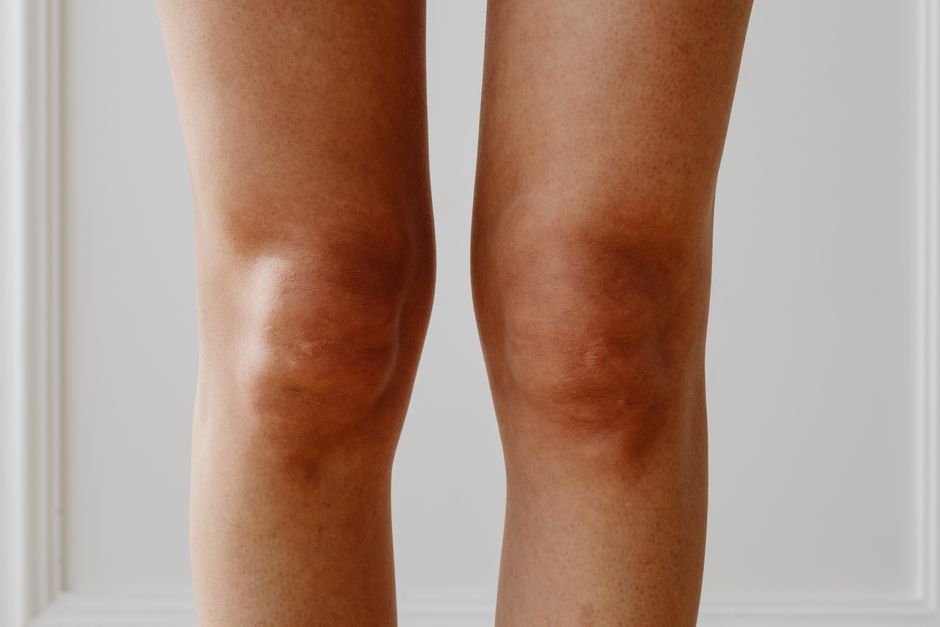
You bent, twisted, or landed wrong, and now your knee hurts. Self-diagnosing a knee injury means using a few simple movement tests to figure out which structure is likely involved, then deciding whether you can manage it at home or need to see a doctor. These tests are screening tools, not a diagnosis. Only a clinician with imaging and an exam can tell you exactly what is wrong.
How To Self Diagnose A Knee Injury Simple Tests
Start by looking at your knee and noting what you can and cannot do. Swelling, bruising, and where the pain sits give real clues about what is injured. Then run through the tests below one at a time.
Stop any test that causes sharp pain, a feeling of instability, or a catching sensation. A positive test is information, not a challenge to push through.
Test 1: Can you bear weight?
Try to stand and put your full weight on the injured leg. If you can walk four steps without limping badly, a major fracture is less likely. If you cannot bear weight at all, or the knee gives way, stop and seek medical care.
Test 2: Check for swelling
Compare both knees side by side. Swelling that appears within a few hours of injury often points to bleeding inside the joint, which can happen with a torn ligament. Swelling that builds over a day or two is more typical of inflammation from a sprain or cartilage irritation.
Test 3: Where exactly does it hurt?
Press gently around the knee. Pain on the front, under the kneecap, points toward the patellar tendon or kneecap issues. Pain on the inner or outer side points toward the collateral ligaments or meniscus. Pain deep in the joint is harder to localize and often involves the meniscus or cartilage.
What Do The Common Knee Tests Actually Check?
Each test puts stress on one structure. Understanding the target helps you interpret what you feel.
- Lachman-style test: With your knee slightly bent, gently pull the lower leg forward. A soft or mushy stop compared to the other knee suggests the ACL may be involved.
- McMurray-style test: Bend the knee, then rotate the lower leg while straightening. A click or catch with pain on the inner or outer joint line can point to a meniscus tear.
- Valgus and varus stress: Push the knee gently inward and outward. Pain or looseness on the inner side suggests the MCL; on the outer side, the LCL.
- Patellar grind: Press the kneecap against the thigh bone while tightening the thigh muscle. Pain suggests irritation under the kneecap.
These tests are useful for narrowing down possibilities. They are not reliable enough to confirm a specific tear on their own. Research has repeatedly found that hands-on tests performed by untrained people are less accurate than the same tests done by a clinician.
What Are The Most Common Knee Injuries?
Most knee injuries fall into a handful of categories. Knowing them helps you match your symptoms to a likely cause.
Ligament sprains and tears. The ACL, MCL, and other ligaments stabilize the knee. They are injured by sudden twisting, landing, or a direct blow. A torn ACL often produces a pop, rapid swelling, and a feeling that the knee will give out.
Meniscus tears. The meniscus is a pad of cartilage that cushions the joint. Tears are common with twisting motions and often cause pain along the joint line, swelling, and a catching or locking feeling.
Patellar tendon problems. Pain just below the kneecap that worsens with jumping or running is typical of patellar tendinopathy. It usually builds gradually rather than appearing after one event.
Kneecap (patellofemoral) pain. A dull ache around or under the kneecap, worse with stairs or sitting for long periods, is common and often not tied to a single injury.
Fractures. A broken bone in the knee causes severe pain, rapid swelling, and an inability to bear weight. This needs urgent medical care.





When Should You See A Doctor Instead Of Self-Testing?
Some signs mean you should skip self-testing and get medical care right away. Do not wait to see if things improve.
- You cannot put any weight on the leg.
- The knee looks deformed or is bent at an odd angle.
- There is numbness, tingling, or the foot feels cold or pale.
- The knee locks and cannot be straightened.
- Swelling came on within a few hours and is severe.
- You heard a pop at the time of injury.
- Pain is severe or getting worse rather than better.
These signs can indicate a fracture, a major ligament tear, or nerve and blood vessel damage. They are not situations for home testing.
What Does The Evidence Say About Self-Testing Accuracy?
Self-testing has real limits, and it is worth being honest about them. The maneuvers described here were designed to be performed by trained clinicians, and their accuracy depends heavily on who is doing them.
Studies comparing clinician-performed special tests to imaging or surgical findings show that even in trained hands, no single test reliably confirms a specific injury. Combining several tests improves accuracy somewhat, but the evidence for self-administered versions is thin.
What self-testing can reasonably do is help you answer three practical questions: Can I bear weight? Is there major swelling or deformity? Do I have any red-flag signs? Those answers guide your next step far more reliably than trying to name the exact structure you injured.
One point worth clarifying: a negative self-test does not rule out a serious injury. Some tears and fractures produce little pain at rest and only show up under load or on imaging. If your symptoms do not improve in a reasonable time, get evaluated regardless of what the tests suggested.
What Should You Do While You Wait To Be Seen?
If your symptoms do not include any red flags, basic care can help in the short term. The goal is to control pain and swelling without making the injury worse.
Rest the knee and avoid activities that reproduce the pain. Ice can help with pain and swelling in the first day or two. Elevating the leg above heart level may reduce swelling. Over-the-counter pain relievers can help, but check with a pharmacist or doctor if you take other medications or have health conditions.
Do not push through pain to “test” the knee repeatedly. Repeated stress on a fresh injury can make it worse.
How Long Should You Wait Before Getting Help?
Mild sprains and strains often improve noticeably within a few days to a couple of weeks. If pain and swelling are not clearly better after a week or two of rest and basic care, get evaluated.
Some injuries, like certain meniscus tears and partial ligament sprains, can improve on their own with time and rehabilitation. Others, like a fully torn ACL, do not heal without treatment. Self-testing cannot reliably tell these apart, which is why persistent symptoms deserve a professional look.
Frequently Asked Questions
Can I diagnose a torn ACL at home?
No. You can suspect a torn ACL based on a pop, rapid swelling, and instability, but only a clinician with an exam and imaging can confirm it. The Lachman test is more accurate in trained hands than when self-administered.
What is the fastest way to tell if my knee injury is serious?
Check whether you can bear weight and whether the knee is deformed, locked, or numb. If any of these are present, treat it as serious and seek care promptly.
Does a clicking knee always mean a meniscus tear?
No. Clicking without pain or swelling is common and often harmless. Clicking that comes with pain along the joint line, swelling, or catching is more concerning and worth evaluating.
How long should I wait before seeing a doctor for knee pain?
If pain and swelling are not clearly improving after one to two weeks of rest and basic care, see a doctor. Seek care immediately for inability to bear weight, deformity, locking, or numbness.
