
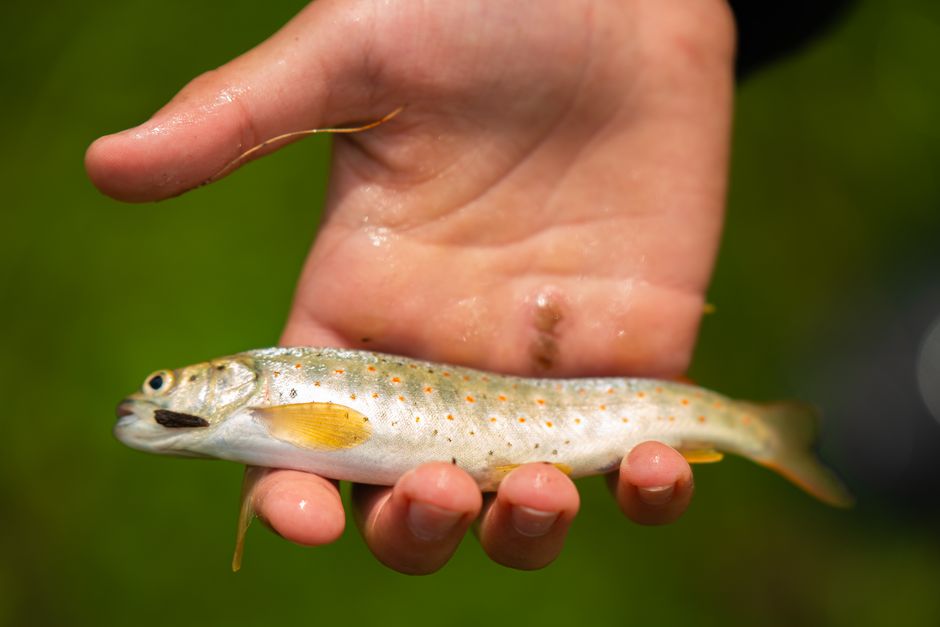
Scaling a trout means removing its scales before cooking, and yes, most trout do have scales — they are just very small and easy to miss. You scale a fish by working a tool from the tail toward the head against the grain of the scales, then rinsing the fish clean. Whether you actually need to scale a trout is a separate question, and for most home cooks the answer is that it is optional but worthwhile when you plan to cook the fish with the skin on.
Trout sit in an unusual spot among food fish. Their scales are so fine that many people assume they have none at all. That assumption is wrong, but the practical consequence is small. A quick pass with the right tool takes a minute or two and changes the texture of the finished dish.
Does A Trout Have Scales At All?
Yes. Trout carry small, thin scales embedded in the skin, and on many fish they are barely visible to the naked eye.
These are called cycloid scales, the same general type found on salmon and carp. They overlap like roof shingles and grow in a pattern that follows the body lines. On a rainbow trout or brown trout, the scales are tiny compared with a bass or a carp. That is why so many anglers and cooks believe trout are naturally scale-free.
The scales are most noticeable along the lateral line — the faint stripe running down the side of the fish — and toward the tail. Run a fingernail from tail to head along the flank and you will feel a fine, rough texture. That is the scale layer.
One clarification worth making: the skin of a trout also carries a thin layer of mucus, sometimes called the slime coat. That layer is not scales and it is not a sign of spoilage. It is a normal protective coating. Rinsing under cool running water removes most of it, and scaling removes the rest of the surface debris along with the scales.
Do You Actually Need To Scale A Trout?
Not always. For many trout dishes, scaling is optional, and plenty of experienced cooks skip it entirely.
Whether you need to scale comes down to how you plan to cook and serve the fish:
- Pan-fried or roasted with skin on: Scaling improves the texture. Small scales can curl and feel gritty against the palate, and they can make the skin less crisp.
- Grilled whole: Scaling helps the skin release cleanly from the grate and from the flesh.
- Poached or steamed: Scales tend to loosen and slip off during cooking, so scaling is less critical.
- Filleted and skinned: If you remove the skin before cooking, scaling is unnecessary.
- Smoked or cured: Scaling first gives a cleaner surface and a better finished appearance.
The general rule many cooks follow is simple: if the skin stays on and goes into a hot pan, scale it. If the skin comes off or the fish is going into liquid, you can leave it.
There is no food-safety reason to scale a trout. The scales are not harmful to eat, though they are not pleasant in texture. This is a quality and presentation decision, not a safety one.
How To Scale A Trout Step By Step
Scaling a trout takes about a minute with the right setup, and the most important part is working against the direction the scales lie.
Trout scales point toward the tail. That means you scrape from tail to head. Working the other way pushes scales under the skin and makes a mess.
Here is a reliable method:
- Work over a sink or a bag. Scales fly. Lining a sink with a plastic bag or scaling inside a large resealable bag keeps cleanup quick.
- Rinse and pat the fish. A wet, slightly slippery fish is harder to hold. Pat it dry so your grip is firm.
- Hold the fish by the tail. Grip the tail firmly with one hand and angle the fish so the belly faces away from you.
- Use the right tool. A fish scaler works best. The back of a sturdy knife, a spoon, or the edge of a metal bottle cap also works. Avoid a sharp blade edge — it cuts the skin instead of lifting scales.
- Scrape in short strokes from tail to head. Use light pressure and work in sections. You will see small scales and a fine spray come off.
- Cover the whole body. Work along both flanks, around the belly, and up toward the head. Pay attention to the area around the fins and the lateral line.
- Rinse thoroughly. Cool running water removes loose scales and mucus. Pat dry before cooking or storing.
If you plan to fillet the fish, scale it first. Scaling a fillet is awkward because there is no firm body to hold against. Scale the whole fish, then fillet.
What Tools Work Best For Scaling Trout?
A dedicated fish scaler is the most efficient tool, but it is not required, and several common kitchen items do the job well enough.
The best options, roughly in order of effectiveness:
- A fish scaler. A metal or plastic tool with a toothed or ridged edge designed to lift scales. Fast and easy to control.
- The spine of a heavy knife. The dull back edge of a chef’s knife works well and is already in most kitchens.
- A sturdy spoon. The bowl edge lifts small trout scales effectively. Slower than a scaler but gentle on the skin.
- A metal bottle cap. The ridged edge is a classic improvised scaler. It works, though it is small and takes longer.
What to avoid: a sharp knife edge. It slices the skin, which defeats the purpose and makes the fish harder to cook cleanly. A dull tool that lifts rather than cuts is what you want.
One practical note: trout scales are small enough that a scaler can send them airborne. Scaling inside a bag or under a low stream of water keeps them contained.
Can You Skip Scaling And Just Eat The Skin?
Yes, in many cases you can cook and eat trout skin with the scales still on, and it will not harm you.
The scales are small and thin. When the fish is cooked, they soften and largely blend into the skin. Some people notice a slightly rough texture; others do not notice at all. This is a matter of preference, not safety.
That said, there are real reasons many cooks scale anyway. Small scales can make the skin less crisp when pan-fried, and they can catch on the palate in a way that feels unpleasant. For a dish where crispy skin is the point, scaling gives a cleaner result.
If you are serving trout to guests or plating it whole, scaling also improves appearance. The skin looks smoother and more uniform after a quick pass with a scaler.
How Should You Store And Handle Trout After Scaling?
Scaled trout should be cooked or refrigerated promptly, and the same basic food-safety rules apply as with any fresh fish.
Once scaled, rinse the fish under cool running water and pat it dry. Store it in a sealed container in the refrigerator and cook it within a day or two for best quality. Fish is highly perishable, and removing the scales exposes more surface area to air.
If you are not cooking right away, keep the fish cold and covered. Freeze it if you need to hold it longer. Wrap it tightly to prevent freezer burn, which affects the skin and flesh quickly on small fish.
Wash your hands, the sink, and your tools with hot soapy water after handling raw fish. Cross-contamination is the main food-safety concern with any raw seafood, not the scales themselves.
Is Scaling A Trout Different From Other Fish?
Scaling a trout is easier than scaling most fish because the scales are so small and thin.
On a bass, carp, or similar fish with large, tough scales, scaling takes real effort and a firm tool. Trout scales lift with light pressure, so the job is quick and forgiving. The same tail-to-head motion applies, but you need far less force.
The main adjustment is pressure. Use a light touch on trout. Heavy scraping can tear the delicate skin, especially on smaller fish. Short, gentle strokes work better than long, hard ones.
Another difference: trout skin is thin and tears easily. A sharp tool will cut through it fast. That is another reason a dull-edged scaler or the back of a knife is the better choice here than a blade.
Frequently Asked Questions
Do trout have scales?
Yes, trout have small, thin scales that are easy to overlook. They are most noticeable along the lateral line and near the tail.
Do you have to scale a trout before cooking?
No, scaling is optional for many preparations and is not a food-safety requirement. It mainly improves texture and appearance when you cook the fish with the skin on.
Which direction do you scale a trout?
Work from the tail toward the head, against the direction the scales point. Short, light strokes with a fish scaler or the back of a knife lift the scales cleanly.
Can you eat trout skin with the scales on?
Yes, cooked trout scales are small and soft enough to eat, and they are not harmful. Many people scale anyway because the texture and crispness of the skin are better without them.
