
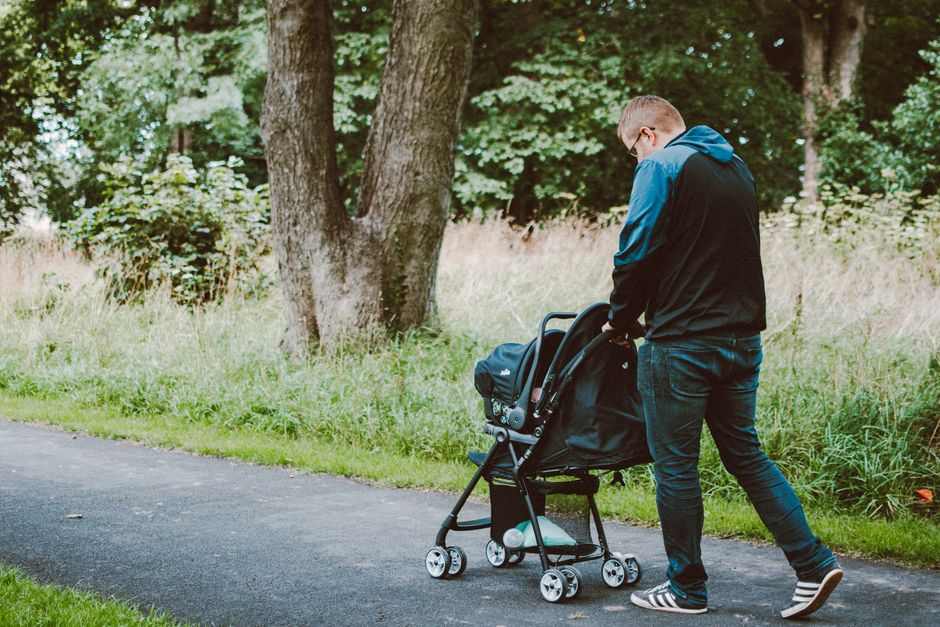
Running with a jogging stroller changes your entire stride, posture, and effort level. Most new parents push with their arms, hunch their shoulders, and end up with back pain within a quarter mile. The fix comes down to a few specific adjustments: stand tall, keep your arms relaxed, and let the stroller roll freely in front of you rather than pushing it like a shopping cart. Here is the straightforward form checklist that makes stroller running feel natural and keeps your body safe.
What Is The Correct Posture For Running With A Jogging Stroller?
Your posture is the foundation of everything else. When you push a stroller, the natural instinct is to lean forward into the handlebar. That lean shifts your center of mass forward, which strains your lower back and makes your hip flexors work overtime.
Keep your torso tall and your shoulders directly over your hips. Imagine a straight line running from your ear down through your shoulder, hip, and ankle. Your head should stay level, not jutted forward toward the stroller. This is the same posture you would use running without a stroller — the stroller should not change your spinal alignment.
Your core muscles do the real work here. A lightly braced core keeps your pelvis stable so your lower back does not absorb the impact of each foot strike. Think of your core as the bridge between your upper body and your legs. If it collapses, your posture collapses with it.
How Should You Hold The Handlebar?
Grip the handlebar with a light, relaxed hold. Death-gripping the bar sends tension up through your forearms, into your shoulders, and up your neck. You want your fingers wrapped around the bar but your knuckles soft, not white.
Your arms should be slightly bent at the elbow, roughly 90 degrees. This is the same arm position you use in normal running. The difference is that your arms stay relatively still instead of swinging. One hand stays on the stroller at all times, but the stroller should not restrict your natural arm movement entirely.
Many runners find it helpful to use just one hand on flat, straight sections and switch hands periodically. This prevents one side of your body from doing all the stabilizing work. Some strollers have a wrist strap — use it. It keeps the stroller from rolling away if you stumble or need to let go briefly.
Where Should Your Hands Be Positioned On The Handlebar?
Hand position matters more than most people realize. If your hands are too close together, you lose steering control. If they are too far apart, you create unnecessary tension across your shoulders.
Place your hands about shoulder-width apart on the handlebar. This gives you balanced leverage for steering while keeping your shoulders relaxed. Your wrists should stay straight, not bent up or down at an awkward angle.
Adjust the handlebar height if your stroller allows it. When your hands rest on the bar, your elbows should sit at roughly a 90-degree angle. If your arms are fully extended or your shoulders are hiked up toward your ears, the handlebar is set at the wrong height for your body.





How To Run With A Jogging Stroller Form Tips For Your Stride
Your stride changes when you push a stroller, and trying to maintain your exact normal stride is a mistake. The stroller adds weight in front of you, which naturally shortens your stride and quickens your cadence. Work with this instead of fighting it.
Keep your feet landing underneath your body, not out in front of you. Overstriding — reaching your foot too far forward — is the most common form error in running generally, and the stroller makes it worse. When you overstride with a stroller, you create a braking effect with every step. Your foot hits the ground ahead of your center of mass, and the stroller’s weight amplifies that deceleration.
Shorten your stride slightly and aim for a quicker turnover. A cadence around 170 to 180 steps per minute is a solid target for most runners, though this varies by individual. The key is landing softly with your foot beneath your body, not slamming your heel out in front.
Your knees should stay slightly bent on impact. Locked knees transmit shock straight up through your joints. A soft, springy landing protects your knees and your lower back, which is already working harder because of the stroller.
How Does Pushing A Stroller Change Your Running Mechanics?
Pushing a stroller is not the same as running free. Research has shown that pushing a stroller increases your oxygen cost — you burn more energy at the same pace. Your heart rate runs higher, and your perceived effort climbs. This is not in your head; it is a measurable physiological change.
Your upper body also works differently. In normal running, your arms swing to counterbalance your legs. With a stroller, your arms stay relatively fixed, which means your core and upper back must take over the stabilizing job. This is why new stroller runners often feel sore in their shoulders and upper back after their first few runs.
Your center of mass shifts forward because the stroller sits in front of you. This changes your balance point. Some runners compensate by leaning back, which is just as problematic as leaning forward. The goal is to keep your body stacked — shoulders over hips, hips over ankles — while letting the stroller roll naturally ahead of you.
One important note: a jogging stroller with a swiveling front wheel should be locked into the fixed position before you start running. Swivel wheels are designed for walking and can shimmy or collapse at running speed. Most manufacturers specify a speed threshold — typically around a brisk walk — above which the front wheel must be locked. Check your stroller’s manual for the exact speed limit.
What Are The Most Common Form Mistakes?
Several mistakes show up again and again. Knowing them helps you catch yourself before they become habits.
Leaning into the handlebar. This is the most common error. It puts your weight forward, strains your lower back, and makes the run feel harder than it should. Check yourself every few minutes: is your torso tall, or are you draped over the bar?
Pushing with your arms. Your arms should guide the stroller, not power it. The force for running comes from your legs and hips. If your arms feel fatigued, you are pushing with them. Relax your arms and let your legs do the work.
Hunching your shoulders. Stress and effort creep into your shoulders without you noticing. Periodically drop your shoulders away from your ears and let them sit naturally.
Gripping too hard. A death grip on the handlebar tenses your entire upper body. Lighten your hold and check your knuckles — they should not be white.
Looking down at your child. Your head should stay level, facing forward. Glancing down at your child is fine for a moment, but keeping your head down for extended periods strains your neck and throws off your balance.
How Do You Handle Hills And Turns?
Hills require a different approach with a stroller. On an incline, the stroller pulls back against you. Lean slightly forward from your ankles — not your waist — to generate power. Keep your core braced and your stride short. Some runners find it helpful to use both hands on the stroller for climbs.
On descents, the stroller pushes forward and can quickly pick up speed. The stroller becomes a runaway weight if you do not control it. Shorten your stride, keep your center of mass slightly back, and use the stroller’s brake if the hill is steep. Do not let the stroller pull you into a faster pace than you can safely handle.
For turns, slow down before you turn, not during it. Lift the front wheel slightly if your stroller allows it — many jogging strollers have a mechanism for this. This takes weight off the front wheel and makes steering much easier. If your stroller does not have this feature, simply slow down and take the turn wide.
Is It Safe To Run With A Baby In A Jogging Stroller?
Safety comes before form. Most jogging stroller manufacturers recommend waiting until your child is at least 6 to 8 months old. This is not arbitrary. Younger infants lack the neck and head control to handle the jarring motion of running, even on smooth surfaces. The American Academy of Pediatrics advises against jogging with infants under 6 months, and some manufacturers set their own threshold higher.
Your child should always be strapped in with the harness, and the stroller should have a five-point harness system. Never hang bags or heavy items from the handlebar — this can tip the stroller backward. Use the storage basket below instead.
Run on smooth, even surfaces whenever possible. Cracks, roots, and potholes are harder to see and avoid when you are pushing weight in front of you. A sudden jolt can be jarring for your child and destabilizing for you.
Pay attention to the weather. Jogging strollers sit low to the ground, where heat and exhaust fumes concentrate. On hot days, check that your child is not overheating. On cold days, wind chill is stronger at running speed. Dress your child appropriately and check on them regularly.
Frequently Asked Questions
Should I lock the front wheel when running with a jogging stroller?
Yes, lock the front wheel before you start running. Swivel wheels are designed for walking and can shimmy or collapse at running speed.
How old does my baby need to be for jogging stroller running?
Most manufacturers recommend waiting until your child is at least 6 to 8 months old. The American Academy of Pediatrics advises against jogging with infants under 6 months due to insufficient neck and head control.
Why does running with a stroller feel so much harder?
Pushing a stroller increases your energy expenditure and raises your heart rate at the same pace. Your upper body also works harder because your arms cannot swing naturally to counterbalance your legs.
Can I run with a regular stroller instead of a jogging stroller?
No, regular strollers are not designed for running. Their wheels are smaller, their frames are less stable, and they lack the suspension and locking front wheel needed for safe running at speed.
