
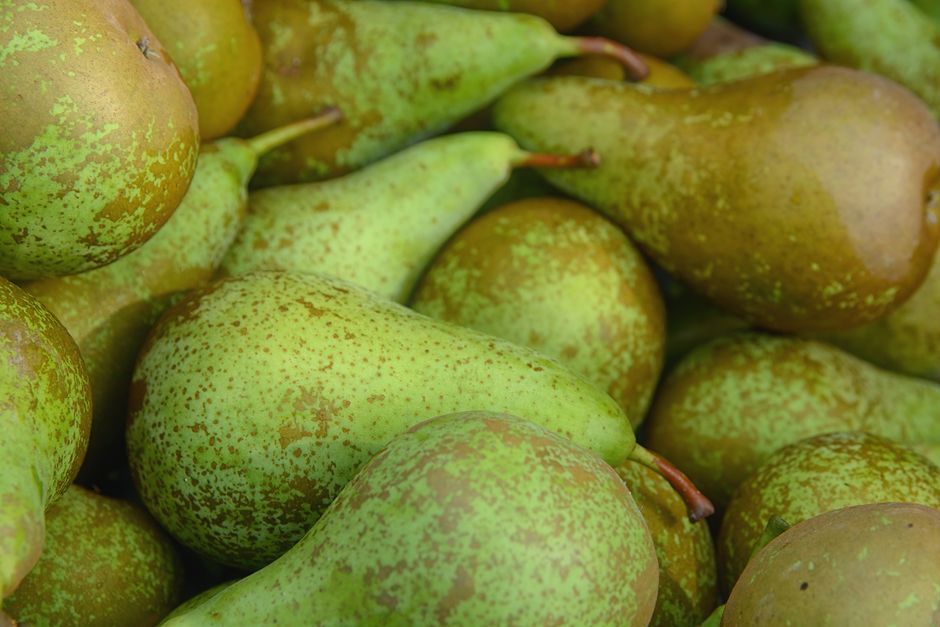
Bosc pears are one of the few fruits that ripen from the inside out, which means a pear that looks perfectly ripe on the outside can still be hard and starchy at the core. To ripen them, leave them at room temperature and check the neck — the area right around the stem — every day by pressing gently with your thumb. When that spot gives slightly under light pressure, the pear is ready to eat. Refrigeration slows ripening dramatically, so only move a Bosc to the fridge once it has reached that stage.
Why Do Bosc Pears Ripen From The Inside Out?
Pears are what plant scientists call climacteric fruit. They continue ripening after harvest, and they do it in a specific sequence. The inner flesh softens first, then the ripening moves outward toward the skin.
This happens because of enzymes. As the pear ripens, enzymes break down pectin — the substance that holds plant cell walls together. That breakdown starts near the core and works outward. At the same time, starch converts to sugar, which is why a ripe pear tastes sweeter than an unripe one.
The practical consequence is simple. A Bosc pear can feel firm near the skin while the center is already soft and ready. If you wait until the whole pear feels soft, the middle will be mushy and grainy by the time you cut it.
This is different from how most people judge fruit. With a peach or a plum, you can often squeeze the whole fruit to check ripeness. With pears, that approach fails. The neck is the most reliable indicator because the ripening front reaches that area last among the parts you can easily feel.
How To Ripen Bosc Pears And Know When Theyre Done
Ripening a Bosc pear takes patience and a daily check. The method is straightforward.
Leave the pear on the counter at room temperature. A cool room slows the process; a warm room speeds it up. Direct sunlight is not helpful and can cause uneven ripening or spoilage.
Check the neck once a day. Press your thumb gently into the flesh right beside the stem. An unripe pear feels like a raw potato — hard and unyielding. A ripe pear gives slightly, like a ripe avocado but less soft. An overripe pear feels mushy and may show darker spots.
If you want to speed things up, place the pear in a paper bag. Pears release ethylene gas, a natural plant hormone that drives ripening. Trapping that gas around the fruit accelerates the process. Adding a ripe banana or apple to the bag increases ethylene exposure further. This is a well-established technique used in commercial fruit storage.
Do not use a plastic bag. It traps moisture and can encourage mold.
Once the neck gives slightly, the pear is ready. Eat it within a day or two for the best texture. If you need to hold it longer, move it to the refrigerator, where cold temperatures slow further ripening. A ripe pear can typically keep in the fridge for several days without becoming mushy, though quality will decline over time.
What Does A Ripe Bosc Pear Look And Feel Like?
Bosc pears have a distinctive appearance. They are elongated with a long, tapering neck and a russet-brown skin that is rough and matte rather than glossy. The skin does not change color dramatically as the pear ripens, which is one reason visual cues are unreliable for this variety.
Here is what to look for at each stage:
- Unripe: Hard when pressed anywhere, especially at the neck. Skin may look dull. No aroma.
- Ripe: Neck gives slightly under gentle thumb pressure. A mild, sweet fragrance develops near the stem. The flesh near the core is tender.
- Overripe: Soft or mushy at the neck, possibly with brown spots or a fermented smell. Flesh may be grainy or watery.
Color is a weak signal for Bosc specifically. Unlike Bartlett pears, which shift from green to yellow, Bosc pears stay brownish throughout ripening. Rely on feel and smell instead.
One non-obvious point: a Bosc pear that is rock-hard at the store may need anywhere from a few days to over a week to ripen at room temperature. The exact time depends on how mature it was at harvest, the temperature of your kitchen, and how much ethylene it is exposed to. There is no fixed number of days that applies to every pear.




Should You Refrigerate Bosc Pears Before They Ripen?
No. Refrigerating an unripe Bosc pear slows ripening and can cause it to become mealy or develop off-flavors. Cold temperatures disrupt the enzymatic process that converts starch to sugar and softens the flesh.
Commercial growers sometimes use controlled cold storage to hold pears for months before they reach stores. That is a carefully managed process with specific temperature and humidity controls. A home refrigerator is not the same thing. For home use, keep unripe pears at room temperature.
Once the pear is ripe, refrigeration becomes useful. Cold temperatures slow the ripening enzymes and buy you a few extra days. The trade-off is that very cold storage can slightly dull the flavor and texture over time. For best eating quality, let a refrigerated pear sit at room temperature for a short while before eating.
Can You Ripen A Bosc Pear Too Fast?
Yes. Ripening too quickly is a real problem with pears, and it is more common than most people expect.
When a pear ripens too fast — because of high heat, excess ethylene, or simply being left too long — the flesh breaks down unevenly. The core turns mushy while the outer flesh is still firm. The result is a pear that is grainy, watery, or has a fermented taste.
To avoid this, check the pear daily once it starts to soften. Do not leave it in a sealed bag longer than needed. If you are using the paper bag method, open the bag and check the pear every day rather than leaving it for several days at a time.
If a pear does become overripe, it is still usable for cooking. Overripe pears work well in sauces, baked goods, or blended into smoothies. The texture will not be good for eating fresh, but the flavor is often still fine.
What About Pears That Never Seem To Ripen?
Some pears simply do not ripen well. This usually happens because they were harvested too early or stored improperly before you bought them.
Pears destined for long storage are often picked mature but unripe and then held in controlled conditions. If the cold chain is broken or the pear was picked too immature, it may never develop proper flavor and texture no matter what you do at home. It might soften somewhat but stay bland or grainy.
There is no reliable way to fix a pear that was picked too early. If a Bosc pear has been sitting at room temperature for well over a week with no change in firmness, it likely will not improve. Cooking is the best use for it.
When buying Bosc pears, look for firm fruit with no soft spots, bruises, or cuts. A pear that is already slightly soft at the neck may be close to ripe and should be eaten soon. A very hard pear will need time, but it should eventually ripen if it was harvested at the right stage.
How To Use Ripe Bosc Pears
Bosc pears hold their shape well when cooked, which makes them a favorite for baking and poaching. Their flesh is denser and less watery than some other varieties, so they do not turn to mush as easily in the oven.
Ripe Bosc pears can be eaten fresh, sliced into salads, baked into tarts, poached in wine or syrup, or added to savory dishes. They pair well with blue cheese, walnuts, and roasted meats.
If you are not ready to use a ripe pear immediately, refrigerate it. Use it within a few days for the best texture. For longer storage, cooked or frozen pears hold up better than fresh ones.
Frequently Asked Questions
How long does it take to ripen a Bosc pear?
It usually takes anywhere from a few days to over a week at room temperature, depending on how mature the pear was when picked and how warm your kitchen is. There is no fixed timeline that applies to every pear.
How do you know when a Bosc pear is ripe?
Press gently on the neck right beside the stem. If it gives slightly under light thumb pressure, the pear is ripe and ready to eat.
Can you ripen Bosc pears in the refrigerator?
No. Cold temperatures slow ripening and can make the pear mealy. Ripen it at room temperature first, then refrigerate it once it is ready to extend its shelf life.
Why is my Bosc pear hard even after a week?
It was likely picked too early or stored improperly before you bought it. A pear that shows no softening after well over a week at room temperature probably will not improve and is best used for cooking.
