
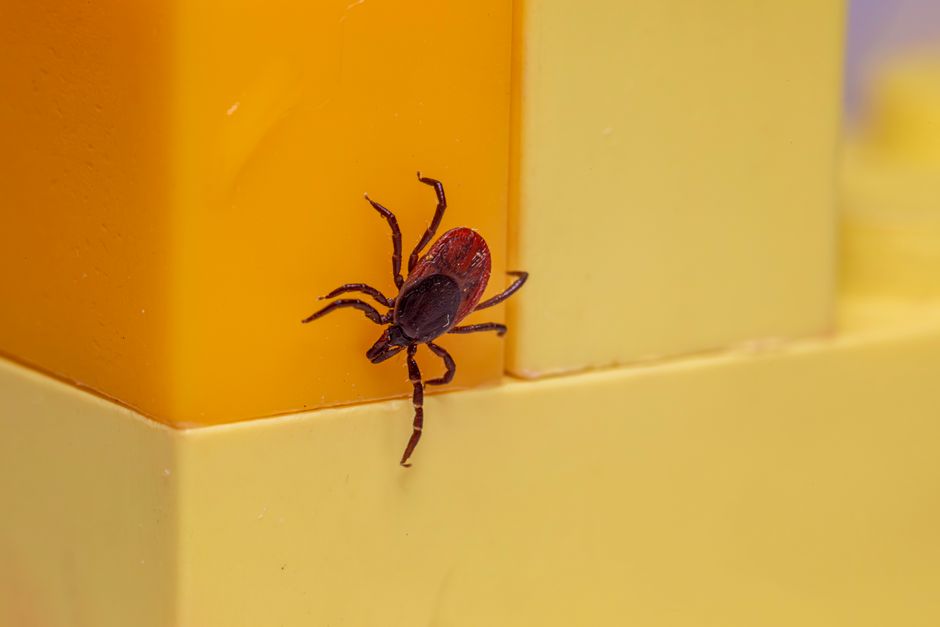
Ticks don’t drop from trees or travel far on their own. They wait on grass blades and low brush, front legs outstretched, for a person or animal to brush past. That single fact shapes everything about yard control: you are not chasing ticks across your property, you are removing the places where they wait and the animals that carry them there. A practical plan combines landscape changes, host management, targeted pesticide use where warranted, and personal protection — in that order of priority.
How To Rid Your Yard Of Ticks: What Actually Works
No single step eliminates ticks from a yard. What works is stacking several measures that each reduce the tick population or your exposure to it.
Start with the landscape. Ticks dry out quickly and avoid hot, sunny, low-cut ground. Keeping grass mowed short, clearing leaf litter, and creating a dry barrier of wood chips or gravel between your lawn and any wooded edge measurably reduces tick presence in the areas people use most. The CDC recommends exactly this kind of barrier approach.
Next, manage the animals that carry ticks into your yard. Mice, deer, and other mammals are the reservoirs that keep tick populations going. Physical exclusion — fencing that keeps deer out — is the most reliable host control. Rodent-targeted tick control products exist and some studies suggest they can reduce tick numbers on treated properties, but the evidence base is smaller than for landscape and pesticide measures. Treat them as a supplement, not a cornerstone.
Chemical control comes last, not first. When used, it should be targeted at the lawn-forest boundary and shady, moist areas where ticks concentrate — not broadcast across an entire property.
Where Do Ticks Live In A Yard?
Ticks cluster in transition zones. The edge where mowed lawn meets woods, brush, or tall grass is where most host-seeking ticks are found. These “ecotones” offer cover, moisture, and a steady supply of animal hosts.
Within that zone, ticks favor:
- Leaf litter and the layer of decaying vegetation on the ground
- Tall grass and unmaintained brush
- Shaded areas that stay damp through the day
- Stone walls and woodpiles where rodents nest
- Ground-level vegetation along trails and garden borders
A common misconception: ticks do not live in trees or drop from above. They climb vegetation only a foot or two high and wait for a host to pass. This means your control efforts belong at ground level, concentrated at the edges of your usable yard.
Another clarification that matters for planning: different tick species have different habitat preferences and carry different diseases. The blacklegged tick (deer tick), which transmits Lyme disease, thrives in wooded and brushy areas with high humidity. The lone star tick and American dog tick favor more open, grassy habitats. Knowing which species are established in your region — your state health department or local extension office can tell you — helps you target the right areas.
Does Mowing And Landscaping Really Reduce Ticks?
Yes, and it is among the better-supported measures available. Mowing reduces tick habitat by lowering humidity at ground level and removing the vegetation ticks climb to quest for hosts.
The effect is real but partial. A mowed lawn is not tick-free — ticks still move through it, and the boundary areas where they concentrate often sit just beyond where the mower reaches. The goal is to shrink tick habitat near where people spend time, not to eliminate ticks from the property.
Practical steps with reasonable support:
- Mow regularly and keep grass short in areas people use
- Remove leaf litter, especially in fall and spring
- Clear brush and tall vegetation at lawn edges
- Create a 3-foot-wide barrier of wood chips or gravel between lawn and woods, as the CDC recommends
- Move woodpiles and bird feeders away from the house — bird feeders attract rodents
- Keep playground equipment and seating areas away from yard edges and tree lines
Landscaping changes take time to show results and work best combined with other measures. They are not a standalone fix.
Should You Use Pesticides For Ticks?
Pesticides can reduce tick numbers when applied correctly, but they are not a first-line solution and they carry real limitations. The evidence supports targeted use in high-risk areas rather than whole-yard spraying.
Two categories are commonly used. Acaricides (tick-killing pesticides) applied to vegetation reduce host-seeking ticks in treated areas. Some research indicates that a single well-timed application in spring or early summer can lower tick populations for weeks, though effectiveness varies with product, timing, and local conditions. The other category is rodent-targeted products — treated cotton or bait boxes that kill ticks on the mice that carry them.
Honest limits worth knowing:
- Pesticides reduce ticks; they do not eliminate them
- Effectiveness depends on correct timing, application, and weather
- Reapplication may be needed, and costs add up
- Pesticides affect non-target insects, including pollinators, so targeted application matters
- No pesticide removes the need for personal tick checks
If you use pesticides, follow the label exactly. For many households, hiring a licensed applicator is the safer route. Children and pets should stay off treated areas until the product label says it is safe.
How Do You Protect Yourself While Working In The Yard?
Personal protection is the layer that works regardless of what is happening on the rest of the property. It is also the most reliable single measure.
Wear light-colored clothing so ticks are easier to spot. Tuck pants into socks and shirts into pants to close the gaps ticks use to reach skin. Treat clothing and gear with permethrin, which kills ticks on contact and remains effective through several washings — the CDC endorses this approach for people who spend time in tick habitat. Use an EPA-registered insect repellent on exposed skin, following label directions.
Do a full-body tick check when you come inside. Check the scalp, behind the ears, under the arms, in the belly button, behind the knees, and in the groin area. Showering within a couple of hours of coming indoors gives you a chance to wash off unattached ticks and find attached ones. Putting clothes in a hot dryer for about ten minutes kills ticks that came in on fabric.
If you find an attached tick, remove it promptly with fine-tipped tweezers, pulling straight up with steady pressure. The risk of Lyme disease transmission rises the longer a tick stays attached, so prompt removal matters.
Does A Tick Tube Or Backyard Chicken Flock Help?
Some approaches get more credit than the evidence supports. Tick tubes — cardboard tubes stuffed with permethrin-treated cotton that mice use for nesting — are widely sold and some studies suggest they reduce tick numbers on treated properties. The evidence is promising but not as strong as for landscape management or targeted acaricide use. They are a reasonable supplement, not a guaranteed solution.
Free-ranging chickens and guinea fowl do eat ticks, and some people report fewer ticks after adding birds. Anecdotal reports are common, but controlled studies showing meaningful tick reduction in residential yards are limited. Birds also attract other wildlife and require care, so treat this as an unproven option rather than a control strategy.
What does not work: ultrasonic devices, tick-repellent plants, and diatomaceous earth spread on lawns. No clinical or field evidence supports these as effective tick control. Garlic sprays and essential oil products marketed for tick control have little to no supporting evidence for yard-wide effectiveness.
When Should You Call A Professional?
A professional pest control service makes sense when ticks are abundant despite your own efforts, when your property borders heavy tick habitat, or when someone in the household has a health condition that raises the stakes of a tick bite.
Licensed applicators have access to products and application methods not available to homeowners, and they can assess where ticks are concentrated on your specific property. Ask what products they use, where they will apply them, and how they protect pollinators and pets. A good provider targets tick habitat rather than blanketing the yard.
Professional service is not a substitute for the basics. Keep mowing, keep the barrier zone clear, and keep doing tick checks. The measures work together.
Frequently Asked Questions
What is the fastest way to get rid of ticks in my yard?
There is no fast fix. The quickest meaningful step is to mow and clear leaf litter from the areas you use, then create a barrier of wood chips between lawn and woods. These changes reduce tick habitat within weeks, but full control takes a season of consistent effort.
Do ticks live in grass or trees?
Ticks wait on grass blades and low vegetation, not in trees. They do not drop from above. Focus control efforts at ground level, especially where lawn meets woods or brush.
Will mowing my lawn get rid of ticks?
Mowing reduces tick habitat and lowers tick numbers in mowed areas, but it does not eliminate them. Ticks still concentrate at yard edges and in taller vegetation just beyond the mower’s reach.
Are tick tubes effective?
Some studies suggest tick tubes can reduce tick numbers on treated properties, but the evidence is not as strong as for landscape management or targeted pesticide use. Treat them as a supplement rather than a standalone solution.
