
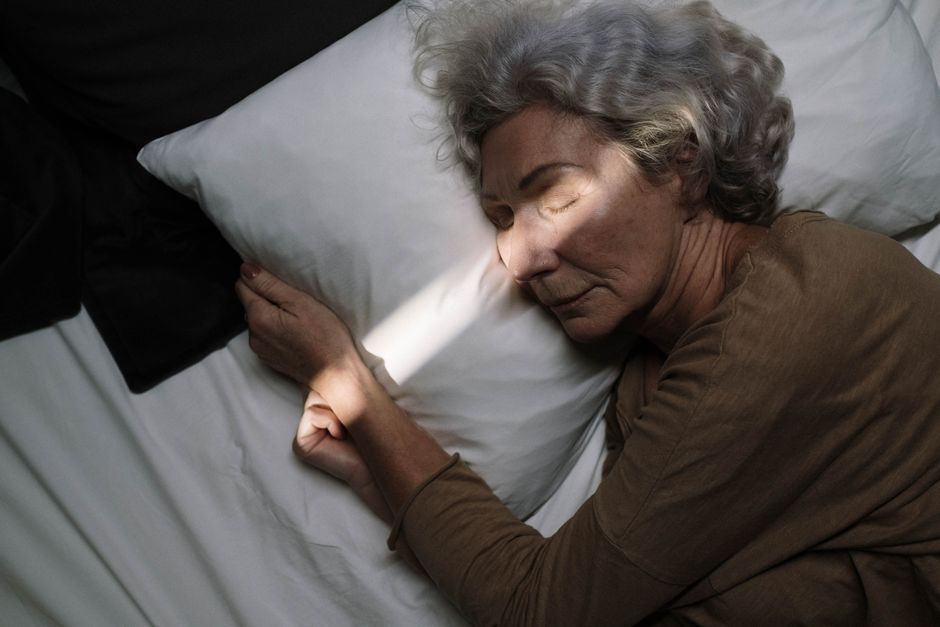
You wake up tired no matter how long you slept. You snore, or your partner says you stop breathing. You fall asleep at your desk by mid-morning. At some point you start wondering whether something more than “bad sleep habits” is going on — and whether a sleep study could explain it. Requesting one starts with a specific conversation with your doctor: describe your symptoms clearly, mention how long they have lasted and how they affect your days, and ask directly whether a sleep study is appropriate. Most doctors will not order one from a vague complaint, but they will act on a clear pattern of symptoms and a description of the impact on your health and daily life.
What Is a Sleep Study and What Does It Actually Measure?
A sleep study — the medical term is polysomnography — is a recording of your body during sleep. It is not a single measurement. It tracks several things at once so a clinician can see how your breathing, brain activity, and body movements interact overnight.
A standard overnight study in a sleep lab typically records:
- Brain waves (electroencephalography) to identify sleep stages and wakefulness
- Eye movements and jaw muscle activity, which help confirm sleep stages
- Breathing effort, airflow at the nose and mouth, and blood oxygen levels
- Heart rhythm
- Leg movements
- Body position and, usually, video and audio
The main purpose is to diagnose or rule out sleep apnea, a condition where breathing repeatedly stops or becomes shallow during sleep. It can also identify periodic limb movements, unusual sleep behaviors, and problems with sleep staging.
Not every sleep concern needs a full lab study. Some situations can be assessed with a home sleep apnea test — a smaller device you take home that records breathing and oxygen levels. Home tests are generally used to look for sleep apnea in adults with a high likelihood of it. They are not equivalent to a lab study and cannot diagnose most other sleep disorders. Which test fits you is a clinical decision, not a patient choice, and it depends on what your doctor suspects.
What Symptoms Suggest You Might Need One?
Doctors order sleep studies when the history points to a specific disorder. The strongest signal is loud snoring combined with witnessed pauses in breathing or gasping during sleep. A bed partner’s observations are genuinely useful here — often more useful than the patient’s own, because you cannot observe your own airway at night.
Other patterns that prompt evaluation include:
- Daytime sleepiness that persists despite adequate time in bed
- Waking with a dry mouth or headache
- Falling asleep unintentionally during quiet activities
- High blood pressure that is difficult to control
- Loud snoring with a body mass index of 30 or higher
- Restless legs or jerking movements during sleep
- Acting out dreams or unusual behaviors at night
One clarification worth knowing: snoring alone, without other symptoms, is common and does not automatically mean you need a study. Roughly half of adults snore at least occasionally. The question a doctor is asking is whether the snoring sits alongside breathing pauses, daytime impairment, or cardiovascular risk factors. That combination is what raises the probability of sleep apnea enough to justify testing.
How To Request A Sleep Study From Your Doctor
Come prepared. The appointment is short, and vague descriptions like “I sleep badly” rarely lead anywhere. Bring specifics.
Before the visit, write down three things: how long the problem has lasted, what your bed partner has noticed, and how it affects your days. Note your sleep schedule — when you go to bed and wake, and whether you wake during the night. If you can, keep a simple sleep diary for one to two weeks. This is not required, but it gives your doctor concrete data instead of impressions.
At the appointment, ask directly. A clear phrasing works better than hinting: “I snore loudly, my partner has seen me stop breathing, and I’m falling asleep during the day. Could sleep apnea be a possibility, and would a sleep study be appropriate?” This tells the doctor what you are worried about and gives them the clinical details they need to decide.
Expect questions. Your doctor will likely ask about your sleep habits, medications, alcohol use, weight history, and whether you have any heart or lung conditions. They may examine your throat, neck, and nasal passages. Some will use a screening questionnaire — the Epworth Sleepiness Scale is common — to gauge daytime sleepiness. Answer honestly; a low score does not rule out apnea, and a high score does not confirm it.
If your doctor is unsure, it is reasonable to ask what would make them more confident either way. Sometimes the answer is a trial of better sleep hygiene first, or treatment of another condition such as nasal congestion or an underactive thyroid. That is not a brush-off. It is a step in the workup.
What If Your Doctor Says No?
Doctors decline sleep studies for reasonable reasons. Testing is expensive, wait times can be long, and the pretest probability matters — ordering a study for someone unlikely to have a disorder produces more false positives than useful answers. A doctor who says “let’s try something else first” may be making a sound clinical judgment.
That said, you are allowed to ask why. A fair question is: “What would need to change for you to consider a sleep study?” Listen to the answer. If it is about cost or access, ask about home testing or a referral to a sleep specialist. If it is about a competing diagnosis, ask what the plan is to evaluate that.
You can also ask for a referral to a sleep medicine specialist. In the US, sleep medicine is a recognized subspecialty, and specialists are trained specifically to evaluate sleep complaints. Seeing one does not guarantee a study, but it puts your case in front of someone whose daily work is exactly this question.
If you have strong risk factors — witnessed apneas, uncontrolled blood pressure, or a job where falling asleep is dangerous — say so plainly. Those details change the risk-benefit calculation, and doctors weigh them.
What Happens During and After a Sleep Study?
An overnight lab study usually means arriving in the evening, having sensors attached with paste and tape, and sleeping in a monitored room. It is not painful, but it is not a normal night’s sleep either. Many people sleep less well than usual. That is expected, and technicians are trained to interpret studies with that in mind.
Results are scored by a clinician and typically reviewed with you at a follow-up visit. The report describes how often your breathing stopped or slowed per hour of sleep — the apnea-hypopnea index — along with oxygen levels, sleep stages, and any limb movements or arrhythmias. Your doctor uses that to decide whether treatment is warranted and which treatment.
If sleep apnea is diagnosed, the most common treatment is positive airway pressure therapy, delivered through a mask. Other options include oral appliances fitted by a dentist, positional therapy, and in some cases surgery. Weight loss can reduce severity for some people, though it is not a quick fix and does not replace treatment in the short term. Which option fits you depends on the severity and pattern of your apnea, and that is a conversation with your clinician.
What Will a Sleep Study Cost?
Costs vary widely by location, facility, and insurance. In the US, an overnight lab study is generally more expensive than a home test, and coverage depends on your plan and whether your doctor documents medical necessity. Before scheduling, ask the facility for an estimate and check with your insurer about prior authorization requirements.
Home sleep apnea tests are less expensive and more convenient, but as noted they are limited in what they can detect. If cost is a barrier, tell your doctor. It is a legitimate part of the conversation, and it may shape which test is ordered.
Frequently Asked Questions
Can I just ask my doctor for a sleep study?
Yes. You can ask directly, and a clear description of your symptoms makes the request more likely to lead to testing. Your doctor still decides whether a study is appropriate based on your history and risk factors.
What is the difference between a home sleep test and a lab study?
A home test records breathing and oxygen levels and is used mainly to look for sleep apnea in adults. A lab study records brain waves, breathing, heart rhythm, and movements, so it can detect a wider range of sleep disorders.
Do I need a referral to see a sleep specialist?
It depends on your insurance plan and the specialist’s practice. Some plans require a referral from your primary care doctor, while others allow you to book directly.
How long does it take to get sleep study results?
Timing varies by facility and how quickly a clinician reviews the recording. Ask the scheduling staff when you book so you know what to expect.
