
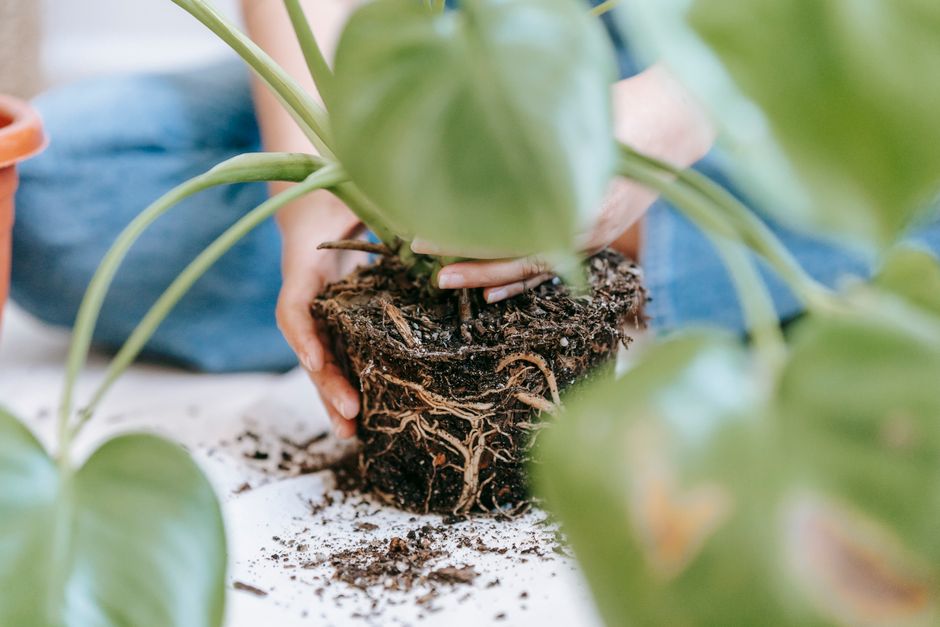
A split leaf philodendron is a dramatic, beautiful plant that eventually outgrows its pot. When roots circle the bottom or push through the drainage holes, it is time to act. Repotting is straightforward: choose a pot one size larger, use fresh well-draining soil, and settle the plant at the same depth it was growing before. Do this in spring or early summer, and your plant will adapt quickly with minimal shock.
How Do You Know Your Split Leaf Philodendron Needs Repotting?
Roots are the clearest signal. Check the drainage holes at the bottom of the pot. If you see thick roots poking out, the plant is root-bound. Another sign is roots circling visibly on the soil surface.
Water behavior changes too. If water runs straight through the pot and out the bottom within seconds, the root mass may have taken over the soil space. The plant may also dry out faster than it used to, needing water every few days instead of weekly.
Growth slowdown is a later sign. A root-bound plant stops producing new leaves or produces smaller ones. When the plant looks healthy but simply stops growing during its active season, check the roots before assuming a nutrient problem.
What Is The Best Time To Repot A Split Leaf Philodendron?
Spring is the ideal time. Early summer works well too. The plant is entering its active growth phase, which means it can recover from root disturbance quickly and establish new roots in fresh soil.
Avoid repotting in winter. Growth slows dramatically, and the plant is less able to recover from the stress of being moved. If you absolutely must repot in winter because the pot cracked or the plant is severely root-bound, do it carefully and keep the plant in a warm spot with consistent moisture.
Do not repot a plant that is currently flowering unless it is an emergency. The plant will likely drop its flower as a stress response. Waiting until the bloom finishes is safer for the plant.
What Pot And Soil Should You Use?
Choose a pot that is 2 to 3 inches larger in diameter than the current one. Going much bigger than that risks waterlogging because the extra soil holds moisture the roots cannot reach yet. That excess moisture can lead to root rot.
Terracotta pots work well because they allow excess moisture to evaporate through the walls. Plastic pots retain moisture longer, so they require more careful watering. Either works, but adjust your watering habits to the pot material.
The pot must have drainage holes. This is non-negotiable for a split leaf philodendron. These plants are prone to root rot in soggy conditions, and drainage holes are the primary defense.
Use a well-draining potting mix. A standard indoor potting soil mixed with perlite or orchid bark in roughly a 2-to-1 ratio works well. The goal is a mix that holds some moisture but drains freely. Avoid heavy garden soil or mixes that compact tightly.




How To Repot A Split Leaf Philodendron Step By Step
Water the plant thoroughly one to two days before repotting. A well-hydrated plant handles root disturbance better than a dry one. The soil should be moist but not soggy on repotting day.
Gather your supplies first. You need the new pot, fresh potting mix, a trowel or scoop, and a clean knife or pruning shears. Having everything ready minimizes the time the roots spend exposed to air.
Remove the plant from its current pot. Turn the pot on its side, grip the base of the plant gently, and slide it out. If it resists, run a knife around the inside edge of the pot to loosen the root ball. Never yank the plant by its stems, as they can snap.
Inspect the root ball. Healthy roots are firm and pale. If you see dark, mushy, or foul-smelling roots, those are rotting and should be trimmed with clean shears. Remove any dead or damaged roots you find.
Loosen the outer roots gently. If the roots are tightly circled, tease them apart with your fingers. This encourages them to grow outward into the new soil instead of continuing to circle. If the root ball is extremely dense, make a few shallow vertical cuts with a clean knife to encourage new growth.
Add a layer of fresh potting mix to the bottom of the new pot. The depth should be such that the top of the root ball sits about an inch below the rim of the new pot. This leaves room for watering without overflow.
Place the plant in the center of the pot. Fill around the sides with fresh potting mix, pressing down gently to remove air pockets. Do not pack the soil tightly, as this reduces aeration for the roots.
Water the plant thoroughly after repotting. Water until it runs out the drainage holes. This settles the soil around the roots and eliminates remaining air pockets. Let the pot drain completely before returning it to its saucer.
What Should You Do After Repotting?
Keep the plant in a spot with bright, indirect light for the first week or two. Avoid direct sun during this recovery period. The roots are adjusting, and the plant cannot take up water as efficiently as it normally would.
Do not fertilize for at least a month after repotting. Fresh potting mix already contains nutrients. Adding fertilizer too soon can burn the newly disturbed roots. Wait until you see new growth, which signals the plant has settled in.
Expect some drooping in the first few days. This is normal. The plant is redirecting energy to root recovery. Keep the soil lightly moist but not wet, and the plant should perk up within a week.
Do not repot again for at least 12 to 18 months. Split leaf philodendrons prefer being slightly root-bound. They grow steadily but do not need frequent repotting once established in a suitable pot.
What Are The Signs Of Repotting Shock?
Wilting is the most common sign. Even with careful technique, some plants droop after repotting. This usually resolves within a week as the roots recover.
Yellowing leaves can occur, especially on older leaves. This is often the plant shedding foliage it cannot support during recovery. A few yellow leaves after repotting is not a cause for alarm. Widespread yellowing combined with soft stems may indicate overwatering.
Leaf drop can happen in severe cases. If the plant drops several leaves within days of repotting, check the roots. If the roots are firm and the soil is not soggy, the plant is likely adjusting. Give it time and consistent care.
Stalled growth is normal for several weeks. The plant is establishing roots before pushing new foliage. If there is no new growth after two months, reassess light, water, and soil conditions.
What Common Mistakes Should You Avoid?
Overwatering after repotting is the most common mistake. The fresh soil holds more moisture than the old root-bound mix did. Water only when the top inch of soil feels dry, even if the plant looked thirsty before.
Choosing a pot that is too large is another frequent error. A pot that is dramatically bigger than the root ball holds excess water, which can cause root rot. Stick to one size up.
Skipping the root inspection is a missed opportunity. While the plant is out of its pot, check for pests, rot, or damaged roots. This is the easiest time to address these issues.
Fertilizing too soon stresses the roots. The roots need time to heal before they can handle fertilizer. Wait at least a month, or until you see new leaves emerging.
Can You Repot A Split Leaf Philodendron With A Moss Pole?
Yes, and it is often necessary. Large split leaf philodendrons are frequently grown on moss poles or trellises. When repotting, keep the pole attached to the plant and move them together.
If the pole is too tall to fit through the pot, you may need to replace it with a shorter one or shorten the existing pole. Some growers remove the pole, repot, and reattach the plant to the pole afterward. This causes some root disturbance but is generally well tolerated in spring.
If the plant has aerial roots attached to the pole, try to preserve them. These roots provide additional support and moisture uptake. Cutting them is not fatal, but keeping them intact reduces stress.
Frequently Asked Questions
How often should I repot a split leaf philodendron?
Every 12 to 18 months is typical for younger plants. Mature plants in large pots can go two to three years between repottings.
Can I repot a split leaf philodendron in winter?
It is not ideal because growth is slow and recovery takes longer. Only repot in winter if the pot is cracked or the plant is severely root-bound.
Should I water my split leaf philodendron right after repotting?
Yes, water thoroughly until it drains from the bottom. Then wait until the top inch of soil dries before watering again.
Why are the leaves turning yellow after repotting?
Some yellowing is normal stress from root disturbance. If it spreads quickly or the stems feel soft, check for overwatering or root rot.
