
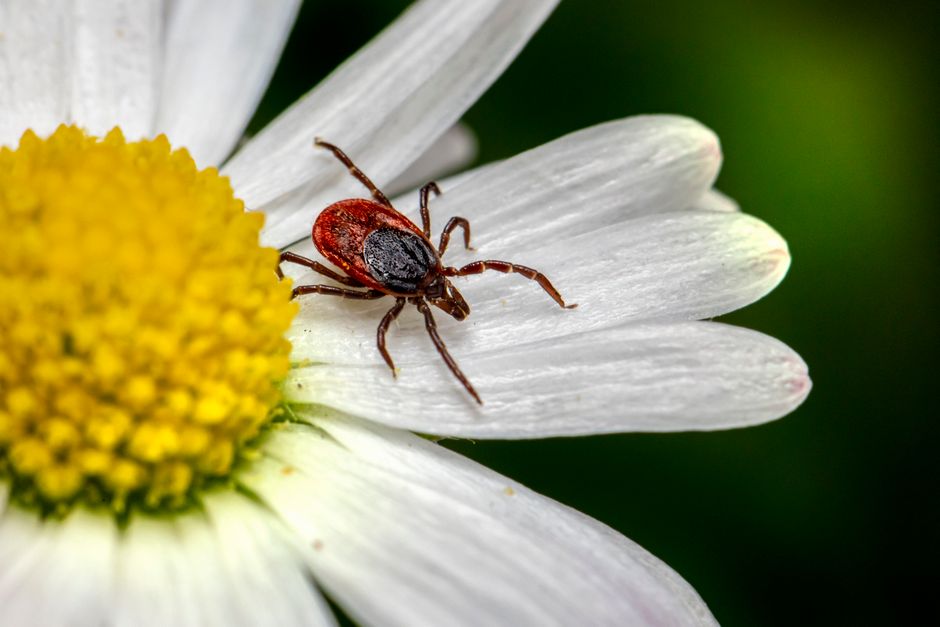
Ticks are not insects. They are arachnids, close relatives of spiders and mites, and that difference matters for how you defend against them. Insect repellents built around certain ingredients work on ticks too, but not all of them, and not equally. The reliable approach combines three layers: an EPA-registered repellent on exposed skin, permethrin-treated clothing, and a habit of checking your body carefully after time outdoors. No single step is enough on its own.
The reason layering matters is simple. Ticks do not fly or drop from trees. They wait on grass and low brush with their front legs outstretched, a behavior called questing, and grab onto whatever brushes past. A tick that lands on your shoe has a long climb ahead before it reaches skin. Treating that path at multiple points gives it more chances to fail.
What Actually Repels Ticks On Human Skin?
Two active ingredients have the strongest record for tick repellency on skin: DEET and picaridin. Both are registered by the Environmental Protection Agency, which reviews repellent products for efficacy and safety when used as labeled.
DEET has been studied for decades. Concentrations from about 20 to 30 percent provide solid, lasting protection against ticks. Higher concentrations do not repel better. They last longer, which is the only thing you gain above roughly 30 percent. For most day hikes, a mid-range concentration is enough.
Picaridin, sometimes listed as icaridin, is a synthetic compound derived from a pepper plant molecule. It repels ticks and mosquitoes, feels less greasy than DEET, and does not damage plastics or synthetic fabrics the way DEET can. Some studies suggest picaridin at around 20 percent performs comparably to DEET against ticks, though the DEET evidence base is larger and older.
Other options exist but with weaker or narrower support. Oil of lemon eucalyptus, sold as OLE or PMD, has demonstrated mosquito repellency and some tick activity, but the evidence for ticks specifically is thinner than for DEET or picaridin. IR3535 is another registered repellent with some tick data. Botanical products marketed as natural, including essential oil blends, generally have little to no published evidence of meaningful tick protection, and their protection time tends to be short.
Apply repellent to exposed skin and to the edges of clothing where ticks might crawl, such as socks, pant cuffs, and waistbands. Do not apply under clothing. Follow the label. Products containing DEET should not be applied to infants under two months, and no repellent product should be used on infants without checking the label and, for young children, a clinician’s guidance.
Why Permethrin-Treated Clothing Changes The Game
Permethrin is the most effective tick defense you can put on fabric, and it works differently from skin repellents. It is an insecticide, not a repellent in the strict sense. Ticks that contact treated fabric are affected neurologically and typically fall off and die rather than continuing to crawl toward skin.
You can buy pre-treated clothing, which stays protective through many washes depending on the manufacturer, or treat your own clothes with a permethrin spray product designed for fabrics. Treated clothing is widely used by outdoor workers, hunters, and public health field staff, and the evidence supporting its use against ticks is strong enough that it is a standard recommendation in outdoor and occupational health guidance.
A few practical points matter:
- Treat socks, pants, and boots at minimum. Ticks almost always attach low and climb.
- Tuck pant legs into socks. This closes the gap where ticks slip under fabric.
- Wear light-colored clothing. It does not repel ticks, but it makes them far easier to spot.
- Let treated clothing dry fully before wearing, and keep it away from cats while wet. Permethrin is toxic to cats, particularly when wet.
Permethrin should never be applied directly to skin. Products sold for clothing treatment are labeled that way for a reason.
How Should You Check Your Body After Being Outdoors?
A thorough tick check within a few hours of coming inside is one of the highest-value habits you can build. The reason is timing. In most cases, a tick must remain attached for a substantial period, often estimated at 24 to 48 hours or longer, before it can transmit the bacteria that cause Lyme disease. Removing ticks promptly, even ones that have attached, sharply reduces risk.
Check these areas specifically, because ticks gravitate to them:
- Scalp, hairline, and behind the ears
- Armpits
- Behind the knees
- Groin and buttocks
- Belly button
- Waistband area
Showering soon after outdoor time helps. It can wash off unattached ticks and gives you a natural moment to check your body. Running your hands over your skin in a mirror, or having someone check your back and scalp, catches what eyes miss.
Tick checks are not a substitute for repellent and treated clothing. They are the last line, and they work best when the earlier lines did their job.
How Do You Repel Ticks In Your Yard And On Pets?
Most people pick up ticks close to home, not on remote trails. Landscaping choices reduce tick habitat around a house. Ticks dry out easily, so they favor shaded, humid edges: leaf litter, tall grass, brush piles, and the boundary where lawn meets woods.
Practical steps include keeping grass mowed, clearing leaf litter near the house, creating a gravel or wood-chip border between lawn and wooded areas, and keeping play equipment and seating away from yard edges. Some evidence supports these habitat modifications for reducing tick presence, though results vary by region and tick species.
Pets bring ticks indoors. Veterinary tick preventives are effective and widely recommended, and they protect the animal as well as reduce ticks in the home. Check pets after outdoor time, especially around the ears, neck, and paws. Ask a veterinarian about the right product for a specific animal rather than choosing one yourself.
Does The Type Of Tick Matter For Your Risk?
Yes, and it affects how seriously to take a bite. Different tick species carry different pathogens. Blacklegged ticks, also called deer ticks, transmit the bacteria that cause Lyme disease in the Northeast and Upper Midwest. Lone star ticks, American dog ticks, and others carry different organisms and are more common in other regions.
This is why local guidance is more useful than generic advice. State health departments and university extension programs publish region-specific information about which ticks are present and what they carry. Knowing which species live where you hike or garden tells you more than any single national rule.
The bite itself does not always announce a problem. A tick can attach and feed without you feeling it, because its saliva contains compounds that dull pain and itching. That is another argument for checking rather than relying on sensation.
What Should You Do If You Find An Attached Tick?
Remove it promptly and correctly. Use fine-tipped tweezers, grip the tick as close to the skin as possible, and pull straight up with steady pressure. Do not twist, jerk, or crush the tick. Do not burn it, smother it with petroleum jelly, or apply nail polish. Those folk methods do not help and can increase the chance the tick regurgitates into the bite.
After removal, clean the area with rubbing alcohol or soap and water. Save the tick in a sealed container or take a clear photo if you can. Knowing the species can help a clinician decide whether preventive treatment is warranted, particularly in areas where Lyme disease is common.
Watch for symptoms in the weeks after a bite, including a spreading rash, fever, fatigue, muscle aches, or joint pain. A rash does not always appear, and it does not always take the classic bull’s-eye shape. Anyone who develops these symptoms after a tick bite should contact a healthcare provider promptly. Decisions about preventive antibiotics after a bite are clinical judgments that depend on the tick species, how long it was attached, and local disease rates, and they belong with a clinician rather than a general article.
Which Repellent Should You Choose?
The best product is the one you will actually use correctly and reapply. A comparison of the main options:
| Product | Where It Goes | Evidence For Ticks |
|---|---|---|
| DEET (20–30%) | Exposed skin | Strong, long-established |
| Picaridin (around 20%) | Exposed skin | Good, somewhat less studied than DEET |
| Oil of lemon eucalyptus | Exposed skin | Some evidence, thinner for ticks |
| Permethrin | Clothing and gear only | Strong |
| Essential oil blends | Exposed skin | Little to no reliable evidence |
For a full day outdoors in tick country, the combination of a DEET or picaridin product on skin plus permethrin-treated clothing and socks covers the most ground. For light yard work in a low-risk area, a skin repellent alone may be reasonable. Match the effort to the exposure.
Frequently Asked Questions
Does DEET repel ticks as well as it repels mosquitoes?
Yes, DEET is effective against ticks and has been studied for decades. Concentrations around 20 to 30 percent provide solid protection, and higher concentrations mainly extend how long protection lasts rather than how well it works.
Can I put permethrin directly on my skin?
No. Permethrin is intended for clothing, gear, and footwear only, and it should never be applied to skin. It is also toxic to cats, especially while wet, so keep treated items away from them until dry.
How long does a tick have to be attached to transmit Lyme disease?
In most cases a tick must stay attached for a substantial period, often estimated at 24 to 48 hours or longer, before it can transmit Lyme bacteria. Prompt removal sharply lowers the risk.
Do essential oils work to repel ticks?
Little to no reliable published evidence supports essential oil blends for meaningful tick protection, and their protection time tends to be short. DEET, picaridin, and permethrin have far stronger support.
