

Cracked heels — the kind that split open and hurt when you stand — heal fastest when you stop the skin from drying out and take pressure off the rim of the heel. The core routine is simple: soak, gently file away dead skin, apply a thick moisturizer with urea or petrolatum, and cover the foot so the product stays put. Deep, painful fissures that bleed or show signs of infection need a doctor, because those can take weeks to close and carry a real risk of infection.
Most cracked heels are a mechanical problem, not a mystery. The skin around your heel is built to stretch every time you take a step. When that skin gets thick and dry, it loses the flexibility to stretch, so it splits. Understanding why it happens makes the fix obvious.
Why Do Feet Crack in the First Place?
The heel pad is wrapped in skin that has to handle your full body weight with every step. As you walk, the fat pad under the heel expands sideways, and the skin over it stretches. Healthy skin flexes with that movement. Dry, thickened skin does not.
When the outer layer of skin loses moisture, it becomes less elastic. Add repeated pressure and the skin eventually tears at its weakest point — usually the edge of the heel where the curve meets the flat bottom. That tear is a fissure.
A few things make this more likely:
- Standing for long periods, especially on hard floors
- Being overweight, which increases the load on the heel pad
- Open-back shoes and sandals that let the heel fat pad spread outward
- Dry air, cold weather, or frequent hot showers
- Diabetes, thyroid problems, or poor circulation, which affect skin quality and healing
- Skin conditions like eczema or psoriasis
- Age — skin produces less oil and holds less water over time
One detail people miss: the fissure itself is rarely the whole story. The hard, thickened skin around it is what keeps pulling the split open. If you only moisturize the crack and ignore the callus ring around it, the crack keeps reopening.
What Actually Repairs Cracked Feet Even Deep Painful Ones?
Repair happens in two stages. First you remove the thick dead skin that is holding the fissure open. Then you trap moisture in the skin so it can flex again without splitting.
Here is the sequence that works, and the reasoning behind each step:
- Soak the feet in warm — not hot — water for about 10 to 15 minutes. This softens the hardened outer layer so it can be removed without tearing live skin.
- Exfoliate gently. Use a pumice stone or foot file on the callus around the crack, not directly into the open fissure. Filing the crack itself irritates it and slows healing. Work on the thick rim of skin instead.
- Moisturize immediately while the skin is still damp. This is the step most people get wrong. Moisturizer seals in water that is already there. Applied to bone-dry skin, it does far less.
- Cover the foot. Socks over a thick ointment keep it in contact with the skin instead of rubbing off on sheets.
- Repeat daily. Cracked heels do not heal in one session. Consistent daily care is what closes them.
For deep or painful fissures, the American Academy of Dermatology recommends looking for moisturizers that contain urea, lactic acid, or salicylic acid. These ingredients do more than sit on the surface — they help soften and thin thickened skin. Petrolatum-based ointments are the strongest option for trapping moisture, though they feel greasy.
A practical trick: apply a thick layer of ointment at night, pull on a pair of socks, and sleep that way. Overnight is when the product has hours of uninterrupted contact with the skin.
Which Ingredients Help and Which Are Just Marketing?
The ingredient list matters more than the price tag. Some foot creams are mostly water and fragrance. Others contain active ingredients with real evidence behind them.
| Ingredient | What it does | Evidence level |
|---|---|---|
| Urea (10-40%) | Softens thick skin, helps it hold water | Well established |
| Petrolatum | Seals in moisture, strongest barrier | Well established |
| Lactic acid | Exfoliates and hydrates | Well established |
| Salicylic acid | Breaks down thickened skin | Well established |
| Glycerin | Draws water into the skin | Well established |
| Fragrance | No skin benefit; can irritate | Not therapeutic |
Higher urea concentrations do more, but they can sting on an open crack. If a fissure is raw, start with a plain petrolatum ointment until it closes a little, then switch to a urea product to tackle the surrounding callus.
What about the products that promise to “heal deep cracks overnight”? There is no cream that closes a deep fissure in a single night. The skin has to rebuild itself, and that takes time. Be skeptical of any claim that skips that biology.
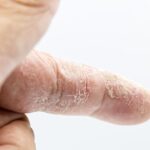




When Should You See a Doctor About Cracked Heels?
Most cracked heels respond to home care. Some do not, and a few need medical attention quickly.
See a doctor or a podiatrist if:
- The crack is deep enough to bleed
- You see redness, swelling, warmth, pus, or a bad smell — signs of infection
- You have diabetes, poor circulation, or a weakened immune system
- The pain makes it hard to walk
- Home care for two to three weeks has not helped
The diabetes point deserves emphasis. For people with diabetes, even a small foot crack can become a serious wound, because reduced sensation and poor blood flow can hide the problem and slow healing. Clinical guidance for people with diabetes is to check the feet daily and get any break in the skin looked at rather than treating it at home indefinitely. This is not a case for watchful waiting.
For a deep, painful fissure, a clinician may use a technique called debridement to remove the thick skin edges, or apply a medical-grade adhesive to hold the crack closed while it heals. These are clinical procedures, not home remedies.
How Can You Prevent Cracked Heels From Coming Back?
Once the skin has healed, the goal shifts to keeping it flexible so it does not split again. Prevention is mostly about moisture and pressure.
- Moisturize the feet daily, even when they look fine. This is the single most effective habit.
- Choose closed-back shoes or shoes with a cushioned heel cup that supports the fat pad.
- Avoid standing for long stretches on hard surfaces when you can.
- Keep showers warm rather than hot, and avoid long soaks that strip oils.
- File calluses regularly so thick skin never builds up enough to crack.
- Drink enough water and manage conditions like diabetes and thyroid disease, which affect skin health.
Heel cups or orthotic inserts can help by reducing the sideways spread of the heel pad with each step. For people whose cracks keep returning, this mechanical fix is often what makes the difference — moisturizer alone cannot overcome constant stretching.
One thing worth saying plainly: cracked heels are not just a cosmetic problem. Open fissures are a break in your skin’s barrier, and that barrier is what keeps bacteria out. Treating them is about comfort and about protecting yourself from infection.
Frequently Asked Questions
How long does it take to heal deep cracked heels?
Shallow cracks often improve within a week or two of daily moisturizing, while deep fissures can take several weeks to close. If a crack is not improving after two to three weeks of consistent care, see a doctor.
Can I use a pumice stone on a deep crack?
File the thick skin around the crack, not the crack itself, because filing into an open fissure irritates it and slows healing. Soak first to soften the skin before filing.
What is the best moisturizer for cracked heels?
Products containing urea, lactic acid, or salicylic acid help soften thick skin, while petrolatum-based ointments seal in moisture best. A thick ointment worn overnight under socks gives the longest contact time.
When are cracked heels a sign of something serious?
Cracks that bleed, show redness, swelling, or pus, or that occur in someone with diabetes or poor circulation need medical attention. For people with diabetes, any foot break in the skin should be checked rather than treated at home indefinitely.
