
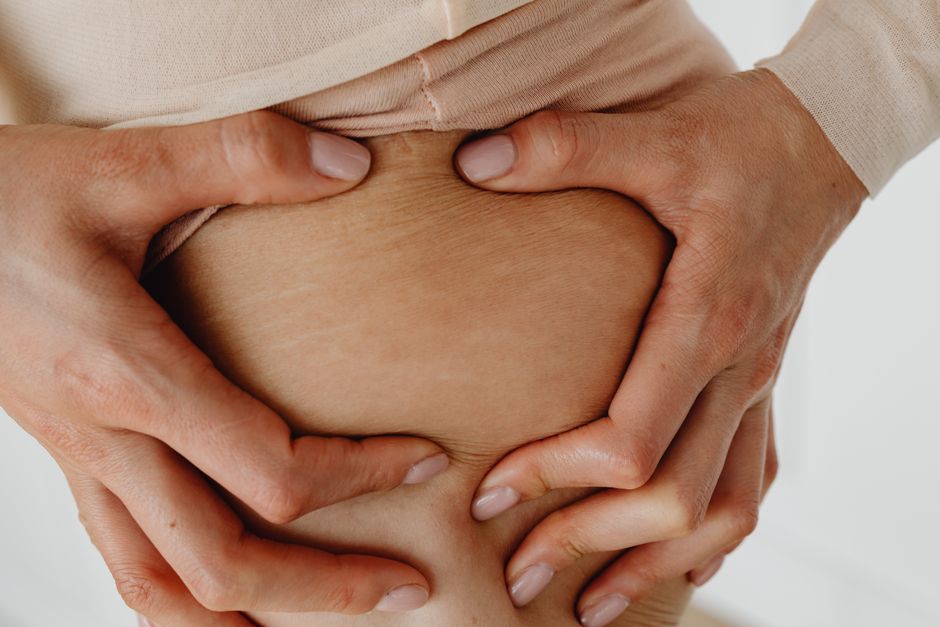
Stretch marks cannot be erased completely. That is the honest starting point. They are scars in the middle layer of your skin, and no cream, oil, or home remedy removes scar tissue. What can happen is meaningful fading. Early stretch marks respond to prescription treatments, and older ones can be softened and blended so they are far less noticeable. The single biggest factor in how much improvement is possible is how new the marks are when treatment starts.
What Are Stretch Marks, Exactly?
Stretch marks are a form of scarring. The medical term is striae distensae, and they form in the dermis — the thick middle layer of your skin that gives it strength and stretch.
The dermis is built from collagen and elastin fibers arranged in a woven pattern. When skin stretches faster than that weave can adapt, the fibers tear. The skin heals the tear with scar tissue, but scar tissue never rebuilds the original woven structure. That is why a stretch mark looks and feels different from the skin around it.
Two things drive this. Mechanical stretching is one. Hormones are the other, and this part gets overlooked. Cortisol and related hormones appear to weaken the dermal fibers and reduce new collagen formation, which helps explain why stretch marks often appear during puberty, pregnancy, and rapid weight gain rather than from stretching alone.
Fresh stretch marks are often red, pink, or purple, and may feel slightly raised or itchy. Over months to years they fade to white or silver and feel flatter, sometimes with a slight indentation. Dermatologists call these two stages striae rubrae and striae albae. The distinction matters because the two stages respond very differently to treatment.
Who Gets Stretch Marks and Why?
Stretch marks are common, and they are not a sign that something is wrong with your skin or your health. Most people who have them got them during one of a handful of predictable situations.
- Pregnancy. A large share of pregnant women develop stretch marks, most often on the abdomen, breasts, hips, and thighs, usually in the later trimesters.
- Puberty. Rapid growth during the teen years commonly leaves marks on the thighs, hips, and breasts in girls and on the shoulders and back in boys.
- Rapid weight gain or loss. Fast changes in body size stretch skin faster than it can adapt.
- Muscle building. Bodybuilders sometimes develop marks on the shoulders, chest, and arms.
- Corticosteroid use. Long-term use of steroid medications, whether topical or systemic, is linked to stretch marks because these drugs suppress collagen formation.
- Genetics. If your mother had stretch marks during pregnancy, you are more likely to develop them too.
There is also a condition called Cushing syndrome, in which the body produces too much cortisol. It can cause wide, dark purple stretch marks, often on the abdomen. If stretch marks appear suddenly and widely along with other symptoms such as easy bruising, weight gain around the middle, or muscle weakness, that is worth a medical evaluation rather than a cosmetic one.
Can You Actually Remove Stretch Marks Permanently?
No. No treatment currently available removes stretch marks completely, and any product claiming to do so is overstating what is possible.
What treatments can do is reduce their appearance. The goal is to make marks flatter, less discolored, and closer in texture and tone to surrounding skin. How much improvement is realistic depends heavily on timing and on the individual.
Newer marks — the red or purple ones — have active blood vessels and ongoing collagen remodeling, which means they are more responsive to treatment. Older white marks have less active tissue to work with, and improvement tends to be more modest. This is one of the few areas of skin care where acting sooner genuinely changes the outcome.





What Treatments Have Evidence Behind Them?
Some treatments have reasonable evidence for improving the appearance of stretch marks. Others are widely sold but poorly supported. Here is where things stand.
Topical retinoids. Tretinoin, a prescription retinoid, is among the better-studied options for early stretch marks. Some studies show improvement in length and color when used on red or purple striae. It is not generally recommended during pregnancy because of the known risks of systemic retinoids, and its use in pregnancy should be discussed with a doctor. Over-the-counter retinol is much weaker and has far less evidence for this purpose.
Hyaluronic acid and other topical creams. Some studies suggest modest benefit, particularly for early marks. Results are generally small and vary between products. The evidence is not strong enough to promise a specific outcome.
Laser therapy and light therapy. Pulsed dye lasers target the redness of newer stretch marks. Fractional lasers and microneedling aim to stimulate collagen and improve texture in older marks. These are among the more effective options, but they usually require multiple sessions, results are partial, and they can be costly. They are performed by dermatologists or trained providers.
Microneedling. Some studies indicate microneedling can improve the appearance of stretch marks, especially when combined with other treatments. Evidence is growing but not definitive.
Chemical peels. Certain peels, including trichloroacetic acid peels, have shown benefit in some studies for stretch marks. They carry risks including pigment changes, particularly in darker skin, and should be done by a professional.
Radiofrequency and ultrasound devices. These are used by some clinicians to stimulate collagen. Evidence is limited and results vary.
Across all of these, the pattern is consistent: partial improvement, not removal, and better results on newer marks.
What About Home Remedies and Drugstore Creams?
This is where the gap between marketing and evidence is widest. A great many products are sold with claims that no study has confirmed.
Cocoa butter, olive oil, and vitamin E. These are popular and widely used, but controlled studies have generally not found that they prevent or remove stretch marks. That does not mean they are harmful — moisturizing skin is fine — but there is no strong evidence they change the marks themselves.
Centella asiatica (gotu kola) and similar extracts. Some small studies suggest possible benefit, but the evidence is limited and mixed. It is not strong enough to call these proven.
Aloe vera, almond oil, and other natural oils. No reliable clinical evidence confirms these remove stretch marks. They may soften skin, which is a different claim.
Be cautious with any product promising complete removal. That claim conflicts with what is known about scar tissue. And be careful with undiluted essential oils or harsh home peels, which can irritate skin or cause burns and pigment problems.
What Can You Do to Prevent Stretch Marks?
Prevention is genuinely difficult because the main drivers — genetics, hormones, and rapid growth — are largely outside your control. Still, a few things are reasonable.
Maintaining steady, gradual weight changes rather than rapid swings reduces the mechanical stress on your skin. Staying well hydrated and keeping skin moisturized supports overall skin health, though the evidence that this prevents stretch marks specifically is weak.
During pregnancy, some clinicians recommend moisturizing the abdomen regularly, but studies have not consistently shown this prevents stretch marks. If a product is marketed specifically to pregnant women as a guaranteed preventive, treat that claim with skepticism.
If you are using a topical retinoid for another purpose and are pregnant or planning to become pregnant, talk to your doctor before continuing.
When Should You See a Dermatologist?
A dermatologist is the right person to assess stretch marks and discuss realistic options. A dermatologist can also tell the difference between ordinary stretch marks and marks that might signal an underlying medical condition.
See a doctor if stretch marks appear suddenly and widely, if they are unusually dark purple, or if they come with other symptoms such as easy bruising, thinning skin, or weight gain around the abdomen. Those can point to a hormonal condition that needs medical attention.
For cosmetic concerns, a dermatologist can recommend a treatment plan based on whether your marks are new or old, your skin tone, and your goals. This matters because darker skin tones carry a higher risk of pigment changes from lasers and peels, so the approach should be tailored.
How To Remove The Stretch Marks: Realistic Expectations
If you take one thing from this guide, let it be this: stretch marks fade on their own over time, and treatment can help them fade more and blend better, but complete removal is not currently achievable.
The best window for treatment is while marks are still red or purple. Once they turn white or silver, improvement is still possible but tends to be smaller. Prescription retinoids and in-office procedures such as lasers and microneedling have the most evidence behind them. Most over-the-counter creams and home remedies have little to none, despite confident marketing.
None of this means you have to treat your stretch marks at all. They are extremely common, they are not a health problem, and many people choose to leave them alone. If you do want to address them, going in with accurate expectations will serve you better than any product label.
Frequently Asked Questions
Can stretch marks be removed completely?
No. Stretch marks are scars in the dermis, and no current treatment removes them entirely. Treatment can make them flatter, less discolored, and less noticeable.
Do stretch marks ever go away on their own?
They fade over time but do not disappear. New red or purple marks gradually turn white or silver, which usually makes them less noticeable but not gone.
What is the best treatment for stretch marks?
Prescription retinoids and in-office procedures like lasers and microneedling have the most evidence, especially for newer marks. Results are partial, and the best option depends on your skin and the age of the marks.
Do cocoa butter and vitamin E remove stretch marks?
Controlled studies have generally not found that they prevent or remove stretch marks. They can moisturize skin, but there is no strong evidence they change the marks themselves.
