
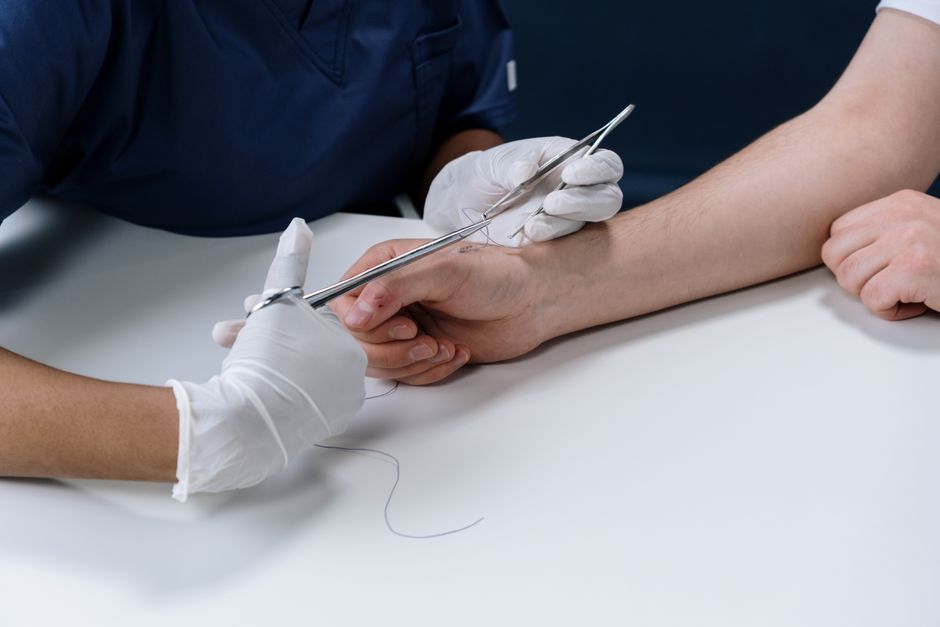
You should not remove stitches at home in most cases. Stitches are placed by a clinician, and the decision to take them out depends on where the wound is, how deep it goes, how well it is healing, and how long it has been since the injury. Removing them too early can cause the wound to split open. Removing them too late can leave a worse scar or trap bacteria. For most wounds, a doctor, nurse, or urgent care clinic should do the removal.
There is one situation where home removal is sometimes reasonable: a doctor has told you the wound is healing well, given you a specific removal date, and shown you how to do it. Outside of that, the safest choice is to have a professional remove them. This article explains why timing matters, what removal actually involves, and the warning signs that mean you should not wait for an appointment.
Why Does Timing Matter So Much For Stitch Removal?
A wound does not close all at once. It heals in overlapping phases. In the first few days, the edges are held together mainly by the stitches themselves. New tissue is forming, but it is weak. Over the following days and weeks, collagen — a protein that gives skin its strength — builds up across the wound and gradually takes over the job the stitches were doing.
Remove the stitches before that new tissue is strong enough, and the wound can pull apart. This is called dehiscence. It is more likely on areas that stretch or bear weight, like the back, the chest, or over a joint. Remove them too late, and the stitch material can irritate the skin, leave track marks, or give bacteria a place to grow along the thread. The goal is to take them out in the window when the wound can hold itself together but the stitches are no longer helping.
That window is different for every part of the body. Skin on the face heals and gains strength faster than skin on the leg. A wound under tension needs more time than a small cut on the forearm.
What Is The Typical Timeline For Removing Stitches?
Timelines vary by location and by the type of wound. The ranges below reflect common clinical practice. Your own clinician may give you a different date based on how your wound looks.
- Face and neck: often around 3 to 5 days
- Scalp and chest: often around 7 to 10 days
- Arms and hands: often around 7 to 14 days
- Legs, back, and trunk: often around 10 to 14 days
- Over a joint or under tension: sometimes longer, occasionally up to 21 days
These are general ranges, not rules. A wound that is infected, swollen, or under a lot of pull may need more time. A small, clean cut on a child’s face may need less. The only person who can give you an accurate date is the clinician who closed the wound.
One detail people often miss: the removal date is a target, not a deadline. If you cannot get in on the exact day, a day or two later is usually not a problem for most wounds. Going a week late is more likely to cause issues.
Can You Safely Remove Stitches At Home?
In a small number of cases, yes — but only when a clinician has cleared it. Home removal is most often considered for simple, shallow wounds on the arms or legs in adults who are healing normally. It is generally not appropriate for wounds on the face, over joints, on the hands, or in children, because the margin for error is smaller and the cosmetic stakes are higher.
If your clinician has approved home removal, here is what the process involves. This is general information, not a substitute for the instructions your clinician gives you.
- Wash your hands thoroughly with soap and water, and clean the area around the wound.
- Use clean tweezers and small scissors. Some clinicians recommend soaking them in rubbing alcohol first.
- Lift the knot of the stitch slightly and snip the thread on one side of the knot, close to the skin.
- Pull the thread gently from the other side, so the part that was under the skin does not drag back through the wound.
- Remove every other stitch first, check that the wound stays closed, then remove the rest.
- Apply a small amount of antibiotic ointment only if your clinician told you to. Routine use of antibiotic ointment on clean wounds is not always necessary.
If the wound opens at any point, stop and cover it. Call your clinician.
What Are The Risks Of Removing Stitches Too Early Or Too Late?
Removing too early is the more serious mistake. The wound can split open, and you may need it closed again — sometimes with a larger scar than the original repair would have left. On the abdomen or chest, early removal carries a higher risk because those areas move with breathing and activity.
Removing too late is usually less dramatic but still a problem. Stitch material left in place can cause:
- Small marks along the wound where the thread sat, sometimes called railroad tracking
- Irritation or a mild inflammatory reaction around each stitch
- A higher chance of infection, since bacteria can travel along the thread
- A scar that looks more prominent than it needed to
Infection is the risk that matters most in both directions. A wound that is already infected should not have stitches removed at home. It needs to be looked at.
What Are The Warning Signs You Should Not Remove Stitches Yourself?
Some wounds are not candidates for home removal no matter how good they look. Do not remove stitches yourself, and contact a clinician promptly, if you notice any of the following:
- Spreading redness, warmth, or swelling around the wound
- Pus, cloudy fluid, or a bad smell
- Fever or chills
- A wound that is pulling apart or gaping
- Increasing pain rather than pain that is fading
- Red streaks moving away from the wound
- Numbness, tingling, or loss of movement near the wound
Red streaks and fever are signs that need urgent attention, not a wait-and-see approach. A wound infection can spread quickly, and delays make it harder to treat.
There is one more situation worth naming. If the wound was caused by a bite, a dirty object, or a deep puncture, the risk of infection is higher from the start. These wounds are usually managed more carefully, and home removal is rarely appropriate.
What Happens During A Professional Stitch Removal?
Professional removal is quick and usually not painful. The clinician cleans the area, checks that the wound has sealed, and then removes the stitches one at a time using sterile instruments. Most removals take only a few minutes. You may feel a slight tug or a pinch, but the wound itself is usually numb enough by that point that it does not hurt much.
After removal, the clinician will look at the wound and tell you how to care for it. The wound is still not at full strength. Skin regains most of its tensile strength over several weeks, but it continues to remodel for months. That means you should avoid heavy pulling or straining on the area for a while, especially if it is over a joint or on the abdomen.
Keep the area clean and dry, protect it from sun exposure for the first several months if it is on visible skin, and follow any scar care advice you are given. Sun protection matters because new scar tissue is more sensitive to UV damage and can darken permanently.
When Should You Call A Doctor Instead Of Waiting?
Call your clinician if you are unsure whether it is time to remove the stitches, if the wound looks different than it did a day ago, or if you missed your removal appointment by more than a few days. Do not try to solve uncertainty by removing them yourself. A quick call or a walk-in visit is far less trouble than a wound that reopens.
If you cannot reach the clinician who placed the stitches, an urgent care clinic can usually handle removal. Emergency departments are set up for this too, though they are a more expensive option for a routine removal.
Frequently Asked Questions
Can I remove my own stitches at home?
Only if a clinician has examined the wound, confirmed it is healing well, given you a removal date, and shown you how to do it. For most wounds, especially on the face, hands, or over joints, a professional should remove them.
What happens if I leave stitches in too long?
Stitch material left in place can cause irritation, leave small marks along the wound, and raise the risk of infection. In most cases it does not cause serious harm, but it can lead to a more noticeable scar.
How do I know if my wound is healed enough to remove stitches?
The wound edges should be closed, with no gaping, pus, or spreading redness. Only a clinician can confirm this reliably, which is why the removal date should come from the person who closed the wound.
What should I do if my wound opens after stitches are removed?
Cover it with a clean dressing and contact a clinician right away. Do not try to close it yourself, and do not apply anything other than what you have been told to use.
