
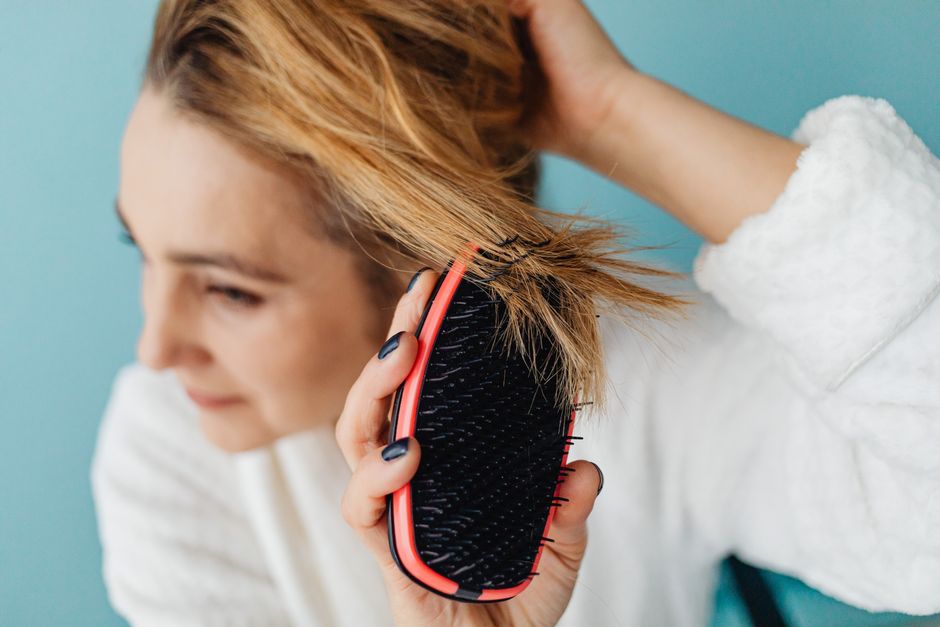
Static hair happens when your hair carries an electric charge that makes individual strands push away from each other. To remove it naturally, add moisture back to dry hair, reduce friction from fabrics and brushing, and let the charge drain away through humidity or a metal touch point. No expensive product is required for any of this.
Static is a physics problem before it is a hair problem. Dry air and dry hair both hold charge well. When your hair rubs against a hat, a scarf, or a brush, electrons move between surfaces. On damp hair that charge leaks away almost instantly. On dry hair it builds up until strands repel each other and lift. Understanding that one mechanism explains almost every fix below.
Why Does Hair Get Static in the First Place?
Static is a buildup of electric charge, and dry hair is very good at holding it. Hair is made mostly of protein and is a poor conductor of electricity. When it is dry, charge has nowhere to go. When it holds some moisture, that moisture lets the charge move and dissipate.
Two things have to be true at once for static to appear: the hair has to be dry, and something has to create friction. That friction is usually a brush, a comb, a wool hat, a scarf, or a jacket collar. Cold winter air is a common trigger because cold air holds less moisture than warm air, and indoor heating dries the air further. This is why static hair is far more common in January than in July.
Damaged or chemically treated hair tends to be more prone to static. Bleaching, relaxing, and repeated heat styling strip away some of the hair’s natural oils and disrupt the outer layer of the strand, called the cuticle. A rougher, more porous surface creates more friction and holds less moisture. Fine hair also tends to show static more easily because light strands lift with less charge.
How To Remove Static From Hair Naturally
Moisture is the fix that matters most, and it works from two directions: moisture in the air and moisture in the hair. Raising indoor humidity is often the single most effective change. A humidifier in the bedroom or living space adds water vapor to dry air, and that alone can noticeably reduce static for many people. There is no universal target humidity that fits every home, but many indoor air guidelines suggest keeping relative humidity somewhere in the 30 to 50 percent range. Above that, you risk condensation and mold growth.
For the hair itself, the goal is to restore some moisture and smooth the cuticle. Practical steps that do not require special products:
- Wash less often if your scalp tolerates it. Frequent washing strips natural oils that help hair hold moisture.
- Use a moisturizing conditioner after every wash and leave a little in rather than rinsing it all out.
- Apply a small amount of a natural oil to the ends and mid-lengths. Jojoba, argan, and coconut oil are common choices. A few drops are enough. Too much oil makes hair look greasy.
- Let hair air-dry when you can. Blow dryers and flat irons remove moisture and add heat damage.
- Switch to a wooden comb or a natural-bristle brush. Plastic combs and brushes generate more friction and hold more charge.
- Rub a dryer sheet lightly over your hair in a pinch. This is a workaround, not a treatment, and some people find the residue irritating.
A useful detail many people miss: running a metal object through your hair can discharge built-up static. Metal conducts electricity, so touching a metal hanger, a metal comb, or even a metal doorknob can let the charge leave your hair. It is a temporary fix, but it works immediately and costs nothing.
Does Hair Static Mean Your Hair Is Damaged?
Not necessarily. Static is mostly a sign that your hair is dry, not that it is damaged. Dryness and damage often travel together, but they are not the same thing. Hair can be perfectly healthy and still crackle in February.
That said, persistent static alongside other signs can point to a moisture problem worth addressing. Those signs include rough texture, split ends, dullness, and hair that tangles more than usual. If your hair feels brittle and snaps easily, the issue is likely more than surface static. In that case, the fix is the same starting point — add moisture, reduce heat and chemical stress — but it may take weeks of consistent care before the hair feels different. There is no reliable timeline that applies to everyone, because how fast hair recovers depends on how much damage was done and how fast it grows.




What Everyday Habits Make Static Worse?
Several common habits feed static without people realizing it. Overwashing is a big one. Shampooing daily, especially with a harsh formula, removes the oils that help hair retain moisture. Hot water does the same thing. So does skipping conditioner.
Fabric choice matters more than most people expect. Wool, nylon, and synthetic fleece are strong static generators. Cotton and natural fibers are gentler. If you wear a wool beanie all winter, you are essentially rubbing a charge generator against your hair every time you put it on or take it off.
Heat styling is another contributor. Flat irons, curling wands, and blow dryers all remove moisture from the hair. Using them on already dry hair makes static worse. If you do use heat, applying a heat protectant and keeping the tool moving helps limit the damage, though it does not eliminate it.
Plastic combs and brushes are the last common culprit. They are inexpensive and everywhere, but they hold charge well. Swapping them out is one of the simplest changes you can make.
Do Natural Remedies for Static Hair Actually Work?
Some do, and some are mostly folklore. The ones that work are the ones that add moisture or reduce friction. The ones that do not usually fail because they do nothing about either.
Things that generally help:
- Humidifiers. They address the air, which is often the root cause in winter.
- Natural oils applied lightly. They smooth the cuticle and help hair hold moisture.
- Leave-in conditioner. It adds moisture and reduces friction between strands.
- Wooden or natural-bristle tools. Less friction, less charge.
- Metal touch points. They discharge existing static instantly.
Things with weaker or unclear support:
- Rubbing a dryer sheet on your hair. It often works in the moment, but it leaves residue and is not a hair care solution. The evidence on long-term effects on hair and scalp is limited.
- Spraying hairspray to weigh hair down. It can reduce visible static briefly, but alcohol in many hairsprays dries hair further over time.
- Home remedies like vinegar rinses. Some people report less static, but there is no strong clinical evidence that vinegar rinses reduce static specifically. They may help with scalp and cuticle condition for some people.
One honest point: many viral “static cures” online are just friction or moisture tricks dressed up with a story. If a remedy does not add moisture or reduce friction, be skeptical.
When Should You See a Professional?
Static hair on its own is not a medical issue. It does not signal a disease, and it does not require a doctor’s visit. A dermatologist is the right person to see if you also have scalp symptoms like persistent itching, flaking, redness, or unusual hair shedding. Those point to something beyond static.
If your hair has become dramatically drier, more brittle, or is breaking off in noticeable amounts, that is worth discussing with a dermatologist or a stylist who can assess the hair directly. Sudden changes in hair texture or shedding can have several possible causes, and identifying the right one usually requires an in-person look rather than a guess from a distance.
Frequently Asked Questions
What is the fastest natural way to get rid of static in hair?
Running a metal object like a metal comb or hanger through your hair discharges the built-up charge almost instantly. It is a quick fix, not a lasting one, because the hair will recharge if it stays dry.
Does putting lotion or oil on your hair stop static?
A small amount of natural oil or leave-in conditioner can reduce static by adding moisture and smoothing the hair’s outer layer. Use only a few drops, since too much makes hair look greasy.
Why does my hair only get static in winter?
Cold air holds less moisture than warm air, and indoor heating dries the air further, so hair loses moisture and holds charge more easily. The same hair often has no static problem in humid summer weather.
Can static hair be a sign of a health problem?
No, static hair by itself is not a sign of any medical condition. See a dermatologist if you also have scalp itching, flaking, redness, or unusual hair shedding.
