
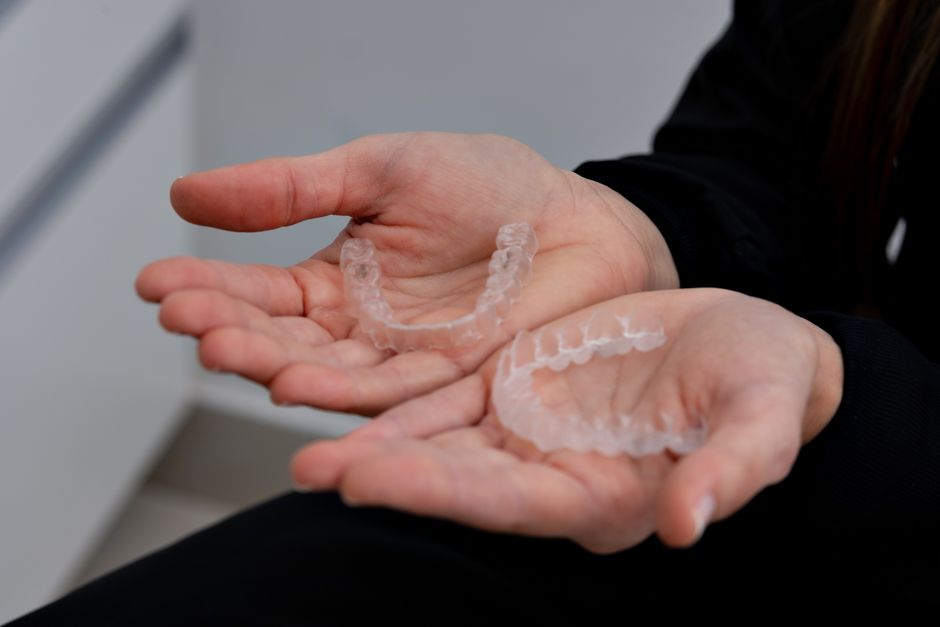
Invisalign trays are clear plastic aligners that can pick up stains from food, drinks, and poor cleaning habits. The good news is that most stains can be removed at home with simple, safe methods. The best approach combines daily cleaning with a deep-cleaning routine using gentle products like mild dish soap, hydrogen peroxide, or specialized cleaning crystals.
What Causes Stains On Invisalign Trays?
Stains form when pigments from what you eat and drink get trapped in the plastic. Coffee, tea, red wine, turmeric, curry, and berries are common culprits. Even dark sodas can leave a film.
Bacteria and plaque also build up on aligners throughout the day. If you do not brush your trays before putting them back in your mouth, that buildup hardens into a visible residue. This is not just a cosmetic issue — a dirty aligner holds bacteria against your teeth for hours.
Smoking or vaping is another major cause. Tar and nicotine leave yellow or brown discoloration that is harder to remove than food stains.
How To Remove Stains From Invisalign Trays Daily
The simplest way to prevent stains is to clean your trays every time you remove them. Rinse them under lukewarm water immediately. Do not use hot water — heat can warp the plastic and ruin the fit of your aligner.
Brush your trays gently with a soft-bristled toothbrush and a small amount of clear, mild dish soap. Avoid toothpaste. Most toothpastes contain abrasives that scratch the plastic. Those tiny scratches become hiding places for new stains and make the aligner look cloudy over time.
Rinse thoroughly after brushing. Any soap residue left on the tray can irritate your mouth or affect the taste of your food.
This routine takes about two minutes. It is the single most effective thing you can do to keep aligners clear.
Deep Cleaning Methods For Stubborn Stains
Even with daily cleaning, some stains set in. Here are the most reliable deep-cleaning options.
Hydrogen Peroxide Soak
Mix equal parts 3% hydrogen peroxide and lukewarm water in a small cup. Soak the trays for 15 to 30 minutes. Hydrogen peroxide breaks down organic pigments and kills bacteria without harming the plastic.
Rinse the trays well before putting them back in your mouth. Do not swallow the solution.
Denture Cleaner Tablets
Products like Efferdent or Polident are designed for dentures but work well on aligners. Drop one tablet in lukewarm water and soak the trays for the time listed on the package — usually 15 to 20 minutes.
These tablets are effective at removing stains and killing odor-causing bacteria. They are widely used by Invisalign wearers, though this is an off-label use. Some people report a lingering taste, so rinse thoroughly afterward.
White Vinegar Solution
Mix one part white vinegar with three parts lukewarm water. Soak for 15 minutes. Vinegar is mildly acidic and helps dissolve mineral deposits and stubborn film.
Do not soak longer than 30 minutes. Prolonged exposure to acid can weaken the plastic.
Invisalign Cleaning Crystals
Invisalign sells its own cleaning crystals. These are a pre-measured powder you dissolve in water. They are formulated specifically for aligner plastic and are one of the safest options.
Follow the package directions exactly. Do not use more than recommended thinking it will work faster.
No clinical evidence currently confirms that one deep-cleaning method is superior to the others. All four are widely used and generally considered safe when done correctly.



What To Avoid When Cleaning Aligners
Some cleaning methods sound reasonable but can damage your trays.
- Hot water — warps the plastic and permanently ruins the fit.
- Toothpaste — abrasive and leaves micro-scratches that collect stains.
- Mouthwash — many contain dyes and alcohol that can discolor or weaken the plastic.
- Bleach — too harsh and leaves toxic residue.
- Dishwasher — heat and detergent will deform the aligner.
- Ultrasonic cleaners — these devices are popular, but evidence on whether they damage aligner plastic is limited. Some orthodontists recommend them; others advise against them. If you use one, keep cycles short.
When a tray becomes scratched, cloudy, or yellowed beyond cleaning, it may be time to move to the next aligner in your series. Your orthodontist can tell you if a tray needs replacement.
How To Prevent Stains From Forming
Prevention is easier than removal. The most effective habit is removing your aligners before eating or drinking anything other than plain water.
Invisalign trays are designed to be worn 20 to 22 hours per day. That leaves a small window for meals and snacks. If you drink coffee or tea while wearing them, you are directly exposing the plastic to staining pigments for an extended period.
If you must drink something other than water with trays in, rinse your mouth and the trays with water immediately afterward. This reduces but does not eliminate staining.
Brush your teeth before reinserting your aligners. Food left on your teeth transfers to the tray when you put it back in. This is one of the most commonly overlooked steps.
Clean your aligner case too. A dirty case re-contaminates a freshly cleaned tray. Wash it with soap and water weekly and let it air dry completely.
Are Cloudy Aligners A Sign Of Damage?
Not always. A cloudy film can be dried saliva, mineral buildup from hard water, or a thin layer of plaque. Soaking in a hydrogen peroxide or vinegar solution usually clears this.
However, if the material itself has turned white or opaque rather than just having a surface film, the plastic may be degrading. This can happen from repeated exposure to hot liquids or harsh chemicals. A degraded aligner may not fit as precisely, which can slow your treatment.
If cloudiness persists after deep cleaning, show the tray to your orthodontist. They can determine whether it is surface buildup or material breakdown.
When To Replace A Stained Tray
Invisalign treatment works by moving teeth in a planned sequence. Each tray is designed to be worn for a specific period, usually one to two weeks. If a tray is stained but still fits correctly, you can continue wearing it.
If the stain is severe enough that you are embarrassed to wear the tray, talk to your orthodontist about moving to the next tray early. Do not make this decision on your own. Moving ahead too soon can disrupt your treatment plan and cause discomfort.
There is no clinical guideline that defines when a stained tray must be replaced. The decision is based on fit, function, and your comfort level.
Frequently Asked Questions
Can I use baking soda to remove stains from Invisalign trays?
Baking soda is abrasive and can scratch the plastic, so it is not recommended. Use hydrogen peroxide or denture cleaner tablets instead.
How often should I deep clean my Invisalign trays?
Once a week is a reasonable schedule for most people. If you drink coffee or tea regularly, you may need to deep clean more often.
Will hydrogen peroxide damage my Invisalign trays?
Soaking in a 50/50 mixture of 3% hydrogen peroxide and water for 15 to 30 minutes is generally safe. Longer soaks or higher concentrations are not recommended.
Can I eat with my Invisalign trays in?
Eating with trays in is not recommended because food can get trapped and cause staining or damage. Remove them for meals and brush before reinserting.
Keeping your Invisalign trays clear takes consistent effort, but the routine is simple. Clean them daily, soak them weekly, and avoid the substances that stain. If a tray becomes too discolored to tolerate, your orthodontist is the right person to advise on next steps.
