
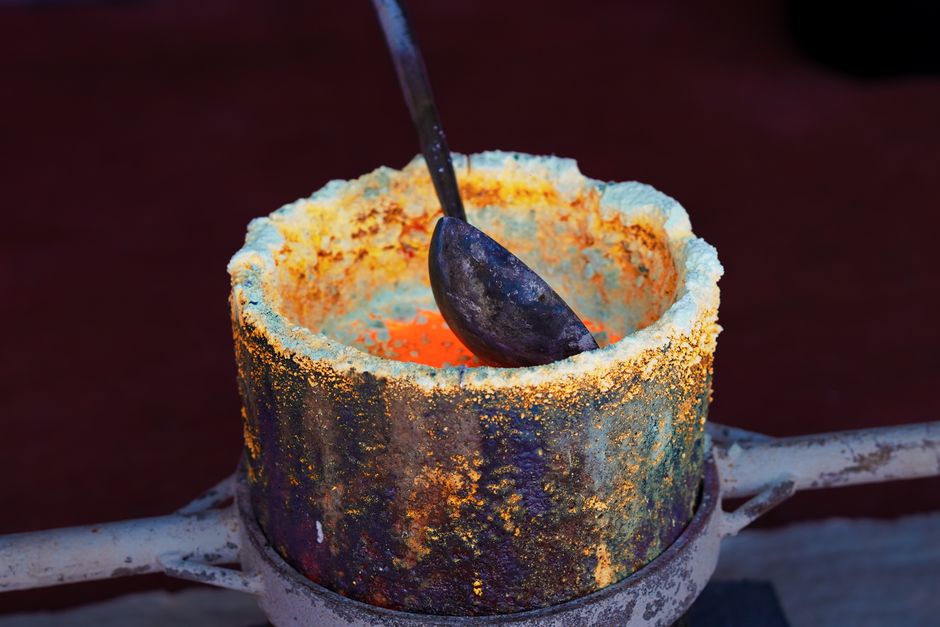
Slag is removed from a crucible by mechanical means, not chemical ones: while the melt is still molten, you skim the floating slag layer off the surface with a dry graphite or metal skimming tool before pouring. Once the crucible is cold, you chip or scrape the hardened slag and glass off the walls with a chisel or similar tool, taking care not to gouge the ceramic. The method differs by state because slag behaves completely differently hot and cold.
There is an important safety point before anything else. Molten slag and molten metal look similar, and slag can stay hot long after the metal surface appears dull. Treat every crucible as hot until it has fully cooled. This is a workshop process, not a kitchen or home task.
What Is Slag And Why Does It Form In A Crucible?
Slag is a glassy or stony byproduct that forms when impurities in a melt combine with flux, oxygen, or crucible material and separate out as a less dense layer on top of the metal.
When you melt metal, oxides and dirt don’t just disappear. They float. Many metal oxides are less dense than the molten metal itself, so they rise and collect at the surface. Add a flux and you deliberately encourage this — the flux binds impurities into a slag that sits on top where you can remove it. In foundry work, that separation is a feature, not a fault. Clean slag removal is part of making clean castings.
Slag also forms from the crucible itself. Clay-graphite and other ceramic crucibles slowly react with the melt and the air. Over time a glassy layer builds on the inside walls. That layer is not the same as surface slag, but it causes similar problems: it can flake into the melt and contaminate the pour.
The practical point is that slag is expected. You are not preventing it entirely. You are managing it and removing it at the right moment.
How To Remove Slag From A Crucible While The Metal Is Molten
Remove molten slag by skimming it off the surface before you pour, using a dry tool and a steady, deliberate stroke.
Timing matters. Skim too early and more slag forms after you finish. Skim right before the pour and you get the cleanest metal. Many foundry workers skim, then skim again just before pouring. That second pass is often the one that matters most.
Here is the process in order:
- Preheat the skimming tool. A cold tool hitting molten metal can cause spatter or a steam pop. Warm it first, away from the melt.
- Make sure the tool is dry. Any moisture on the tool turns to steam instantly and can throw metal. This is a genuine burn hazard, not a minor caution.
- Skim with a slow, controlled stroke. Push the slag to one side of the crucible and lift it out. Fast strokes splash.
- Tap the slag off into a dry, preheated slag pot or ingot mold. Never drop hot slag onto a wet floor or into water.
- Repeat just before the pour. A final skim gives the cleanest transfer.
Wear the right protection: a face shield, heat-resistant gloves, and clothing that covers arms and legs. Molten metal and slag spatter. This is standard foundry safety practice, and it exists because people get hurt when they skip it.
One clarification that surprises people new to this: you generally do not remove slag by adding something to dissolve it. Fluxes help slag form and flow, but the removal itself is physical. You lift it off. Chemical “slag dissolvers” are not a standard part of crucible practice.
How Do You Remove Slag From A Cold Crucible?
Cold slag is removed by mechanical chipping and scraping, done carefully so you don’t damage the crucible wall.
Let the crucible cool completely first. This is not optional. A crucible that looks cool on the outside can still hold significant heat inside, and thermal shock from a cold tool on a hot wall can crack it. Ceramic crucibles are especially vulnerable to sudden temperature change.
Once it is fully cold:
- Inspect the inside. Look for the glassy slag layer and any loose flakes.
- Chip with a chisel or similar tool. Work at the edges of the slag, not straight into the wall. Let the slag break away rather than forcing the tool through it.
- Scrape remaining glassy film. A stiff scraper removes thin layers that chipping misses.
- Avoid gouging the ceramic. Deep scratches in a crucible wall become weak points and places where metal can stick next time.
Some foundry workers use a light mechanical method such as gentle tapping or a soft mallet on the outside to crack loose slag. This can work, but it risks cracking the crucible if done too hard. Chipping from the inside is generally safer for the crucible.
Do not use water to cool a hot crucible to speed this up. Rapid cooling can crack ceramic crucibles and is a known cause of crucible failure. Let it cool in air.
Molten Vs Cold Slag Removal: What’s The Difference?
The two situations call for different tools, different timing, and different risks. Here is the comparison.
| Factor | Molten slag | Cold slag |
|---|---|---|
| When | Before pouring, while metal is liquid | After the crucible has fully cooled |
| Main tool | Skimming tool (graphite or metal) | Chisel, scraper, or similar |
| Main risk | Burns, spatter, steam pops | Cracking the crucible, gouging the wall |
| Method | Lift slag off the surface | Chip and scrape off the walls |
| Key precaution | Dry, preheated tools | Full cooling before touching |
The core difference is that hot slag is a floating layer you lift away, while cold slag is a bonded coating you break off. The tools follow from that.
How Do You Prevent Slag Buildup And Crucible Damage?
Good practice reduces how much slag you have to deal with and protects the crucible between uses.
Use the right flux for your metal and don’t overdo it. Excess flux creates more slag and can attack the crucible lining. Follow the flux manufacturer’s guidance for your specific metal rather than guessing.
Keep the melt covered when you can, and avoid stirring more than necessary. Every stir brings more oxygen into contact with the metal and creates more oxide. Skim at the right time rather than constantly.
Store crucibles dry. Moisture absorbed into a ceramic crucible is a real hazard — it turns to steam when heated and can cause spalling or cracking. Preheating gradually, rather than slamming a cold crucible into a hot furnace, reduces thermal shock.
Inspect crucibles between uses. Cracks, deep gouges, and heavy glazing are signs the crucible is nearing the end of its life. A damaged crucible can fail during a pour, which is dangerous. Replace rather than push a compromised crucible.
None of this eliminates slag. It keeps the amount manageable and keeps the crucible sound.
What Safety Precautions Matter Most?
The biggest risks in slag removal are burns from molten material and crucible failure, and both are largely preventable with basic precautions.
Moisture is the most underestimated hazard. Water on a tool, in a slag pot, or on the floor near a melt can flash to steam and throw molten material. Keep everything dry and preheat tools and containers that will touch hot metal.
Wear proper personal protective equipment every time. Face shield, heat-resistant gloves, and covered arms and legs are standard. Safety glasses alone are not enough around molten metal.
Work in a well-ventilated area. Fluxes and molten metal can release fumes. Foundry ventilation exists for a reason.
Never use water to cool a hot crucible or hot slag. Let everything cool in air. This protects both you and the crucible.
If you are new to foundry work, learn from someone experienced before working with molten metal. The processes here are standard, but the margin for error around a melt is small.
Frequently Asked Questions
Can you remove slag from a crucible with water?
No. Water on hot slag or a hot crucible can flash to steam and throw molten material, and rapid cooling can crack ceramic crucibles. Let the crucible cool in air and remove cold slag mechanically.
What tool is best for skimming slag off molten metal?
A dry, preheated skimming tool made of graphite or metal is standard. The tool must be free of moisture and warmed before it touches the melt to avoid spatter and steam pops.
How do you know when a crucible has cooled enough to clean?
Wait until the crucible is fully cool to the touch inside and out before chipping slag. A crucible that feels cool on the outside can still hold heat inside, so give it plenty of time in air.
Does removing slag damage the crucible?
It can if done carelessly. Chipping at an angle into the wall or gouging the ceramic creates weak points, so work at the edges of the slag and let it break away rather than forcing the tool.
