
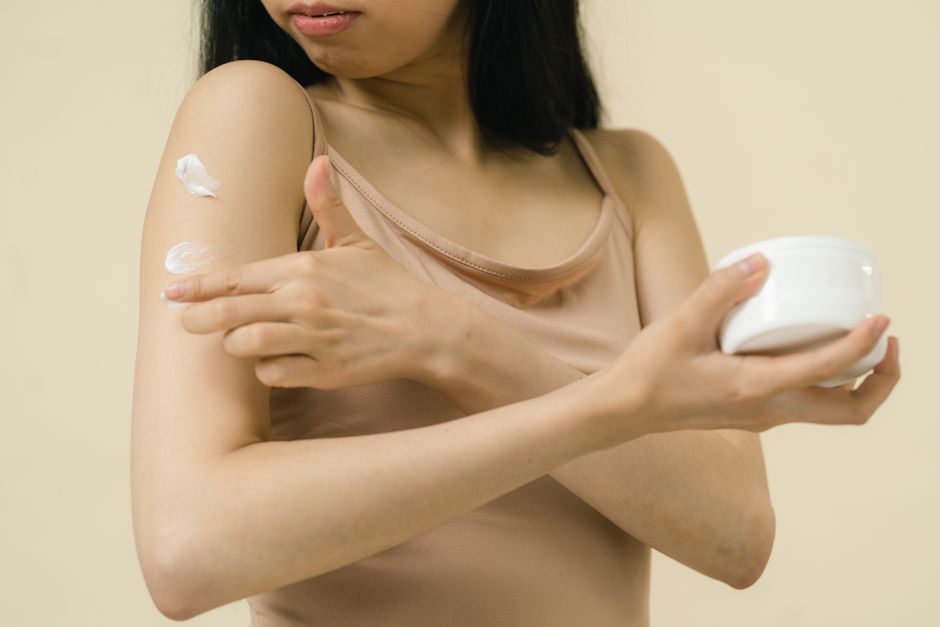
Self tanning lotion turns hands orange faster than any other part of the body. The fix is not scrubbing harder. It is breaking down the dye gently with oil, exfoliation, and time. Most fake tan stains on the palms and knuckles fade noticeably within three to five days if you stop adding more color and start removing it.
The reason hands are so prone to staining comes down to skin structure. Palms have a thick outer layer and far more dead cells than the rest of the body. Those cells grab onto the active ingredient in self tanners, a sugar-based compound called DHA (dihydroxyacetone), and hold it. The result is a dark, uneven orange that looks nothing like a natural tan.
Why Does Self Tanner Stain Hands So Badly?
DHA reacts with the amino acids in dead skin cells to create brown pigments called melanoidins. This is the same browning reaction you see when bread toasts or an apple slice turns brown in air.
Your palms and the sides of your fingers carry a much denser layer of dead cells than your arms or legs. More dead cells means more places for that reaction to happen. The skin there also has fewer oil glands, so it stays drier and absorbs product more readily.
There is a second factor people rarely consider. Most self tanners also contain a cosmetic dye that shows up instantly so you can see where you applied it. That dye alone can stain hands for a day or two even before the DHA reaction develops.
The full color from DHA usually appears four to eight hours after application. This delay is why many people wash their hands right away, think they are fine, and wake up the next morning with orange palms.
How To Remove Self Tanning Lotion From Hands Fast
Oil is the most effective first step. Many self tanning formulas are oil-based or contain ingredients that dissolve in oil, and the pigment sitting on the surface of your skin responds to the same principle.
Try these methods, starting with the gentlest and working up:
- Cooking oil or olive oil. Massage a generous amount into your hands for a full minute. Wipe with a warm, damp cloth. Repeat two or three times.
- Makeup remover or cleansing balm. These are designed to lift pigment and cosmetic dye. Work it in dry, then rinse.
- Baking soda paste. Mix baking soda with a little water and gently rub for 30 seconds. Do not press hard.
- Lemon juice. The acid helps loosen dead cells. Use it briefly and rinse well, because citrus can irritate skin and increase sun sensitivity.
- Exfoliating scrub. A sugar or salt scrub removes the top layer of stained cells. Keep the pressure light.
One round of any single method rarely removes everything. Combining oil first, then a gentle exfoliant, then a moisturizer tends to work better than scrubbing one way repeatedly.
Avoid harsh tools like pumice stones or stiff brushes. They can damage the skin barrier and leave hands raw, which does not speed up fading and can make the area look worse.
Does Toothpaste or Lemon Juice Actually Work?
Toothpaste is one of the most repeated home remedies for fake tan stains, and the evidence for it is thin. Some toothpastes contain mild abrasives and whitening agents that may lift a small amount of surface pigment. That is a mechanical effect, not a chemical one, and it is not specific to self tanner.
What toothpaste does reliably is dry out and irritate skin. Many formulas contain menthol, fluoride, and detergents that were never meant for prolonged skin contact. If you try it, use plain white paste, not gel, and rinse within a minute.
Lemon juice has a clearer rationale. Its acidity helps break the bonds holding dead cells together, so stained cells shed faster. The tradeoff is real. Citrus juices can cause a condition called phytophotodermatitis, where skin becomes unusually sensitive to sunlight and can develop a rash or dark streaks. Rinse it off completely and avoid sun exposure on your hands afterward.
Neither remedy is a guaranteed fix. Both are best treated as mild helpers, not solutions.





How Long Does It Take for Fake Tan to Fade From Hands?
Fake tan on the hands typically fades over five to ten days as your skin naturally renews itself. The exact timeline depends on how much product landed there, how dark the formula was, and how often you wash your hands.
Hands actually shed color faster than most body areas because they get washed constantly. Every wash removes a few more stained cells. This is good news, but it also means the fading is uneven, which can leave a patchy look for a few days.
What you should not do is apply more self tanner to “even things out.” Adding product to already-stained hands deepens the color and extends the problem. Wait it out and let the skin turn over.
If you need hands to look presentable sooner, a light exfoliation twice a day plus regular moisturizing is the most reliable approach. Moisturizing matters more than people expect, because hydrated skin sheds dead cells more efficiently than dry skin.
How Do You Prevent Orange Hands Next Time?
Prevention is far easier than removal, and it takes about thirty seconds.
The core technique is a barrier. Before you apply self tanner anywhere on your body, coat your palms, the sides of your fingers, your knuckles, and your wrists with a thick moisturizer or a thin layer of petroleum jelly. This blocks DHA from reaching the dead cells that stain.
Then follow these habits:
- Use a tanning mitt instead of bare hands whenever possible.
- Apply tanner to the back of your hands last, using only the leftover product on the mitt. The back of the hand tans naturally and needs very little.
- Wash hands immediately after application with soap and warm water, paying attention to the webbing between fingers.
- Wipe each finger individually with a damp cloth, including around the nails and cuticles.
- Wash again four to six hours later, once the color has started to develop.
Nails and cuticles are a common blind spot. Product collects under the nail edge and around the cuticle, where it can leave a rim of orange that is hard to reach later. A cotton swab dipped in makeup remover handles this area well.
What If the Stain Will Not Come Off?
Some staining resists every home method, especially if the product sat on your hands for many hours or you used a formula with a strong cosmetic dye. In that case, the honest answer is that time does most of the work.
You can support the process without damaging your skin:
- Moisturize several times a day.
- Exfoliate gently once daily, not more.
- Avoid hot water, which strips oils and can irritate already-stressed skin.
- Skip harsh chemicals, bleach, and nail polish remover on large areas of skin.
Nail polish remover contains acetone, which can dry and irritate skin. It is sometimes used on small spots like the cuticle line, but it is not a good choice for the whole hand.
If your skin becomes red, cracked, or painful, stop all removal attempts. That is a sign of barrier damage, not stubborn tan, and it needs rest and moisturizer rather than more scrubbing.
Frequently Asked Questions
How do I get self tanner off my hands quickly?
Start with oil or a cleansing balm, then follow with a gentle exfoliating scrub. Most stains fade noticeably within a few days, though a single session rarely removes everything.
Does toothpaste remove fake tan from hands?
Toothpaste may lift a small amount of surface pigment through mild abrasion, but there is little evidence it works well and it can irritate skin. Plain white paste is less drying than gel formulas if you try it.
Why did my hands turn orange from self tanner?
Palms and fingers have a thick layer of dead skin cells that react with DHA, the active ingredient in self tanners, to create brown pigment. More dead cells means more staining.
How long does fake tan last on hands?
It usually fades over five to ten days as skin cells renew, and frequent hand washing speeds this up. Avoid reapplying tanner to stained hands, since that deepens the color.
