
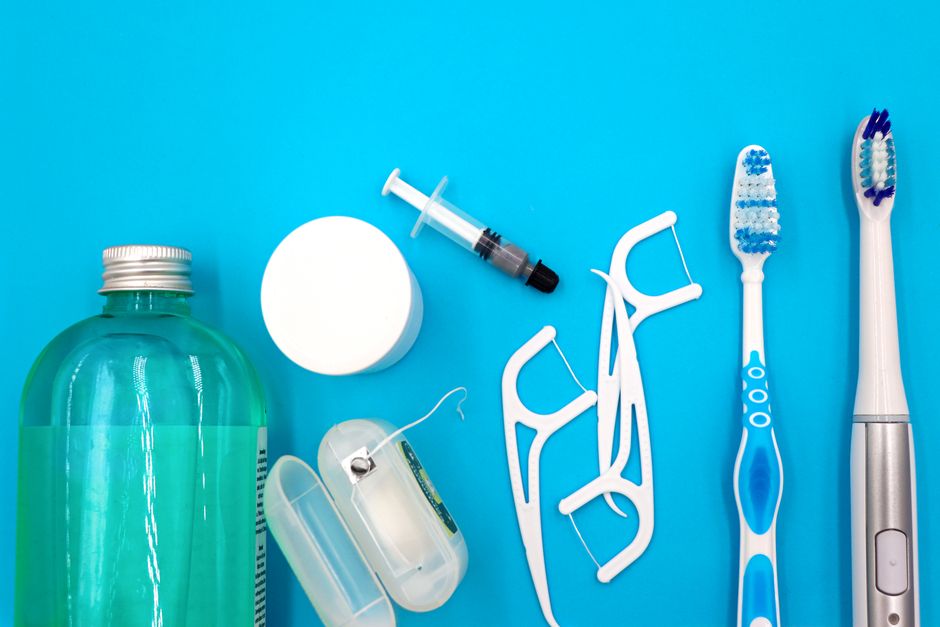
Plaque is a sticky film of bacteria that constantly forms on your teeth. If it stays there, it hardens into tartar, which you cannot remove at home. The only way to remove plaque is to physically disrupt it with brushing and flossing. Rinsing alone cannot remove the sticky film from your tooth surfaces, but it can help reduce bacteria and freshen breath when used alongside brushing and flossing.
What Is Plaque and Why Does It Matter?
Plaque forms when bacteria in your mouth mix with sugars and starches from food. These bacteria produce acids that attack tooth enamel. Over time, this acid attack leads to cavities and gum disease.
You cannot see plaque easily when it first forms. It is clear or pale yellow. You can feel it though — a fuzzy coating on your teeth, especially near the gumline. If you run your tongue across your teeth in the morning and they feel rough, that is plaque.
When plaque stays on teeth for more than 48 hours, it starts to mineralize. Saliva contains calcium and phosphate, which harden the plaque into tartar, also called calculus. Once tartar forms, brushing and flossing will not remove it. Only a dental professional with specialized instruments can scrape it off.
How To Remove Plaque From Teeth Brush Floss Rinse
Brushing is the first line of defense against plaque. The mechanical action of the bristles physically scrapes the biofilm off your teeth. This is why technique matters more than the toothpaste you use.
Use a soft-bristled toothbrush. Hold it at a 45-degree angle toward your gumline. Use short, gentle strokes — about the width of one tooth. Brush the outer surfaces, inner surfaces, and chewing surfaces of every tooth. Brush for two minutes, twice a day.
Electric toothbrushes have an advantage here. Studies have shown that powered brushes remove more plaque than manual brushes, particularly oscillating-rotating models. They also help you brush for the right amount of time because most have built-in timers.
Do not scrub hard. Aggressive brushing damages enamel and pushes gums back. The goal is to sweep plaque away, not to scour your teeth clean.
Why Flossing Is Non-Negotiable
Your toothbrush cannot reach between teeth. The spaces between teeth are narrow, and bristles cannot penetrate them. Plaque that builds up in these gaps causes cavities between teeth and gum disease.
Floss reaches these areas. Slide the floss gently between two teeth, curve it into a C-shape around one tooth, and move it up and down. Repeat on the adjacent tooth. Use a fresh section of floss for each gap.
Floss once a day. The timing does not matter much. Some dentists recommend flossing before brushing so fluoride from toothpaste can reach between teeth. Others say flossing after brushing is fine. The important thing is that you do it consistently.
If traditional floss is difficult for you, interdental brushes or water flossers are alternatives. Interdental brushes are small brushes that slide between teeth. Some research suggests they remove more plaque than string floss. Water flossers use a stream of water to remove food and plaque. They are helpful for people with braces, bridges, or implants, but evidence on whether they remove plaque as effectively as string floss is mixed.





What Rinsing Can and Cannot Do
Mouthwash does not remove plaque. Plaque is a sticky biofilm, and rinsing cannot physically detach it from your teeth. This is a common misunderstanding.
What mouthwash can do is reduce the number of bacteria in your mouth. Antimicrobial mouthwashes containing chlorhexidine, cetylpyridinium chloride, or essential oils have been shown to reduce plaque build-up when used as part of a complete routine. They do not remove existing plaque, but they slow down its formation.
Fluoride rinses help strengthen enamel and prevent cavities, but they do not remove plaque either. Choose a rinse based on what you need. If you are prone to cavities, a fluoride rinse makes sense. If you have gum inflammation, an antimicrobial rinse may help. If you are unsure, ask your dentist.
Rinsing with plain water after meals can help wash away loose food particles. It will not remove the sticky film that has already formed on your teeth.
Can Home Remedies Remove Plaque?
You will see many claims online about natural ways to remove plaque. Baking soda, coconut oil pulling, apple cider vinegar, and citrus peels are common suggestions. The evidence for these is weak.
Baking soda has mild abrasive properties, and some toothpaste formulations include it. Research shows baking soda toothpaste can remove surface stains, but it is not better than standard toothpaste at removing plaque.
Oil pulling — swishing coconut or sesame oil in your mouth for 15-20 minutes — has been practiced for centuries. Some studies suggest it reduces bacteria and plaque, but the evidence is limited and the studies are small. Oil pulling is not a substitute for brushing and flossing.
Apple cider vinegar is acidic. Rinsing with it can erode tooth enamel. Do not use it as a mouthwash. The same applies to lemon juice and other acidic substances.
No home remedy removes tartar. If you have hard deposits on your teeth, only a dental professional can remove them.
How Often Should You See a Dentist?
Most people need a professional cleaning every six months. This removes tartar and gives your dentist a chance to check for cavities, gum disease, and other issues.
Some people need more frequent cleanings. If you have gum disease, a history of cavities, or poor plaque control, your dentist may recommend visits every three to four months. If your oral hygiene is excellent, annual visits may be enough.
Do not skip cleanings because you brush and floss well. Even with perfect home care, you will miss some areas. Tartar that forms below the gumline cannot be seen or reached with a toothbrush.
Building a Routine That Works
Consistency beats intensity. Brushing twice a day and flossing once a day, every day, is more effective than a perfect cleaning performed once a week.
Keep your toothbrush accessible. If you brush after breakfast, keep it by the sink with your toothpaste. If you floss at night, keep floss next to your bed or in your bathroom. Reduce friction between intention and action.
Replace your toothbrush every three to four months, or sooner if the bristles are frayed. Worn bristles do not remove plaque effectively.
If you struggle with flossing, try a different tool. The best flossing method is the one you will actually use daily. A water flosser or interdental brush used consistently beats string floss used sporadically.
Frequently Asked Questions
Can mouthwash remove plaque from teeth?
No. Mouthwash cannot remove plaque that is already attached to your teeth. It can reduce bacteria and slow down new plaque formation, but it only works alongside brushing and flossing.
How long does it take for plaque to turn into tartar?
Plaque can begin to harden into tartar within 48 hours. Once it hardens, usually within a few days, you cannot remove it at home and need a professional dental cleaning.
Is an electric toothbrush better for removing plaque?
Yes. Studies have found that electric toothbrushes, especially oscillating-rotating models, remove more plaque than manual brushes. They are particularly helpful for people who tend to brush too quickly or too hard.
Does baking soda remove plaque from teeth?
Baking soda has mild abrasive properties and can help remove surface stains, but it is not more effective than standard toothpaste at removing plaque. It cannot remove tartar.
