
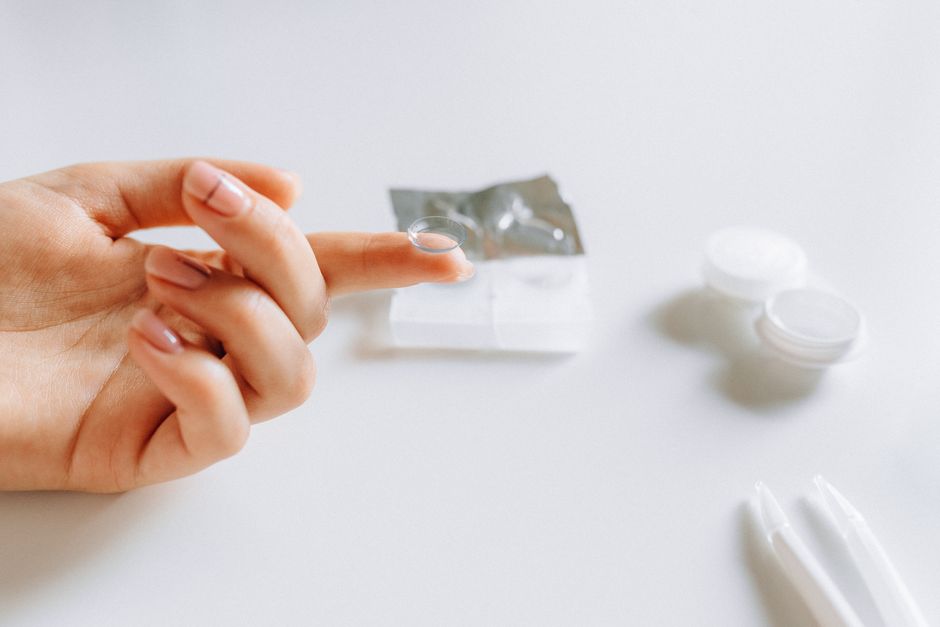
Removing hard contact lenses is a straightforward process once you know the technique. The key is to use the edge of your finger to break the suction seal between the lens and your eye, not to pinch the lens directly. This step-by-step guide covers the correct method, common mistakes, and what to do if a lens feels stuck.
What Are Hard Contact Lenses and Why Do They Feel Stuck?
Hard contact lenses, also known as rigid gas permeable (RGP) lenses, are smaller than soft lenses. They do not absorb water like soft lenses do. Instead, they sit on a thin layer of tears over your cornea.
Because they are rigid, they do not bend when you pinch them. The lens holds its shape while the tear film creates a suction effect. This suction is what keeps the lens centered on your eye. It is also why pulling or pinching the lens directly can be painful and ineffective.
When you remove the lens correctly, you break this suction by sliding the lens off the cornea. Once the seal is broken, the lens lifts away easily.
How To Remove Hard Contact Lenses Step By Step
Follow these steps in order. Do not rush. If you feel any resistance, stop and repeat the previous step.
Step 1: Wash your hands. Use soap and water. Rinse thoroughly. Dry your hands with a lint-free towel. Any oil or lotion on your fingers can make the lens slippery and harder to grip.
Step 2: Look in a mirror. Position yourself over a clean sink or a folded towel on the counter. If you drop the lens, it lands on something soft and clean rather than the sink drain.
Step 3: Use your non-dominant hand to hold your upper eyelid open. Place your index finger or middle finger on your upper eyelash line. Press gently against the bony ridge above your eye. This prevents blinking.
Step 4: Use your dominant hand to pull down your lower eyelid. Use your middle finger for this. Your index finger remains free to touch the lens.
Step 5: Place your index finger on the lower edge of the lens. Do not place it in the center. The edge is where the lens meets the white part of your eye.
Step 6: Slide the lens down or to the side. Move your finger from the lower edge of the lens toward the white part of your eye. This sliding motion breaks the suction seal. You will feel the lens release.
Step 7: Lift the lens away. Once the lens is on the white of your eye and the suction is broken, pinch it gently with your thumb and index finger. Lift it straight off your eye.
Common Mistakes When Removing Hard Lenses
Most people struggle with removal because they try to pinch the lens directly off the cornea. This does not work with rigid lenses. The suction is too strong, and the lens will not flex.
Another common mistake is pressing directly on the center of the lens. This pushes the lens harder against the eye. It does not break the seal. It can also cause discomfort or a scratchy sensation.
Blinking during removal is also a problem. If you blink while your finger is on the lens, the lens can shift off-center. This is why holding both eyelids open matters. The upper lid hold is especially important because the blink reflex is strongest there.
Some people try to remove the lens with wet or slippery fingers. This makes it difficult to grip the lens edge. Dry fingers provide better traction on the lens surface.





What To Do If a Hard Lens Feels Truly Stuck
A lens that feels stuck is almost always just a strong suction seal. The lens has not fused to your eye. It cannot move behind your eye. The anatomy of the eye prevents this.
If the lens will not slide with gentle pressure, do not force it. Apply a few drops of contact lens rewetting solution or preservative-free saline directly to the eye. Blink several times. Wait 30 seconds and try again.
If the lens still will not move, try the same sliding technique with a clean, dry fingertip. Sometimes a dry finger grips the lens edge better than a wet one.
If you have been wearing the lenses for longer than your eye care professional recommended, the eye may be dry. Extended wear can reduce tear production, making the lens stick more firmly. Rewetting drops address this directly.
Why You Should Never Use Tools or Fingernails
Some people attempt removal with tweezers, suction devices, or fingernails. None of these are safe. The cornea is one of the most sensitive tissues in the body. A scratch or abrasion can be painful and may lead to infection.
Fingernails can easily scratch the eye surface or the lens itself. A scratched lens can irritate the eye and may need to be replaced. Tools designed for soft lens removal are not appropriate for rigid lenses because the suction mechanics are different.
If you cannot remove the lens with your fingertip after several attempts, contact your eye care professional. This is not an emergency, but it does require professional help.
How To Care for Hard Lenses After Removal
Once the lens is out, clean it immediately. Rinse it with the recommended cleaning solution for rigid gas permeable lenses. Rub it gently between your fingers with a few drops of cleaner. Rinse again with saline or the recommended rinsing solution.
Store the lenses in a clean case with fresh conditioning or soaking solution. Never reuse old solution. The solution keeps the lens hydrated and disinfected for the next wear.
Replace the lens case every three months. Cases collect bacteria and protein deposits over time. A dirty case can contaminate a clean lens.
RGP lenses are more durable than soft lenses, but they can still scratch or chip. Inspect each lens before insertion. If you see a crack, chip, or deep scratch, do not wear it. A damaged lens can damage your cornea.
When To See an Eye Care Professional
See your eye care professional if you have persistent redness, pain, or a feeling that something is still in your eye after removal. These symptoms may indicate a corneal abrasion or an infection.
Schedule an appointment if you consistently struggle with removal. Your eye care professional can check the fit of the lens. A lens that does not fit well will be harder to remove and may cause discomfort during wear.
If you experience sudden vision changes, severe pain, or light sensitivity while wearing the lenses, remove them immediately. If symptoms continue after removal, seek care promptly. Do not wait to see if it improves.
Frequently Asked Questions
Why won’t my hard contact lens come out?
The suction seal between the lens and your eye is holding it in place. Slide the lens to the white of your eye with your fingertip to break the seal before lifting it.
Can a hard contact lens get stuck behind my eye?
No. The anatomy of the eye prevents a lens from moving behind the eyeball. The lens can shift under the eyelid, but it cannot go behind the eye.
Is it safe to use tweezers to remove a hard contact lens?
No. Tweezers can scratch your cornea or damage the lens. Use only your clean, dry fingertip to slide and lift the lens.
What should I do if my hard lens is stuck and painful?
Apply rewetting drops, blink several times, and try the sliding technique again. If pain continues, remove the lens if possible and contact your eye care professional.
