
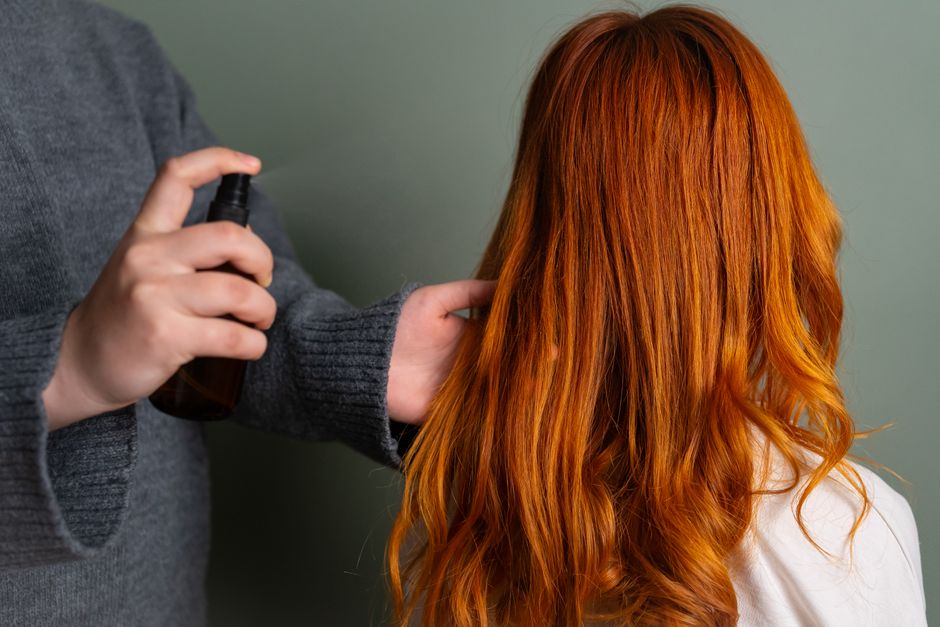
Getting hairspray out of color treated hair takes patience and the right cleanser. The buildup sits on top of the cuticle, and the cuticle is exactly what color treatments open and weaken. Harsh scrubbing or strong clarifying shampoos can strip the dye along with the residue. The safest approach is a gentle surfactant cleanser, warm water, and time. For heavy buildup, a single low-sulfate wash with a diluted clarifying agent followed by a deep conditioner is usually enough.
Why Hairspray Buildup Is Different on Color Treated Hair
Hairspray is not one ingredient. It is a mix of polymers, plasticizers, and solvents that form a film when the solvent evaporates. That film holds a style in place. It also sits on the surface of each strand.
Color treatment changes that surface. Permanent dye and bleach lift the outer cuticle layer so pigment can enter the cortex. The cuticle does not fully close afterward. It stays slightly raised and more porous than untreated hair.
That porosity does two things. It lets hairspray polymers lodge deeper than they would on virgin hair. It also lets water and cleansers pull color molecules out faster. So the same wash that clears buildup on untreated hair can fade color on treated hair.
This is the core tension. You need enough cleansing to lift the film without opening the cuticle so much that pigment escapes.
What Actually Dissolves Hairspray Residue
Hairspray polymers are designed to resist humidity and light wear. They are not designed to resist surfactants. That is the key fact.
Surfactants are molecules with one end that grabs oil and one end that grabs water. They surround the polymer film and lift it off the strand. This is why shampoo works at all.
Warm water helps. Heat softens the polymer film and makes it easier for surfactants to get underneath it. Water that is too hot is a problem for color treated hair, though, because it swells the cuticle and speeds dye loss.
Two categories of cleanser matter here:
- Gentle surfactants like sodium cocoyl isethionate or cocamidopropyl betaine lift light to moderate film without stripping color as aggressively.
- Clarifying surfactants like sodium laureth sulfate or sodium lauryl sulfate remove more residue but also remove more color and natural oil.
Alcohol-based hairspray residue can sometimes be loosened with a small amount of isopropyl alcohol, but this is risky on color treated hair. Alcohol strips both the polymer and the dye. Most people are better served by a surfactant wash.
How To Remove Hairspray Buildup From Color Treated Hair
Start with the gentlest method that could work and move up only if it does not. Most people over-wash. A single careful wash removes more residue than three rushed ones.
Here is a sequence that respects both goals — clearing film and keeping color:
- Brush first. Use a wide-tooth comb or a boar-bristle brush to loosen surface film and distribute natural oils down the strand. Do this before water touches the hair.
- Wet with lukewarm water. Warm enough to soften the film, not hot enough to swell the cuticle. Aim for comfortably warm, not steamy.
- Apply shampoo to the scalp and mid-lengths, not the ends. The ends have the most color and the least oil. Let the lather run down when you rinse.
- Let it sit for 30 to 60 seconds. Surfactants need contact time to surround the polymer. Rinsing immediately wastes the wash.
- Rinse thoroughly. Leftover shampoo residue attracts dirt and makes the next wash harder.
- Repeat only if needed. A second wash is reasonable for heavy buildup. A third rarely helps and costs color.
- Follow with a color-safe conditioner or mask. This closes the cuticle and replaces some of what the wash removed.
If gentle shampoo does not clear the film, a diluted clarifying shampoo used once every few weeks is a reasonable step. Dilute it with water in your hand before applying. Keep it off the ends. Follow immediately with a deep conditioner.
Does Dish Soap or Baking Soda Work?
Dish soap does remove hairspray film. It is also one of the fastest ways to fade color. Dish soaps are formulated to cut heavy grease and are far more aggressive than any shampoo.
Baking soda works as a mild abrasive and raises the pH of the wash. Higher pH opens the cuticle, which helps lift residue but also releases dye. Some people use it as a DIY clarifying treatment. For color treated hair, the trade-off is usually not worth it.
No clinical studies have compared dish soap, baking soda, and clarifying shampoo directly for color retention. What is known is that high-pH, high-surfactant washes remove more color. That is a predictable consequence of how dye sits in porous hair, not a matter of debate.
The honest position: these methods can work. They also carry a real cost to color. Use them only when gentler options have failed, and condition afterward.
How Often Should You Wash Color Treated Hair With Buildup?
There is no single correct frequency. It depends on how much product you use, how oily your scalp is, and how porous your hair became after coloring.
What is well established is that washing more often removes more color. Every wash opens the cuticle and lets some pigment escape. This is why color-treated hair fades faster than untreated hair, all else being equal.
A practical approach:
- Wash when the scalp feels oily or the film is visible, not on a fixed schedule.
- Use a gentle, sulfate-free or low-sulfate shampoo for routine washes.
- Save clarifying washes for when buildup is genuinely heavy.
- Use dry shampoo sparingly. It adds its own residue and can make buildup worse over time.
Some people find that washing less often and using a cleansing conditioner in between keeps both the film and the color in better shape. This is common practice, though it has not been tested in controlled trials against standard shampoo for color retention.
Preventing Buildup Without Stripping Color
Prevention is more effective than removal. The less film that forms, the less cleansing you need.
Use less hairspray. Most people apply far more than needed. A light mist held 10 to 12 inches from the hair sets a style without coating it.
Choose flexible-hold or brushable formulas over heavy aerosol lacquers. Flexible formulas use polymers that stay softer and rinse out more easily.
Let hairspray dry completely before touching or restyling. Wet film smears into the cuticle. Dry film sits on top and rinses away.
Wash out product the same day when possible. Overnight, film can harden and bind more tightly to porous strands.
Use a color-safe conditioner every wash. Conditioning smooths the cuticle, which makes future film easier to remove.
One detail worth knowing: buildup is often worst at the roots and along the hairline, where spray concentrates. These areas also tend to be the oiliest. Focus cleansing there and let the rest of the hair benefit from the runoff.
When Buildup Is Not the Real Problem
Sometimes hair feels coated and dull even after a good wash. That is not always hairspray.
Hard water leaves mineral deposits that feel similar to product buildup. So do some leave-in treatments, silicones, and dry shampoos. If a clarifying wash does not fix the texture, the residue may be mineral, not polymer.
Color treated hair can also feel rough because the cuticle is damaged, not because it is dirty. In that case, more washing makes it worse. Protein treatments and moisturizing masks address damage. Cleansers do not.
If hair breaks, sheds more than usual, or the scalp burns or itches after a wash, stop and see a dermatologist. Those symptoms are not typical buildup and should not be treated as such.
Frequently Asked Questions
Can I use clarifying shampoo on color treated hair?
Yes, but use it sparingly and dilute it first. Clarifying shampoo removes hairspray well, and it also removes color faster than gentle shampoo, so reserve it for heavy buildup.
Does dish soap remove hairspray buildup?
It does remove the film, but it strips color quickly because it is far harsher than shampoo. Use it only as a last resort and condition immediately afterward.
How do I get hairspray out without washing my hair?
You cannot fully remove hairspray without water and a surfactant. Brushing and a small amount of leave-in conditioner can loosen light surface film, but heavy buildup needs a wash.
Why does my color fade faster when I wash out hairspray?
Washing opens the cuticle, and porous, color treated hair releases pigment each time it gets wet. The more often and more aggressively you wash, the faster the color fades.
