
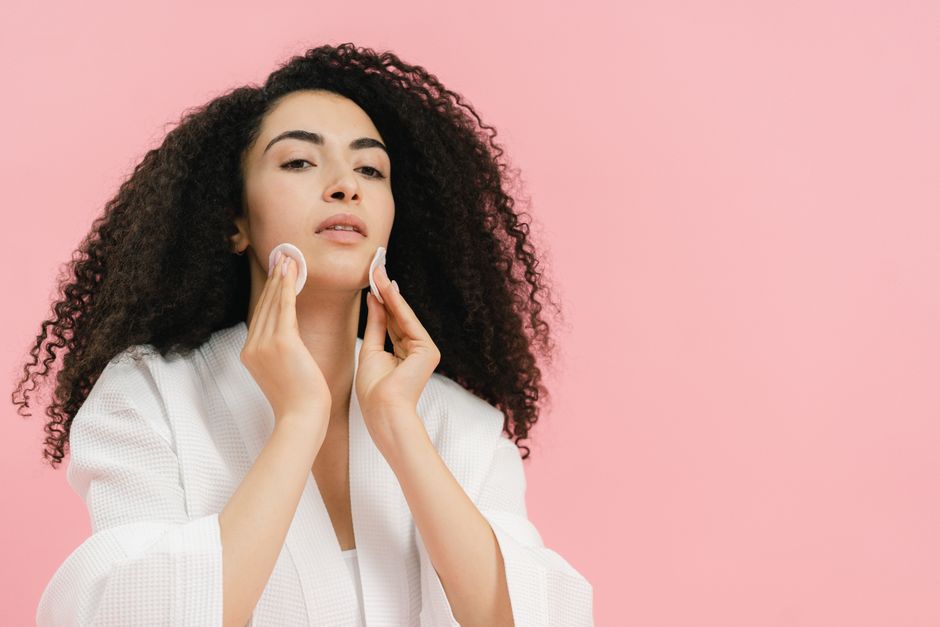
Hair dye on your face comes off with the same tools you already have in your kitchen and bathroom. A cotton ball soaked in micellar water, makeup remover, or a mild oil will lift most fresh dye from skin. For stubborn stains, a gentle exfoliant or a small amount of rubbing alcohol on a cotton swab does the job. The sooner you treat the stain, the easier it comes off.
Why Does Hair Dye Stain Skin So Easily?
Skin and hair are both made of keratin, a protein. That shared chemistry is exactly why dye grabs onto your forehead, ears, and hairline as easily as it grabs onto your strands.
Permanent hair dye works through a chemical reaction. It contains dye precursors and a developer, usually hydrogen peroxide, that opens the hair’s outer layer so color molecules can enter. During that process, some of those molecules also bind to the keratin in your skin’s surface. Once they bind, water alone will not remove them.
Two things make facial staining worse. First, the skin around your hairline is thinner and more porous than the skin on your arms or legs, so it absorbs color faster. Second, the longer dye sits on your skin, the more it binds. That is why a quick wipe right after application works far better than waiting until you rinse.
Darker shades and red-based dyes tend to leave the most visible stains. Red dye molecules are larger and bind more aggressively to keratin, which is why they are notoriously hard to remove from both skin and bathroom tiles.
How To Remove Hair Dye From Face Using Items You Already Have
Start with the gentlest option and work your way up. Most fresh stains come off with the first one or two methods. You only need the stronger options for dye that has fully set.
Everyday products that work
- Micellar water: Soak a cotton pad and press it against the stain for a few seconds, then wipe. The micelles lift dye and oil without stripping your skin.
- Oil-based makeup remover or cleansing balm: Massage in, let it sit for a minute, then wipe. Oil breaks down the dye’s grip on skin.
- Petroleum jelly: Apply a thick layer, wait several minutes, then wipe off with a warm damp cloth.
- Baby oil or olive oil: Same principle. Massage in, wait, wipe. Good for sensitive skin.
- Rubbing alcohol or hand sanitizer: Works well on set stains. Apply to a cotton ball, dab the spot, and avoid the eyes entirely.
- Nail polish remover (acetone): Effective but harsh. Use only on small, stubborn spots and rinse thoroughly afterward.
- Baking soda paste: Mix baking soda with a little water or gentle cleanser. Apply, rub lightly, and rinse.
- Toothpaste (not gel): The mild abrasive in white paste can lift surface stains. Rub gently and rinse.
- Exfoliating scrub: A gentle facial scrub removes the top layer of stained skin cells.
How to apply them correctly
Always test on a small area first, especially if you have sensitive skin. Use a cotton ball or pad rather than your fingers so you are not spreading dye to new areas. Work from the outside of the stain inward to keep it from creeping.
Do not scrub hard. Aggressive rubbing irritates skin and can make redness worse, which makes the stain look darker. Patience and a few repeat passes beat hard scrubbing every time.
Keep all of these products away from your eyes. If dye or a remover gets in your eye, rinse with lukewarm water for several minutes. If irritation continues, seek medical care.
What Works Best on Set or Dried Hair Dye Stains?
Once dye has been on your skin for hours, it has bonded more deeply and simple wiping will not cut it. The strategy shifts to breaking that bond and gently removing stained surface cells.
Rubbing alcohol is the most reliable single option for set stains. Soak a cotton ball, hold it on the spot for 10 to 15 seconds, then wipe. Repeat as needed. It dries out skin, so follow with moisturizer.
For very stubborn stains, some people combine a gentle exfoliant with an oil-based cleanser. The oil loosens the dye while the exfoliant lifts dead, stained skin cells. This is more effective than either method alone.
There is one important thing to know about set stains: some of the color is now inside the skin, not just on top of it. No topical product can remove dye that has penetrated living skin cells. In those cases, you simply have to wait.





How Long Does Hair Dye Stain Last on Skin?
Most surface stains fade within one to three days with normal washing and skin turnover. Stains that have soaked deeper can take up to a week or longer.
Skin constantly sheds its outer layer. As those stained cells slough off, the color fades on its own. This is why even stains you cannot remove with products will eventually disappear without any intervention.
You can speed up natural fading by gently exfoliating once a day and moisturizing regularly. Moisturizing matters more than people expect. Dry, flaky skin holds onto dye longer because dead cells are not shedding efficiently.
Do not pick at or peel the stained area. That damages the skin barrier and can lead to irritation or infection, which is far worse than a temporary stain.
How Do You Prevent Hair Dye From Getting on Your Face?
Prevention is genuinely easier than removal, and a few simple steps before you start dyeing make a real difference.
- Apply a thin layer of petroleum jelly or a thick moisturizer along your hairline, ears, and neck before you start. This creates a barrier the dye cannot easily cross.
- Wear gloves so you do not transfer dye from your hands to your face.
- Use a dye brush to apply color precisely rather than your fingers.
- Wipe up any drips immediately with a damp cloth. Fresh dye comes off in seconds.
- Keep cotton pads and micellar water within reach during application so you can catch mistakes right away.
- Consider a dye formula designed to be less runny if you regularly struggle with drips.
If you are dyeing your own hair at home for the first time, do a patch test on a small area of skin 48 hours before, as most dye manufacturers recommend. This checks for allergic reactions, which are separate from staining and can be serious.
When Should You See a Doctor About a Hair Dye Reaction?
Staining is cosmetic and harmless. An allergic reaction is a different situation and needs attention.
Contact dermatitis from hair dye can cause redness, swelling, itching, blistering, or oozing along the hairline, ears, and eyelids. These symptoms usually appear within 48 hours of application but can show up later. If you notice swelling around your eyes, lips, or face, or have trouble breathing, seek emergency care immediately.
Mild irritation can often be managed by washing the area thoroughly, applying a cool compress, and using an over-the-counter hydrocortisone cream. If symptoms are spreading, painful, or not improving after a couple of days, see a doctor. Do not apply more dye over irritated skin.
One clarification worth making: a stain and a reaction are not the same thing. A stain is dye sitting on or in the skin. A reaction is your immune system responding to a chemical. If your skin is red, itchy, or swollen, treat it as a reaction, not a stain, and stop using the product.
Frequently Asked Questions
Does toothpaste really remove hair dye from skin?
Yes, plain white toothpaste can lift surface stains because of its mild abrasive texture. Use the paste, not the gel, and rub gently before rinsing. It works best on fresh stains, not set ones.
Can I use nail polish remover on my face?
Acetone nail polish remover can remove stubborn dye, but it is harsh on facial skin and should only be used on small spots. Rinse thoroughly and moisturize afterward. Keep it away from your eyes.
How long does hair dye stay on your skin?
Most stains fade within one to three days as your skin sheds its outer layer. Deeper stains can last up to a week or more. Gentle daily exfoliation and moisturizing can speed this up.
Is it safe to dye your hair if you have a rash from a previous dye?
No. A rash after dyeing suggests a possible allergic reaction, and re-exposure can trigger a stronger response. See a doctor before using any hair dye again, and ask about alternatives.
