
Those small dark dots across your nose are usually not dirt, and scrubbing harder will not make them go away. Most of the time they are either open pores filled with oxidized oil and dead skin (blackheads) or tiny fine hairs (sebaceous filaments). Telling them apart matters, because each has a different fix. The good news: both respond to consistent, evidence-based skin care — and neither requires harsh scrubbing or “pore vacuums.”
What Are the Black Dots on My Nose?
Most black dots on the nose are blackheads, which doctors call open comedones. A pore becomes blocked with a mix of sebum (skin oil) and dead skin cells. When that plug reaches the surface and meets air, it darkens. That color change is oxidation, not trapped dirt.
The second common culprit is the sebaceous filament. These are thin, normal strands of oil and dead cells that line the pore. They are present on almost every nose. They can look dark or grayish and are often mistaken for blackheads.
There are other possibilities, including enlarged pores that cast small shadows, and in some people, a condition called trichostasis spinulosa, where tiny hairs sit in the pores. The distinction matters because treatments differ. A dermatologist can confirm what you are looking at with a simple visual exam.
Blackheads vs. Sebaceous Filaments: What’s the Difference?
Blackheads are a form of mild acne. Sebaceous filaments are a normal skin feature, not a disorder. This is the single most useful thing to understand, because it changes what “removing” them actually means.
A true blackhead is a discrete, raised or flat dark plug in a widened pore. It tends to be darker and more distinct. Sebaceous filaments are more uniform, lighter gray-brown, and appear in a fairly even pattern across the nose. Squeezing a filament often produces a thin, worm-like thread of oil. Squeezing a blackhead produces a firmer plug.
Here is the part most people are not told: sebaceous filaments refill. The pore is lined with oil glands that keep producing sebum. You can reduce their appearance, but you cannot permanently remove a structure that is part of normal skin. True blackheads, by contrast, can be cleared and kept clear with the right routine.
This is why some products promise “permanent” results and disappoint. They are often treating filaments, which return by design.
How To Remove Black Dots On Your Nose For Good
No method removes blackheads forever in a single session. “For good” means keeping pores clear with a routine that prevents new plugs from forming. The approach with the strongest evidence is a consistent daily and weekly skin care plan built on a few proven ingredients.
Salicylic acid is the workhorse. It is a beta hydroxy acid that is oil-soluble, so it can get into the pore lining and help break down the plug. Over-the-counter cleansers and leave-on treatments are widely available. Some people see improvement within a few weeks; others need longer. Research generally supports salicylic acid for mild acne, though results vary by person and formulation.
Retinoids are another well-established option. Topical retinoids help normalize how skin cells shed, which reduces the chance of pores getting blocked. They are used for acne and are supported by substantial clinical evidence. They can cause dryness and irritation at first, so they are usually started slowly. Adapalene is available over the counter in the US; stronger retinoids require a prescription.
A practical routine looks like this:
- Cleanse gently twice a day with a mild cleanser. Avoid harsh scrubs.
- Use a salicylic acid product a few times a week, building up as tolerated.
- Add a retinoid at night if tolerated, starting two to three times weekly.
- Moisturize daily. Dry skin can trigger more oil production.
- Use a non-comedogenic sunscreen every morning.
Timelines matter. Most people need several weeks of consistent use before seeing clear change. Nothing works overnight, and any product claiming instant permanent removal is overselling.
Do Pore Strips and Extractions Actually Work?
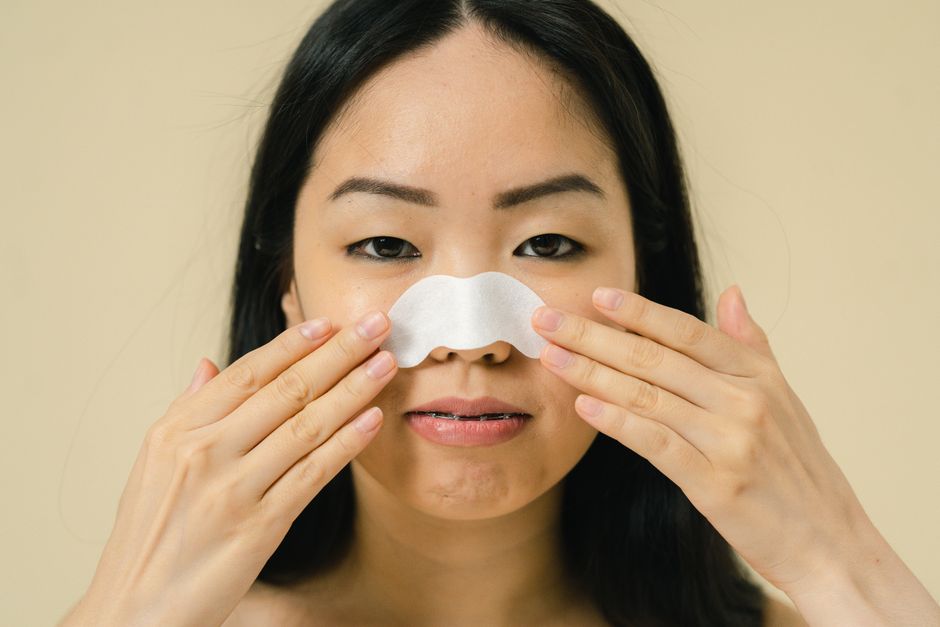
Pore strips do remove something — but usually not what you think. They pull out the top layer of sebaceous filaments and some surface oil. The effect is temporary, often a day or two, and the filaments refill. Pore strips can also irritate skin and, used repeatedly, may damage the skin barrier.
Manual extraction by a dermatologist or trained esthetician can remove a genuine blackhead. This is a legitimate clinical option for stubborn spots. Doing it yourself at home with fingernails or tools raises the risk of scarring, infection, and broken capillaries. Those small broken vessels are permanent.
Pore vacuum devices are popular online. There is no good clinical evidence that they clear blackheads better than standard care, and suction can cause bruising and broken capillaries. The evidence here is limited, and the risk is real.
What About Home Remedies and DIY Treatments?
Some home remedies are harmless. Others cause damage. It helps to separate the two.
Gentle chemical exfoliation with salicylic acid is well supported. Clay masks can temporarily absorb surface oil and may make pores look smaller for a short time, though they do not remove blackheads. These are reasonable adjuncts.
Harsh physical scrubs, baking soda pastes, lemon juice, and glue-based “peel-off” remedies are not recommended. Baking soda is alkaline and can disrupt the skin’s acid barrier. Lemon juice is acidic and irritating and can cause a rash when combined with sunlight. Glue peel-offs can tear the skin. No clinical evidence supports any of these for clearing blackheads.
Steaming the face may soften plugs and make extraction easier, but on its own it does not remove blackheads. It is sometimes used before a professional extraction.
When Should You See a Dermatologist?
See a dermatologist if your blackheads are widespread, painful, or leaving marks, or if over-the-counter products have not helped after a few months of consistent use. Persistent or inflamed acne benefits from professional care, and prescription options exist.
Also seek care if you notice a spot that is changing, bleeding, or not healing. Most black dots are harmless, but a changing lesion warrants a professional look. This is a general safety point, not a diagnosis.
A dermatologist can also tell you whether you are dealing with blackheads or normal sebaceous filaments. That distinction alone can save you money and frustration.
How Do You Keep Pores Clear Long Term?
Consistency beats intensity. The people who keep their noses clear are usually the ones who follow a simple routine every day, not the ones who do aggressive treatments once and quit.
Keep using a salicylic acid or retinoid product regularly, even after your skin clears. This is maintenance, not a cure. Avoid picking and squeezing, which enlarges pores over time and can cause scarring. Manage oil with gentle cleansing rather than stripping. And be patient — skin turnover takes weeks, so improvements build gradually.
One more point worth knowing: pores do not open and close like doors. That common claim is a myth. Pores have no muscle to contract. What changes is how much they are stretched by plugs and oil. Keep the plugs from forming, and pores look smaller — but the pore itself does not shrink.
Frequently Asked Questions
Are black dots on the nose blackheads or something else?
They are often blackheads, but many people actually have sebaceous filaments, which are normal oil-filled pores. A dermatologist can tell the difference with a quick exam.
Can you remove blackheads permanently?
True blackheads can be cleared and kept clear with a consistent routine, but sebaceous filaments refill by design and cannot be permanently removed. “For good” means prevention, not one-time removal.
Does salicylic acid really get rid of blackheads?
Salicylic acid is oil-soluble and helps break down pore plugs, and it is a well-established option for mild acne. Results vary and usually take several weeks of consistent use.
Do pore strips work on blackheads?
Pore strips mostly pull out surface oil and sebaceous filaments, and the effect lasts only a day or two. They are not a lasting fix and can irritate skin with repeated use.
