
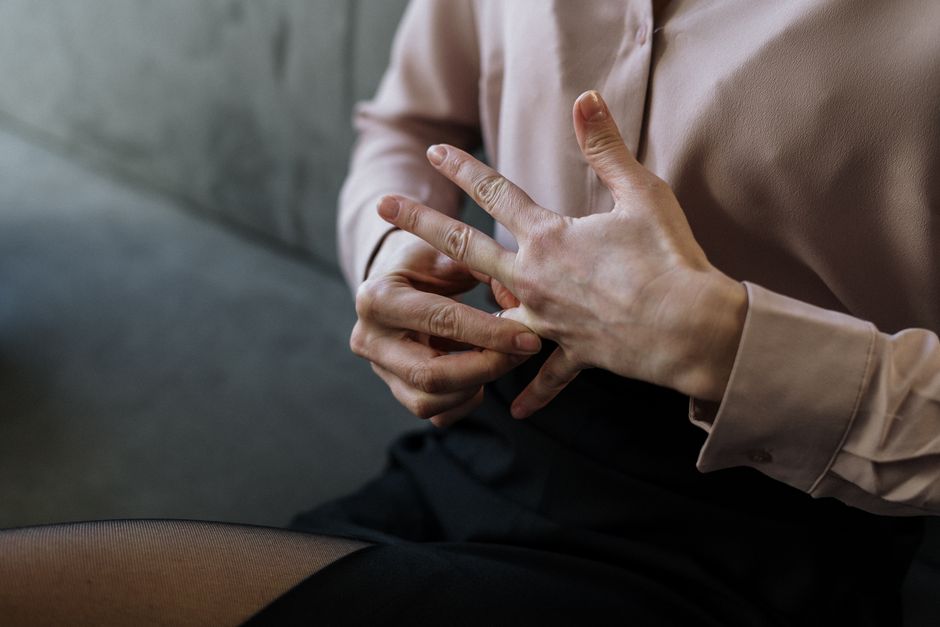
A stuck wedding ring usually comes off without cutting. The most reliable first step is to stop pulling and let the finger settle. Fingers swell for many reasons — heat, exercise, salty food, pregnancy, minor injury — and swelling often drops once you cool the hand and raise it above heart level for a few minutes. From there, three approaches handle most cases: lubrication, the string method, and reducing the swelling itself. Cutting is a last resort, and a jeweler or emergency department can usually do it safely if nothing else works.
Why Does a Wedding Ring Get Stuck?
A ring gets stuck because the finger has swollen around it, not because the ring has shrunk. The bone of the finger does not change size over a day. The soft tissue around it does.
Common causes of that swelling include heat, physical activity, long periods standing, salty meals, alcohol, pregnancy, and minor knocks or insect bites. Some medications can cause fluid retention. In many people, fingers are naturally a little larger in the evening than in the morning.
There is a mechanical reason too. The knuckle is wider than the base of the finger. A ring that slides on easily over the knuckle can still catch on the way back off if the tissue just below the knuckle is puffy. Pulling makes this worse — the ring drags skin ahead of it and creates a bulge that jams against the band.
This is why the first rule is counterintuitive. Stop pulling. Give the tissue a chance to settle before you try anything else.
What Should You Try First Before Anything Else?
Cool the hand and raise it. That is the first move, and it works often enough that it is worth trying before lubrication or string.
Hold the hand under cool — not icy — running water for several minutes. Then keep the hand raised above the level of your heart for another few minutes. Gravity helps move fluid out of the finger. Cold narrows blood vessels in the skin, which can reduce puffiness.
Do not use ice directly on the finger. Prolonged direct cold can injure skin, and a numb finger is harder to assess. Cool water is enough.
While the hand is cooling, relax it. Clenching the fist or tensing the hand increases pressure in the finger and makes swelling worse. Let the hand hang loose, then raise it.
If the finger is red, hot, very painful, or you see a cut or blister under the ring, stop and seek medical care. A ring that is trapping swelling against damaged skin is a different problem from a ring that is simply snug.
How Do You Use Lubrication to Slide a Ring Off?
Lubrication reduces friction between the ring and the skin. It works best when the swelling is mild and the ring can still rotate on the finger.
Good options include:
- Dish soap mixed with a little water
- Hand lotion or petroleum jelly
- Cooking oil
- Water-based personal lubricant
Apply generously around the ring and work it under the band by rotating the ring gently. Then use a slow twisting motion — not a straight pull. Twist the ring back and forth as you ease it toward the knuckle.
Keep the finger below the level of the hand while you twist. Gravity pulls fluid toward the fingertip, and you want the opposite. Some people find it helps to press firmly on the finger just below the ring to push swelling back toward the hand before twisting.
If the ring will not budge after a few minutes of gentle twisting, do not force it. Move on to the string method.





How Does the String Method Work to Remove a Stuck Ring?
The string method — sometimes called the thread technique — works by compressing the swollen tissue so the ring can pass over it. It is widely used in emergency departments and by jewelers, and it succeeds in many cases where lubrication alone fails.
Here is the standard approach:
- Take a length of smooth, thin string or dental floss, about 18 to 24 inches.
- Slide one end under the ring, working from the palm side toward the fingertip.
- Wrap the string tightly around the finger from the ring toward the fingertip, in overlapping loops, like a spiral bandage. Each loop should sit close to the last.
- Tuck the loose end under the last loop near the fingertip so it stays put.
- Apply lubrication to the wrapped finger.
- Take the other end of the string — the one still near the base of the finger — and unwind it slowly, pulling the ring along with it toward the fingertip.
The wrapping squeezes fluid out of the tissue ahead of the ring. As you unwind, the ring slides over the compressed skin. Go slowly. If the finger turns blue, pale, or numb, stop and unwrap.
The string method is not comfortable. It can be genuinely painful, and it works best when someone else does the wrapping so you can keep the hand relaxed. If you have poor circulation, diabetes with nerve damage, or a skin condition on the finger, let a clinician do it rather than attempting it yourself.
When Should You Stop Trying and Get Help?
Stop and get help if the finger beyond the ring is numb, blue, cold, or losing sensation. That means circulation is being compromised, and it needs to be addressed promptly.
Other signs that mean stop:
- The finger is badly swollen and hard to the touch
- The skin under or around the ring is cut, blistered, or infected
- You have tried lubrication and string without success
- The ring is embedded in the skin
A jeweler can often remove a ring with specialized tools, and many will do it at no charge. An emergency department or urgent care clinic can cut a ring off with a ring cutter, which is a small tool designed for exactly this purpose. Cutting a ring is not a failure — it protects the finger, and a jeweler can often repair or resize the ring afterward.
If the finger is injured, infected, or you have a condition that affects circulation, do not spend time on home methods. Go straight to care.
How Can You Prevent a Ring From Getting Stuck Again?
The simplest prevention is to know when your fingers swell and take the ring off before that happens. Many people find their rings are tight after salty meals, during hot weather, after exercise, or in the evening.
Other steps that help:
- Remove rings before exercise, swimming in cold water, or activities that might cause knocks.
- During pregnancy, expect finger size to change and consider wearing the ring on a chain until swelling settles.
- Have a jeweler check the ring’s fit and consider a slightly larger size or a comfort-fit band if it is consistently snug.
- Do not wear a ring on a finger that is already swollen or injured.
If a ring has become tight over months rather than hours, that is worth mentioning to a clinician. Persistent finger swelling can have causes that deserve a look, including fluid retention, joint conditions, or medication effects.
What About Cutting the Ring Off Yourself?
Do not cut a ring off yourself. Home cutting tools are not designed for the job, and the risk of cutting the finger is real.
A ring cutter used by a jeweler or clinician has a small guard that slips between the ring and the skin. That guard is the whole point — it protects the finger while the blade cuts the metal. Without it, you are cutting blind against skin.
If you cannot get to a jeweler or clinic and the finger is at risk, call for emergency help. Do not improvise with pliers, wire cutters, or a saw.
Frequently Asked Questions
Can I remove a stuck wedding ring without cutting it?
Yes, in most cases. Cooling and raising the hand, lubrication, and the string method resolve many stuck rings without cutting. If those fail or the finger is numb or blue, get help rather than forcing it.
Does the string method for removing a ring really work?
It often does, and it is commonly used in emergency departments. It works by compressing swelling ahead of the ring so the band can slide over the tissue, but it can be painful and should be done by someone else if possible.
What should I do if my finger turns blue under the ring?
Stop trying and get medical help promptly. A blue, cold, or numb finger means circulation is being compromised, and a clinician can remove the ring safely.
Will a jeweler remove a stuck ring for free?
Many jewelers will remove a stuck ring at no charge, though policies vary. Call ahead and ask before you go.
