
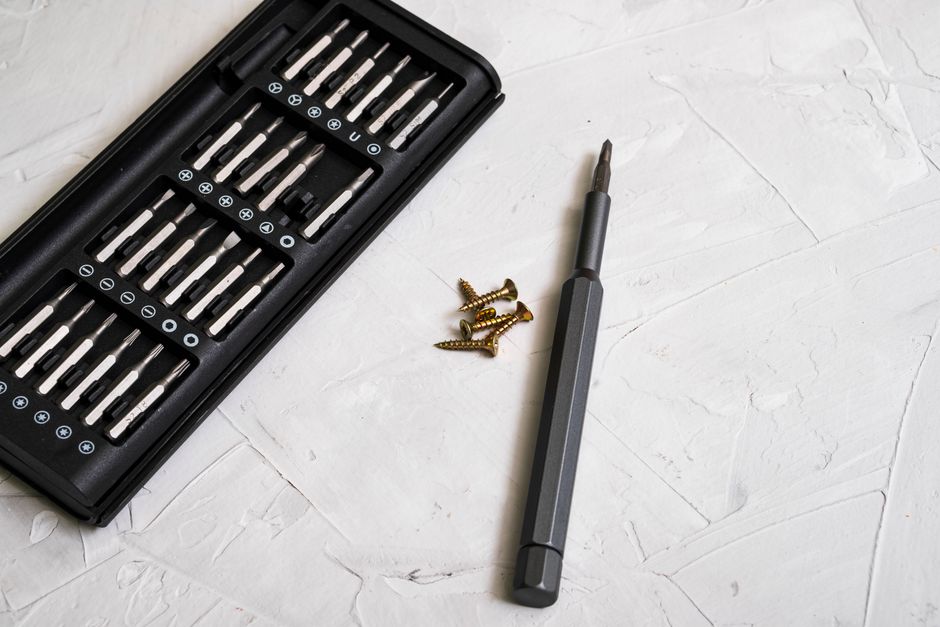
A stripped screw has a head so damaged that a screwdriver can no longer grip it. You do not need a drill to remove one. Eight methods work with common household items: a rubber band for grip, a wider flathead screwdriver, a rotary tool to cut a new slot, locking pliers on the head, a screw extractor bit, a hacksaw slot, a small chisel to turn the edge, and careful heat or lubrication to break the screw loose. The method you pick depends on how much of the head is left and how tight the screw is stuck.
Why Do Screws Strip In The First Place?
A screw strips when the turning force from the driver exceeds what the head can hold. The driver spins, the metal deforms, and the recess that once fit snugly becomes a smooth bowl. Nothing left for the tool to grab.
Four things cause this most often:
- Wrong driver size. A Phillips driver that is too small or too pointed sits high in the cross and chews the corners.
- Cam-out. Phillips heads are designed to slip out under too much torque. That design protects the screw from over-tightening, but it also damages the head if you keep pushing.
- Soft metal. Low-grade steel and many furniture screws deform faster than the driver does.
- Downward pressure without alignment. If the driver is not straight, the force lands on one edge of the recess instead of the whole thing.
One clarification that matters: Phillips and Pozidriv look almost identical but are not the same. A Pozidriv driver in a Phillips screw (or the reverse) is a common reason heads strip. Pozidriv screws usually have small lines radiating between the cross arms. Check before you reach for a driver.
What Should You Try First On A Stripped Screw?
Start with the rubber band method. It is the least damaging and takes seconds.
Place a wide rubber band flat over the screw head. Press your screwdriver through it into the recess and turn slowly while pushing down hard. The rubber fills the gap the stripped metal left and adds friction. It works best when the head is only mildly damaged and the screw is not seized.
If that fails, move to a screwdriver with a wider, flatter tip. A flathead that spans the full width of the damaged recess can sometimes catch edges that a Phillips cannot. Push down firmly and turn slowly. Rushing is what stripped it in the first place.
Neither method damages the screw further, so both are safe first attempts on furniture, electronics, and anything you cannot afford to scratch.
How To Remove A Stripped Screw Without A Drill 8 Ways
Work through these from least to most destructive. Stop as soon as one works.
1. Rubber band for extra grip
Cover the head with a wide rubber band, press the driver through it, and turn with steady downward force. Best for lightly stripped heads and screws that are not rusted in place.
2. A wider flathead screwdriver
Match the blade width to the full width of the damaged recess. The goal is to catch the outer edges of the head, not the worn center. Slow, firm pressure works better than speed.
3. A rotary tool to cut a new slot
If you have a rotary tool with a cutting wheel, cut a straight slot across the damaged head. Then remove it with a flathead screwdriver. This creates fresh edges for the driver to bite. It damages the screw, so only use it on screws you plan to replace.
4. Locking pliers on the head
If the head sits above the surface, grab it from the side with locking pliers and turn. This works well on screws with a raised head. It will not work on a countersunk screw that sits flush or below the surface.
5. A screw extractor bit
Screw extractors are made for exactly this problem. Most sets include a drill bit to make a small pilot hole and a reverse-threaded extractor that bites into the damaged head as you turn it counterclockwise. You can turn the extractor by hand with a tap wrench or a bit holder. A drill makes it easier, but it is not required for a small screw.
6. A hacksaw slot
No rotary tool? A thin hacksaw blade can cut a slot across the head by hand. It takes longer and needs a steady hand, but it achieves the same result as method three. Use a blade fine enough to cut a narrow slot.
7. A small chisel to turn the edge
Place a small chisel or flat punch against the outer edge of the head at an angle. Tap it with a hammer to rotate the screw counterclockwise. This is a traditional method for larger screws. It works on raised heads and requires care to avoid slipping into the surrounding material.
8. Heat or penetrating oil to break it loose
If the screw is seized by rust or paint, no grip method will work until you free it. A penetrating oil applied and left to soak can loosen rust over time. Gentle heat from a soldering iron or heat gun on the screw head can help break a paint or adhesive bond. Use heat carefully and never near flammable materials.





Which Method Works Best For A Screw That Is Stuck, Not Just Stripped?
A stripped head and a seized screw are two different problems. Grip methods fix the first. They do nothing for the second.
If the screw will not budge even with good grip, the threads are stuck. Rust, paint, thread-locker adhesive, or cross-threading are the usual causes. In that case, apply penetrating oil and give it time to work into the threads. Then try the rubber band or flathead method again with firm downward pressure.
Heat helps when paint or adhesive is the culprit. A soldering iron held against the screw head for a short time can soften the bond without damaging most surrounding materials. Keep heat away from plastics and anything flammable.
One caution: do not assume more force will solve a seized screw. Excess force is what strips heads and can snap the screw entirely, which creates a harder problem.
What If The Screw Head Is Completely Gone?
When there is no recess left at all, grip methods are off the table. You are down to cutting a new slot, using an extractor, or turning the edge with a chisel.
A screw extractor is the most reliable option at this stage. The pilot hole gives the extractor something to bite, and the reverse thread pulls the screw out as you turn. For very small screws, this can be delicate. For larger ones, it is the standard approach.
If the screw is in wood and the head is gone, another option is to drill out the screw entirely and fill the hole. That requires a drill, so it falls outside the no-drill methods here. It is worth knowing as a last resort.
How Do You Avoid Stripping A Screw Next Time?
Most stripped screws are preventable. The fix is technique, not tools.
- Match the driver to the screw type and size exactly. Phillips, Pozidriv, and flathead are not interchangeable.
- Press down firmly before you turn. Downward pressure keeps the driver seated in the recess.
- Turn slowly. Speed causes cam-out and chews the head.
- Stop if the driver slips. Slipping is the first sign the head is starting to strip.
- Use the right screw for the material. Soft screws in hard material strip faster.
The single biggest cause is a driver that is slightly too small. It feels like it fits, but it sits high in the recess and damages the corners. If a driver wobbles at all, try the next size up.
Frequently Asked Questions
Can I remove a stripped screw without a drill?
Yes. A rubber band, a wider flathead screwdriver, locking pliers, a screw extractor turned by hand, or a slot cut with a rotary tool or hacksaw can all remove a stripped screw without a drill. The best method depends on how much of the head is damaged and whether the screw is seized.
What is the easiest way to remove a stripped screw?
The rubber band method is usually the easiest first attempt. Place a wide rubber band over the head, press your screwdriver through it, and turn slowly with firm downward pressure. It works best on lightly stripped screws that are not stuck.
Will a rubber band really work on a stripped screw?
It works when the head is only mildly damaged and the screw is not seized. The rubber fills the gap left by the stripped metal and adds friction. It will not work if the recess is completely gone or the screw is rusted in place.
What do I do if the screw head is completely stripped?
Use a screw extractor, cut a new slot with a rotary tool or hacksaw, or turn the edge with a small chisel. Grip methods like a rubber band will not help once the recess is gone. A screw extractor is the most reliable option at that point.
