
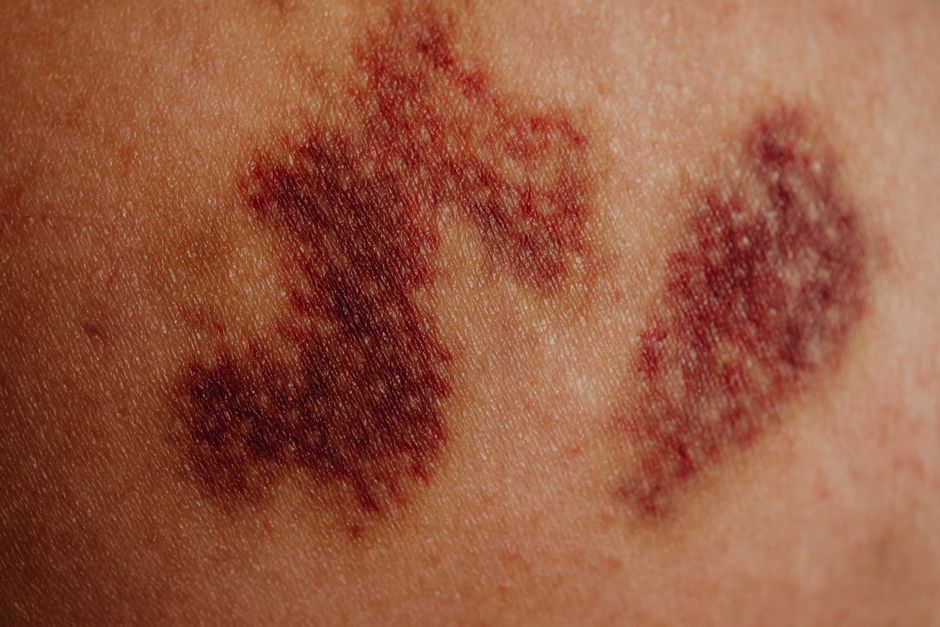
A bruise is your body’s own repair job made visible. It happens when small blood vessels under the skin break from a bump or impact. Blood leaks into the surrounding tissue, which is why the area turns black and blue. You cannot instantly erase a bruise, but you can speed up how quickly your body clears that blood and repairs the tissue. The two most effective steps are simple: apply ice right after the injury, and then switch to gentle heat after about 48 hours. Elevating the injured area and protecting it from further impact also helps your body do its work faster.
What Actually Happens When You Get a Bruise
The medical name for a bruise is a contusion. It forms when a blow crushes small blood vessels called capillaries. Blood escapes into the tissue beneath your skin. That pooled blood is what creates the familiar dark mark.
Your body responds immediately. White blood cells move in to clean up the area. Special enzymes begin breaking down the leaked blood. The breakdown of hemoglobin — the protein that carries oxygen in red blood cells — is what causes a bruise to change colors. It shifts from red to purple to green to yellow before fading completely. That color change is a normal sign that healing is progressing.
Most bruises heal on their own within one to two weeks. The speed depends on the size of the bruise, your age, and your overall health. Older adults bruise more easily and heal more slowly because skin thins and blood vessels become more fragile with age.
How To Remove A Bruise And Help It Heal Faster: What Works
The most important step is timing. What you do in the first 48 hours differs from what you should do after that window closes.
First 48 hours: Ice and compression. Cold constricts the blood vessels. That limits how much blood leaks into the tissue in the first place. Apply an ice pack wrapped in a thin cloth for 15 to 20 minutes at a time. Repeat this every few hours for the first two days. Do not apply ice directly to bare skin — that can cause frostbite. Compression with an elastic bandage can also help reduce blood flow to the area, but do not wrap it so tight that it cuts off circulation.
After 48 hours: Heat and gentle movement. Once the bleeding has stopped, heat helps. Warm compresses increase blood flow to the area. That extra circulation carries away the broken-down blood cells faster. A warm towel or heating pad for 15 to 20 minutes a few times a day is sufficient. Gentle movement of the injured area also promotes circulation. If you bruised your arm, move it through its normal range of motion. If you bruised your leg, walk a little. Movement should never cause sharp pain.
Elevation helps when possible. Raising the bruised area above heart level reduces blood pooling. Gravity works against blood flow to the area. This is most practical for bruises on the arms and legs. If you bruised your shin, prop your leg up on a pillow while sitting or lying down.
Do Arnica and Other Topical Treatments Really Work?
Arnica is one of the most popular remedies for bruises. It comes as a gel, cream, or homeopathic tablet. The evidence for its effectiveness is mixed. Some small studies suggest that arnica gel applied topically may reduce bruise size and pain. Other studies show no meaningful difference compared to a placebo. The quality of research is not strong enough to make a firm recommendation.
Arnica should never be applied to broken skin. It is not meant for open wounds. Homeopathic arnica tablets are highly diluted and generally considered safe, but they have not been proven to work in large, well-designed trials.
Vitamin K cream is another option some clinicians recommend. Vitamin K plays a role in blood clotting, and topical forms have shown some promise in reducing bruising after cosmetic procedures. Research published in the Journal of Cosmetic Dermatology found that a vitamin K cream reduced bruising severity after laser treatment. However, that evidence comes from a specific clinical setting. Whether it helps with everyday bruises from bumps is less clear.
Bromelain, an enzyme found in pineapple, is sometimes suggested as a supplement to reduce bruising. Some research suggests it may have anti-inflammatory properties. But no large human trials have confirmed that taking bromelain speeds up bruise resolution. The evidence here is limited.




What Does Not Work — And What Can Make a Bruise Worse
Several popular home remedies have no scientific support. Rubbing raw meat on a bruise is an old folk remedy that serves no medical purpose and introduces bacteria to the skin. Applying vinegar or toothpaste does nothing except potentially irritate your skin.
Massaging a bruise is a common mistake. Firm massage in the first 48 hours can break more blood vessels and make the bruise larger. After a few days, very light massage around — not directly on — the bruise may help circulation, but there is no strong evidence that it speeds healing.
Heat in the first 48 hours is counterproductive. Heat increases blood flow, which means more blood leaks into the tissue. Save the warm compresses for after the second day.
Alcohol and blood-thinning medications make bruising worse. If you take aspirin, warfarin, or other anticoagulants, you will bruise more easily and bruises will be larger. Do not stop taking prescribed blood thinners to heal a bruise faster — that decision belongs to your doctor. Over-the-counter pain relievers also matter. Ibuprofen and naproxen can increase bleeding risk. Acetaminophen does not have this effect, so it is the safer choice for bruise-related pain.
When a Bruise Needs Medical Attention
Most bruises are harmless. But some require a doctor’s evaluation. Seek medical care if a bruise does not improve after two weeks. A bruise that keeps growing or becomes increasingly painful may indicate a deeper injury. Bruising that appears without any known injury — especially on the torso, back, or face — could signal an underlying bleeding disorder or other medical condition.
Large bruises that feel hard or swollen underneath may be a hematoma. A hematoma is a collection of blood that has clotted. Some hematomas require drainage by a medical professional. Bruises accompanied by severe pain, inability to move a joint, or numbness may indicate a fracture or nerve damage.
Bruising around the eye — often called a black eye — warrants attention if it occurs with vision changes, double vision, or pain with eye movement. Bruising on the head after a fall or blow should be evaluated, particularly if it comes with confusion, vomiting, or loss of consciousness.
People who bruise very easily without explanation should mention it to their doctor. Frequent large bruises from minor bumps can be a sign of a vitamin deficiency, such as vitamin C or vitamin K, or a blood disorder. A simple blood test can help identify the cause.
Can You Prevent Bruises From Forming?
You cannot prevent every bruise. Accidents happen. But you can reduce your risk. Wearing protective gear during sports is the most obvious step. Clearing clutter from walkways reduces trips and falls. Improving lighting in your home helps you avoid bumping into furniture.
Nutrition plays a supporting role. Vitamin C is required for collagen production, which keeps blood vessel walls strong. Vitamin K is necessary for normal blood clotting. A diet rich in fruits, vegetables, and leafy greens provides both. There is no evidence that taking high-dose supplements prevents bruising in healthy people. But correcting an actual deficiency can make a difference.
Regular exercise improves circulation and muscle tone. Stronger muscles provide a natural cushion over blood vessels. That means a bump that might cause a bruise on a sedentary person may not break vessels in someone with more muscle mass protecting the area.
Frequently Asked Questions
How long does it take for a bruise to go away?
Most bruises fade within one to two weeks. Larger bruises or those in areas with loose skin, like the thigh, can take up to three weeks.
Is ice or heat better for a bruise?
Ice is better for the first 48 hours because it limits blood flow to the area. After 48 hours, heat helps by increasing circulation and clearing away the pooled blood.
Does arnica really help bruises heal faster?
Some small studies suggest arnica gel may reduce bruising, but the overall evidence is mixed. It is not harmful on unbroken skin, but it has not been proven to speed healing in large trials.
When should I worry about a bruise?
See a doctor if a bruise does not improve after two weeks, grows larger over time, or appears without any known injury. Bruises with severe pain, swelling, or numbness also need medical evaluation.
