
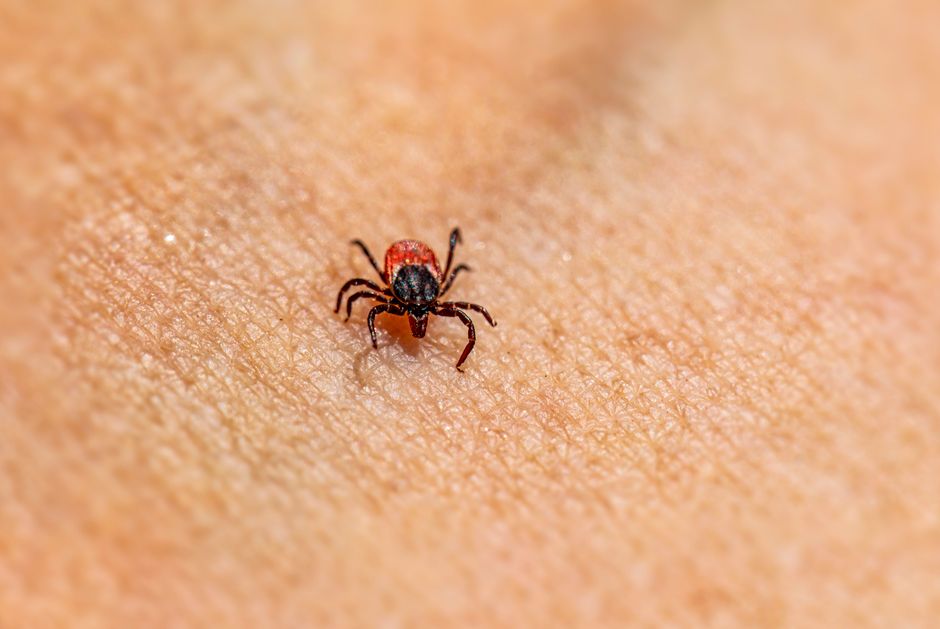
If a tick’s head breaks off and stays in your skin, don’t panic and don’t dig for it. The mouthparts left behind are tiny and usually work their way out on their own as your skin repairs itself. Wash the area with soap and water, apply an antiseptic, and leave it alone. The real concern isn’t the stuck head — it’s whether the tick passed any disease to you before it was removed.
How To Remove A Broken Off Tick Head From Skin
The short answer: you usually don’t need to remove it. The piece left behind is almost always the tick’s mouthparts, not its actual head. These are small, barbed structures the tick uses to anchor itself while feeding. Once the body is gone, the remaining fragment typically sits near the surface and the skin pushes it out over days to weeks, similar to how a splinter works its way out.
What you should do instead is focus on the wound itself:
- Wash the bite area gently with soap and warm water.
- Apply an over-the-counter antiseptic or a thin layer of antibiotic ointment.
- Cover it with a bandage if it’s in a spot that might get dirty.
- Leave the fragment alone. Don’t squeeze, pick, or dig at it.
- Note the date of the bite and watch the area for the next several weeks.
If the fragment is clearly visible right at the surface — you can see it without stretching or digging — you can try lifting it out with clean fine-tipped tweezers. Grasp it as close to the skin as possible and pull straight up with steady pressure. If it doesn’t come easily, stop. Repeated attempts cause more tissue damage than the fragment itself and raise the risk of infection.
Why Digging At A Stuck Tick Head Causes More Harm Than Good
Every attempt to dig out a buried fragment creates a small open wound. That wound is now exposed to whatever bacteria live on your skin and in the environment.
The mouthparts of a tick are built to stay put. They have backward-facing barbs that lock into tissue. Pulling, squeezing, or poking at them can break them into smaller pieces, push them deeper, and introduce bacteria from your fingers or tools. A fragment that would have worked itself out in a week can turn into a minor infection that needs medical treatment.
There’s also a practical point that gets lost in the panic. The tick’s salivary glands — where disease-causing organisms typically live — are in the body, not the mouthparts. Once the body is removed, the main transmission risk is largely over. The leftover fragment is mostly a mechanical annoyance, not an ongoing source of infection.
Some clinicians will remove a visible fragment in the office if it’s bothering the patient or sitting in a cosmetically sensitive spot. That’s a reasonable option. It’s not an emergency.
What Are The Signs The Bite Site Is Infected?
Watch the area for signs that bacteria have taken hold. These typically appear within the first few days after the bite.
- Increasing redness that spreads outward from the bite
- Swelling that gets worse instead of better
- Warmth when you touch the area
- Pus or cloudy fluid draining from the wound
- Pain that increases over time
- Fever or chills
A small red ring right at the bite site is normal in the first day or two. It’s part of the healing response. What matters is whether the redness is expanding. A spreading rash, especially one that clears in the center to form a ring shape, needs medical attention — that pattern can be a sign of Lyme disease, though not everyone who gets Lyme develops it.
If you notice any of these signs, contact a healthcare provider. Skin infections from tick bites are treatable with antibiotics, and early treatment works better than waiting.





What Diseases Can A Tick Transmit Even If The Head Breaks Off?
The disease risk depends on the tick, not on whether the head came off. If the tick was attached long enough to transmit an infection, that transmission already happened by the time you removed it.
In the United States, the most common tick-borne illness is Lyme disease, carried by blacklegged ticks (also called deer ticks). Other illnesses include anaplasmosis, babesiosis, ehrlichiosis, Rocky Mountain spotted fever, and Powassan virus. Different tick species carry different organisms, and risk varies by region.
Transmission generally isn’t instant. For Lyme disease, the CDC has long stated that the risk of transmission rises the longer a tick is attached, and that ticks usually need to be attached for more than 24 hours before the bacterium can be transmitted. That’s why prompt removal matters — and why a tick you found crawling on you, not attached, poses no risk.
If you removed an attached tick and it was engorged (full of blood), it had likely been feeding for a while. Save the tick in a sealed bag or small container of rubbing alcohol if you can. Some health departments and testing services can identify the species and test it, which can help your doctor decide whether treatment or monitoring is appropriate.
When Should You See A Doctor After A Tick Bite?
Call a healthcare provider if any of the following apply:
- You can’t remove the fragment and the area becomes painful, swollen, or hot
- You develop a rash, especially an expanding one
- You have fever, chills, headache, muscle aches, or fatigue in the weeks after the bite
- The tick was attached for a long time or was engorged
- You live in or visited an area where tick-borne diseases are common
- You’re pregnant, immunocompromised, or have young children who were bitten
Bring the tick if you saved it. Tell your provider the date of the bite and where you think you picked it up. That information helps them assess which diseases are possible in your region.
Don’t wait for symptoms to become severe. Early treatment for most tick-borne illnesses is more effective than treatment started later.
How Do You Remove A Tick Correctly In The First Place?
Preventing the head from breaking off starts with how you remove the tick. The method matters more than most people realize.
Use fine-tipped tweezers. Grasp the tick as close to your skin as you can get — right where the mouthparts enter. Pull straight up with steady, even pressure. Don’t twist, jerk, or squeeze the body. Don’t apply petroleum jelly, nail polish, alcohol, or a lit match. These folk remedies don’t work and can cause the tick to regurgitate its stomach contents into your bloodstream, which may increase disease risk.
If you don’t have tweezers, use a piece of tissue or cloth to protect your fingers and pull steadily. Wash your hands and the bite site afterward. Dispose of the tick by flushing it, putting it in alcohol, or sealing it in tape.
If part of the tick stays in the skin despite doing everything right, that’s not a failure on your part. It happens. Clean the area and let your skin do its job.
Does The Broken Head Itself Cause Lyme Disease?
No. The fragment left in your skin does not transmit Lyme disease or any other tick-borne illness on its own.
The bacteria that cause these illnesses live in the tick’s midgut and salivary glands, which are in the body. Once the body is detached, the remaining mouthparts don’t carry an active infection risk. Any transmission that was going to happen already happened while the tick was feeding.
This is why the focus after a broken-off head should be on monitoring for symptoms, not on extracting every last piece. Your skin will handle the fragment. Your job is to watch for signs of illness in the weeks that follow.
Frequently Asked Questions
Will the tick head come out on its own?
Yes, in most cases. The fragment usually works its way to the surface and out as the skin heals, similar to a splinter, though it can take days to weeks.
Can a broken tick head cause an infection?
The fragment itself doesn’t cause infection, but the wound from digging at it can. Keep the area clean and watch for spreading redness, swelling, or pus.
Should I put alcohol or peroxide on a tick bite?
Washing with soap and water is enough. Rubbing alcohol can be used as an antiseptic, but peroxide can irritate healing tissue and isn’t necessary.
How long after a tick bite should I watch for symptoms?
Watch for about 30 days. Most tick-borne illnesses cause symptoms within that window, though some can take longer.
