
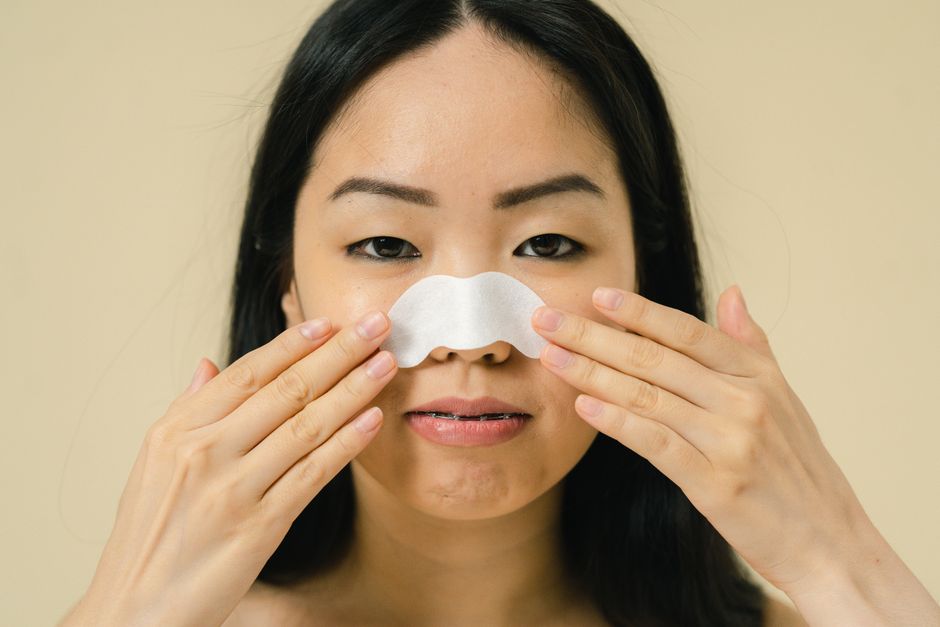
A blackhead is a small plug of oil and dead skin cells that has opened to the surface of your skin and turned dark from exposure to air. You can remove one safely at home with the right tools and technique, but the most effective approach is preventing them from forming in the first place. The safest methods involve gentle exfoliation, topical treatments with proven ingredients, and manual extraction only when done correctly.
What Exactly Is a Blackhead?
A blackhead is a type of acne called an open comedone. Your skin produces oil called sebum through hair follicles. When sebum mixes with dead skin cells, it can form a plug inside the pore.
If the plug stays below the surface, it is a whitehead. If the plug opens to the air, oxygen reacts with the material and turns it dark. The dark color is not dirt. It is oxidized oil and skin cells. Scrubbing harder will not remove it.
Blackheads most often appear on the nose, chin, forehead, and cheeks. They can also show up on the chest, back, and shoulders. They are not caused by poor hygiene. In fact, over-washing can make them worse by irritating the skin and triggering more oil production.
How To Remove A Blackhead Safely at Home
The safest way to remove a blackhead at home is to soften the skin first, then use gentle pressure with a clean tool. Never squeeze with your fingernails. That pushes the plug deeper and can damage the pore wall, leading to inflammation, scarring, or a larger pimple.
Start by washing your face with a gentle cleanser and warm water. Then apply a warm, damp washcloth to the area for five to ten minutes. This softens the plug and opens the pore naturally.
Use a sterile comedone extractor, which is a small metal tool with a loop on one end. Place the loop around the blackhead and press down gently. If the plug does not release with light pressure, stop. Do not force it. Try again another day or leave it for a dermatologist.
After extraction, clean the area with a gentle antiseptic like witch hazel or a mild salicylic acid toner. Then apply a light moisturizer. Extraction should only be done occasionally, not as a daily routine.
Do Pore Strips Actually Work?
Pore strips can remove the top portion of a blackhead, which is why they look effective right after use. The adhesive grabs the surface of the plug and pulls it out when you peel the strip away.
However, pore strips do not remove the entire plug from deep within the pore. The lower portion often stays behind, and the pore can refill quickly. Some dermatologists also note that the adhesive can irritate sensitive skin and strip away healthy oils.
Pore strips are fine for occasional use if you find them satisfying. They are not a long-term solution. They do not prevent blackheads from forming, and they will not clear out pores that are already deeply clogged.





Which Skincare Ingredients Actually Clear Blackheads?
Several ingredients have strong evidence behind them for treating blackheads. These are available over the counter and are the first-line approach recommended by dermatologists.
Salicylic acid is a beta-hydroxy acid that dissolves oil and dead skin inside the pore. It is oil-soluble, meaning it can penetrate into the pore and break up the plug. Products with 0.5% to 2% salicylic acid are common in cleansers, toners, and leave-on treatments. Daily use can prevent blackheads from forming.
Benzoyl peroxide works differently. It kills acne-causing bacteria and helps remove excess oil. It is more effective for inflamed acne but can also help with blackheads. It can bleach fabrics and cause dryness, so start with a lower concentration like 2.5%.
Retinoids are vitamin A derivatives that increase skin cell turnover. They help prevent dead cells from clogging pores in the first place. Adapalene is available over the counter at 0.1% strength. Prescription-strength retinoids like tretinoin are more potent. Retinoids require consistent use for several weeks before you see results.
Niacinamide helps regulate oil production and has anti-inflammatory properties. It is not as directly effective at clearing existing blackheads, but it supports overall skin barrier health and can reduce oiliness over time.
What Not To Do When Removing Blackheads
Squeezing with fingers is the most common mistake. Your nails are not sterile, and the pressure is hard to control. You can push the plug deeper, rupture the pore wall, and cause the area to swell and turn red.
Do not use harsh physical scrubs with crushed shells, sugar, or salt. These create micro-tears in the skin surface. The irritation can trigger more oil production and make blackheads worse.
Avoid using tools that are not designed for extraction, such as bobby pins, tweezers, or safety pins. These can break the skin and introduce bacteria, leading to infection and scarring.
Do not over-exfoliate. Using strong acids or scrubs multiple times a day strips the skin barrier. Damaged skin becomes inflamed, and inflammation makes acne worse. Once a day is enough for most people.
If a blackhead becomes red, painful, or turns into a pimple, leave it alone. Treat it like an inflamed breakout and let it heal. Do not attempt extraction on irritated skin.
When Should You See a Dermatologist?
Most blackheads respond to consistent home care with salicylic acid or retinoids over several weeks. If you have tried these products for two to three months without improvement, a dermatologist can help.
A dermatologist can perform professional extraction with sterile tools and proper technique. This is especially useful for blackheads that are deeply embedded and will not release with home methods.
For persistent or widespread blackheads, a dermatologist may recommend prescription-strength retinoids, chemical peels, or other treatments. These are stronger than anything available over the counter and require professional supervision.
See a dermatologist sooner if you notice sudden changes in your skin, if blackheads are accompanied by painful cysts, or if you have concerns about scarring. A professional can also rule out other skin conditions that look similar to blackheads, such as sebaceous filaments.
How To Prevent Blackheads From Coming Back
Prevention is more effective than removal. Blackheads form when oil and dead skin accumulate, so the goal is to keep pores clear on a daily basis.
Wash your face twice a day with a gentle cleanser. Use lukewarm water, not hot. Hot water strips the skin and can trigger rebound oil production.
Use a leave-on salicylic acid product daily if your skin tolerates it. A 2% salicylic acid serum or lotion applied after cleansing is more effective than a cleanser that washes the ingredient away quickly.
Moisturize every day, even if your skin is oily. Well-hydrated skin has a healthier barrier and produces less excess oil. Choose a non-comedogenic moisturizer, which means it is formulated not to clog pores.
Wear sunscreen daily. Sun damage thickens the outer layer of skin, which can trap oil and dead cells inside pores. A lightweight, non-comedogenic sunscreen protects your skin without adding heaviness.
Do not pick at your skin. Every time you pick, you risk inflammation and scarring. If you notice a blackhead forming, treat it with salicylic acid rather than your fingers.
Are Sebaceous Filaments the Same as Blackheads?
Sebaceous filaments are often mistaken for blackheads. They appear as tiny, light-colored dots on the nose and cheeks. They are actually normal oil ducts that are visible through thin skin, not plugs of trapped debris.
Sebaceous filaments are not acne. They do not need to be removed. Squeezing them produces a thin, yellowish strand of oil, and they refill within days. They are a normal part of skin anatomy and become more visible as we age.
Salicylic acid and retinoids can make sebaceous filaments less noticeable by regulating oil flow, but they will not make them disappear completely. That is normal. They are not a skin problem that requires treatment.
Frequently Asked Questions
Is it bad to squeeze blackheads?
Yes, squeezing blackheads with your fingers can push the plug deeper, damage the pore, and cause inflammation or scarring. Use a sterile comedone extractor with light pressure instead.
How long does it take for salicylic acid to clear blackheads?
Most people see noticeable improvement after four to six weeks of consistent daily use. Retinoids can take eight to twelve weeks to show full results.
Can toothpaste remove blackheads?
No. Toothpaste is not formulated for skin and contains ingredients that can irritate or burn the skin. There is no clinical evidence that it clears blackheads.
Do blackheads go away on their own?
Some blackheads eventually clear as skin cells shed, but most persist for weeks or months without treatment. Consistent use of salicylic acid or a retinoid is the most reliable way to clear them.
