
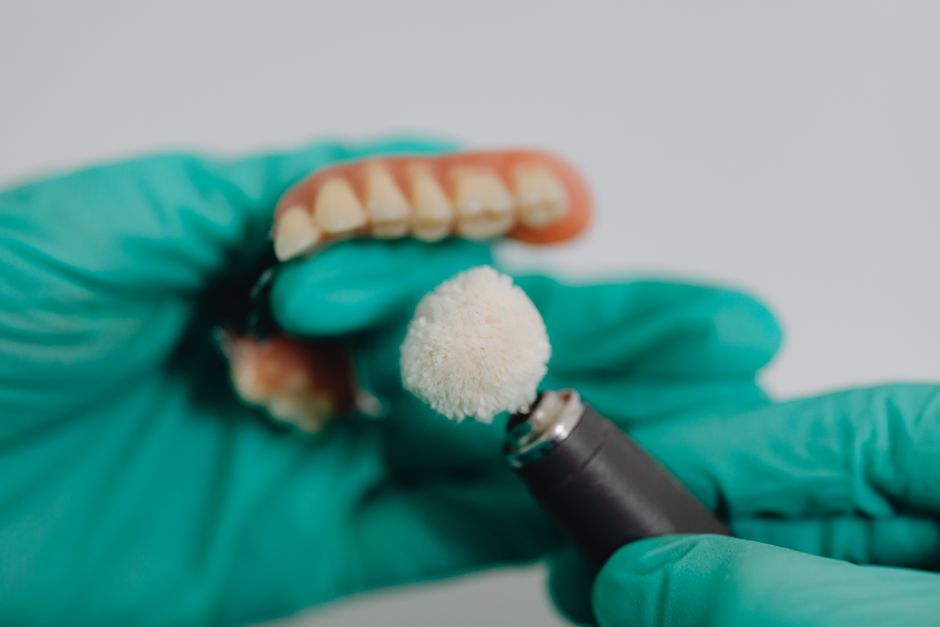
If your dentures have started to feel loose, rocking when you chew, or slipping when you talk, the problem is usually the fit between the denture base and your gums — not the teeth themselves. You can address that fit in two ways: a dentist can reline the denture in a lab or chairside, or you can use a home reline kit sold at most pharmacies. Home kits are temporary fixes that last a short time and carry real risks if used incorrectly. A professional reline is the durable option and the one that protects the health of the tissues underneath.
What Does Relining Dentures Actually Mean?
A reline means adding new material to the inside surface of the denture — the part that touches your gums — so it fits your mouth again. The artificial teeth and the outer shape of the denture stay the same. Only the tissue-facing surface is rebuilt.
This matters because your mouth changes. The bone and gum tissue under a denture shrink over time, a process called ridge resorption. It happens fastest in the first year after teeth are removed and continues gradually afterward. As the ridge shrinks, the denture that once fit snugly now sits on a smaller foundation. That is why a denture that felt fine a year ago can start to float.
Relining is different from a repair. A repair fixes a crack or a broken tooth. A reline corrects fit. If your denture is cracked, missing a tooth, or the bite is badly off, a reline alone will not solve the problem.
How To Reline Dentures At Home Or With A Dentist?
This is the core decision, and the two paths are not equivalent. Home reline kits use a soft, temporary material you mix and press into the denture yourself. Professional relines use materials applied by a dentist, and they come in two forms: a hard reline and a soft reline.
Home kits are sold as over-the-counter products and are intended as short-term comfort measures. They can reduce slipping for a period of days to a few weeks. They are not a substitute for a professional reline, and manufacturers generally label them as temporary.
A dentist’s hard reline uses a material that cures rigid, matching the acrylic of the denture base. This is usually done in a lab, and the denture is typically out of your mouth for a period while it is processed. A chairside reline can sometimes be done in a single visit with a material that sets in the mouth.
A soft reline uses a pliable material that cushions the gums. It is often used when tissues are sore or healing, or when a person cannot tolerate a hard reline. Soft relines tend to need replacement sooner than hard ones because the material degrades over time.
The important difference is not just durability. A dentist can examine the tissue under the denture, check the bite, and identify problems a home kit cannot address — including sores, bone changes, and a denture that no longer sits in the correct position.
What Are the Risks of DIY Reline Kits?
Home reline kits can cause harm when used the wrong way. The most common problems come from applying too much material, applying it unevenly, or using it on a denture that needs a different kind of fix.
When the reline material is too thick, the denture sits higher in the mouth than it should. That changes your bite. An altered bite can put uneven pressure on the gums and on the jaw joint, and it can make chewing less effective. Over time, an incorrect bite can contribute to sore spots and tissue irritation.
Uneven material creates high spots — areas of concentrated pressure against the gum. These can cause sores that are slow to heal, especially in people with diabetes or reduced circulation. If a sore does not heal, it needs to be looked at.
There is also a self-limiting problem. Home reline material fills the space between the denture and the gum, but it does not restore the correct relationship between the upper and lower jaws. If your denture has been loose for a long time, the fit issue is often more complex than a layer of soft material can fix.
Some people are sensitive or allergic to ingredients in reline products. If you notice burning, swelling, or a rash after using one, stop using it and contact a dentist or physician.





When Should You See a Dentist Instead?
See a dentist rather than reaching for a home kit if any of the following apply:
- Your denture is cracked, chipped, or has a loose or missing tooth.
- You have a sore, ulcer, or painful spot under the denture that has not healed.
- The denture has become so loose that it moves when you speak or eat.
- Your bite feels different, or your jaw aches.
- You have had the denture for several years without a professional check.
- You have diabetes, a weakened immune system, or a history of gum disease.
A non-healing sore under a denture deserves attention. Persistent irritation from an ill-fitting denture is a known risk factor for changes in the mouth lining, and any sore that does not heal within a couple of weeks should be evaluated by a dentist or physician. This is not a reason to panic, but it is a reason not to wait.
Dentures also wear out. Even with good care, the acrylic and the teeth degrade, and the fit changes as the ridge shrinks. Many dentists recommend a professional examination at least once a year, though the right interval depends on your individual situation.
How Is a Professional Reline Done?
The process starts with an examination. The dentist checks the fit, looks at the tissue under the denture, and assesses the bite. If a reline is appropriate, the next step depends on the type.
For a lab-processed hard reline, the dentist typically takes an impression of your mouth with the denture in place or applies a material to the denture and has you bite down. The denture is then sent to a lab, where the old tissue surface is replaced with new acrylic. You may be without the denture for a period while it is being processed.
For a chairside reline, the dentist applies a material directly to the denture and seats it in your mouth while it sets. This can often be completed in one visit. The trade-off is that chairside materials may not last as long as lab-processed ones.
After any reline, there is usually an adjustment period. The dentist will check for high spots and may adjust the fit. Some soreness in the first days is common as the tissue adapts.
How Long Does a Reline Last?
Durability varies by type and by how much your mouth continues to change. Soft relines generally need replacement sooner than hard relines because the material breaks down. Hard relines tend to last longer, but no reline is permanent.
The underlying issue — ridge resorption — does not stop. A reline restores fit at a point in time. As the bone continues to change, the fit will eventually need to be addressed again. In some cases, after multiple relines, a dentist may recommend a new denture instead, because the denture base itself no longer fits the changed shape of the ridge.
There is no single timeline that applies to everyone. How often you need a reline depends on your rate of bone change, your oral habits, the condition of the denture, and how well you care for it.
How Can You Make Dentures Last Longer?
Good care slows wear but does not stop the mouth from changing. Handle the denture over a folded towel or a basin of water so a drop does not crack it. Clean it daily as directed, and follow your dentist’s guidance on whether to leave it out at night.
Taking the denture out for part of each day gives the tissue underneath a chance to rest. This is commonly recommended, though the specific schedule should come from your dentist based on your situation.
Do not adjust the denture yourself with tools, and do not use household adhesives or glues to fix a fit problem. These can damage the denture and injure your gums. If a denture breaks, a dentist or a qualified dental lab should repair it.
Keep up with professional checkups. Small fit problems are easier and less costly to correct early. A denture that has been loose for months can lead to tissue changes that make the eventual fix more involved.
Frequently Asked Questions
Can I reline my dentures at home?
Yes, over-the-counter reline kits are available and can provide temporary relief from a loose fit. They are not a permanent solution, and they carry risks if applied incorrectly.
How long do home denture reline kits last?
They are intended as short-term measures and typically last from days to a few weeks. Durability depends on the product and how well it is applied.
Is a DIY denture reline safe?
It can be safe when used as directed on a denture that only needs a fit adjustment. It is not safe as a substitute for professional care when there is a crack, a sore, or a bite problem.
How often do dentures need to be relined?
There is no fixed schedule, because the rate of bone and gum change varies from person to person. A dentist can assess whether a reline is needed at a checkup.
