
Tailbone pain, called coccydynia, is pain at the very bottom of your spine — the small triangular bone called the coccyx. The first-line treatment is rarely surgery or medication. It is offloading the bone and calming the tissues around it. That means a cushion that keeps pressure off the tailbone when you sit, plus gentle stretching and movement to reduce muscle tension in the pelvic floor and hips. Most cases improve with these measures over weeks to months, though the timeline varies a lot from person to person.
What Is Tailbone Pain And Why Does It Happen?
The coccyx is the remnant of a tail. It is made of three to five small fused vertebrae and attaches to the sacrum by a joint and ligaments. You put weight on it when you sit and lean back.
Pain can come from the bone, the joint between the coccyx and sacrum, the surrounding ligaments, or the muscles and nerves nearby. Common triggers include a fall onto the buttocks, childbirth, prolonged sitting on hard surfaces, and repetitive strain from cycling or rowing. Sometimes no clear cause is found.
Doctors describe two broad types. In coccygeal instability, the coccyx moves more than it should when you sit, often because of injury or a joint that has become lax. In coccygeal hypermobility, the bone shifts in a way that irritates the joint and nearby tissue. Some cases involve a bone spur or a coccyx that points sharply inward. Others are muscular — tight pelvic floor or gluteal muscles pulling on the area.
This distinction matters because the right approach depends on the cause. A cushion helps almost everyone by reducing direct pressure. Stretching helps most when muscle tightness is part of the picture. If the joint itself is unstable, cushions and stretches may ease symptoms but not fix the underlying problem.
How To Relieve Tailbone Pain With Stretches And Cushions
Two things do most of the work. First, stop pressing the coccyx against a hard surface. Second, reduce the muscle tension that pulls on it. Cushions handle the first job. Stretches and gentle movement handle the second.
A coccyx cutout cushion — often called a donut or wedge cushion — has a gap or notch at the back so your tailbone hangs free when you sit. This is different from a standard foam pad, which compresses under your weight and still loads the bone. The cutout is the key feature. A cushion without it does not solve the problem.
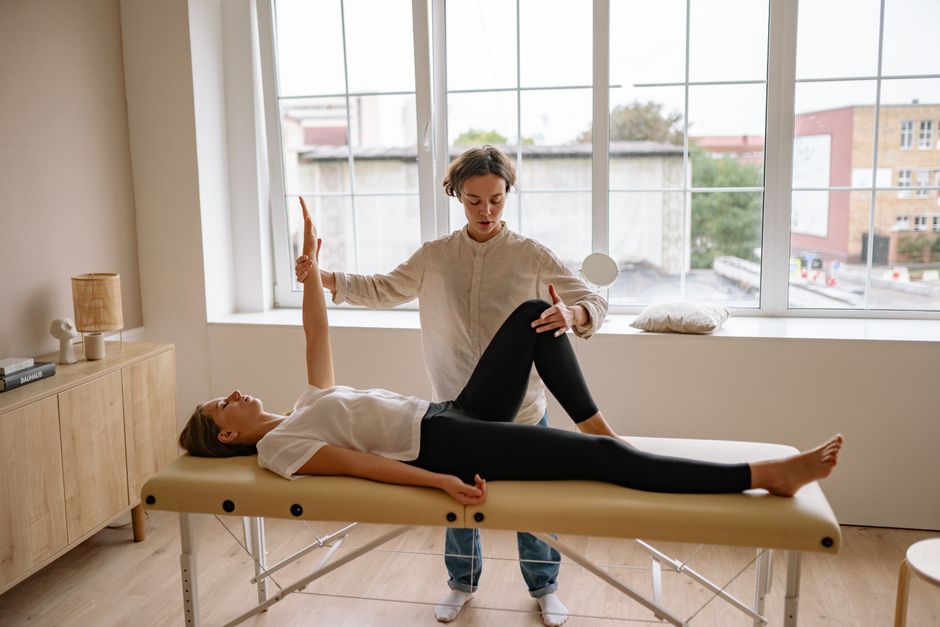
Stretching targets the muscles that attach near the coccyx: the pelvic floor, the glutes, and the hip rotators. When these are tight, they can tug on the bone and its ligaments. Gentle, consistent stretching can reduce that pull over time.
Neither approach works instantly. Tissue needs time to adapt. Many people notice improvement in a few weeks, but some take longer.
Which Stretches Help Tailbone Pain?
These stretches are low-risk for most people. Move slowly. Stop if a stretch makes the pain sharper, not just mildly uncomfortable.
- Knees-to-chest: Lie on your back. Bring both knees toward your chest and hold them with your hands. Hold for 20 to 30 seconds. This gently lengthens the lower back and glutes.
- Figure-four stretch: Lie on your back with knees bent. Cross your right ankle over your left knee. Reach through and pull your left thigh toward you until you feel a stretch in your right buttock. Hold 20 to 30 seconds. Switch sides.
- Piriformis stretch: Similar to the figure-four but done seated or lying, focusing on the deep hip rotator muscle. Hold 20 to 30 seconds per side.
- Child’s pose: Kneel and sit back on your heels, then fold forward with arms extended. This opens the lower back and hips. Hold 30 seconds to a minute.
- Pelvic floor relaxation: Lie on your back with knees bent. Breathe deeply into your belly and consciously relax the muscles between your pubic bone and tailbone. Hold for several breaths. This is not a stretch in the traditional sense but a release.
Do these once or twice a day. Consistency matters more than intensity. Forcing a stretch can irritate the area and set you back.
One clarification worth knowing: strengthening the deep core and glutes is often as important as stretching. Weak supporting muscles let the pelvis move poorly, which can keep the coccyx irritated. A physical therapist can assess which muscles are tight and which are weak — they are not always the same ones.
How Do You Choose And Use A Tailbone Cushion?
Look for a cushion with a true cutout at the back edge. The gap should be wide enough that your tailbone sits over empty space, not foam. Memory foam and gel both work; the shape matters more than the material.
Wedge-shaped cushions tilt your pelvis forward slightly, which can reduce pressure on the coccyx. Donut cushions with a hole in the center are common but the hole must line up with your tailbone, which is not always easy to position correctly. A U-shaped or cutout design is generally easier to place.
Use the cushion anywhere you sit for long periods — your desk chair, your car, the dinner table. If you sit on hard surfaces at work or during a commute, the cushion is doing real work. On soft furniture like a deep sofa, it may help less because you sink in and the pelvis rotates back.
Do not expect a cushion to fix the problem alone. It removes one source of irritation. The muscles and joint still need attention.
What Else Helps And When To See A Doctor
Sitting posture matters. Slouching pushes the tailbone down and forward. Sitting upright with your weight on your sitting bones — the two bony points under your buttocks — takes load off the coccyx. Standing up every 30 minutes or so also helps, since prolonged static sitting is a common aggravator.
Heat can relax tight muscles. A warm compress or a warm bath may ease discomfort. Some clinicians recommend avoiding prolonged sitting on hard surfaces and using a standing desk part of the day.
If pain persists despite these measures, doctors may consider other options. These include physical therapy, manual treatment of the coccyx joint, injections of a local anesthetic and steroid into the area, or in rare cases surgery to remove part of the coccyx. These are not first-line and are generally reserved for cases that do not improve. The evidence for injections and surgery is limited, and outcomes vary. This is a situation where you want a doctor experienced with coccydynia.
See a doctor if the pain came after a fall or injury, if it is severe or getting worse, if you have numbness or weakness in your legs, or if you have trouble controlling your bladder or bowels. Those last symptoms can signal a nerve problem that needs urgent attention.
Also see a doctor if pain has lasted more than a few weeks without improvement, or if you have unexplained weight loss, fever, or a history of cancer. Tailbone pain is usually mechanical, but it can occasionally be a sign of something else.
How Long Does Tailbone Pain Take To Heal?
Most cases improve within weeks to a few months with conservative care. Some people take longer. A minority have persistent pain that lasts many months or longer.
The timeline depends on the cause. A mild strain from prolonged sitting often settles fairly quickly once you change how you sit. Pain from a fall or childbirth may take longer because the joint and ligaments need time to recover. If the coccyx is unstable, symptoms can linger and may need more targeted treatment.
There is no single timeline that applies to everyone. Improvement is usually gradual, not sudden. If you are not seeing any change after several weeks of consistent cushion use and gentle stretching, it is reasonable to get assessed.
Frequently Asked Questions
Does sitting on a donut cushion really help tailbone pain?
A cushion with a cutout or gap at the back can reduce direct pressure on the coccyx, which is the main goal. A cushion without that gap usually does not help because it still loads the bone.
How often should I stretch for tailbone pain?
Once or twice a day is a common approach, holding each stretch for about 20 to 30 seconds. Consistency matters more than frequency or intensity.
Can tailbone pain go away on its own?
Many cases improve over weeks to months with conservative measures like cushions, stretching, and posture changes. Some cases persist and need medical evaluation.
When should I worry about tailbone pain?
Seek medical care if the pain follows a fall, is severe or worsening, or comes with numbness, weakness, or loss of bladder or bowel control. Those symptoms need prompt evaluation.
