
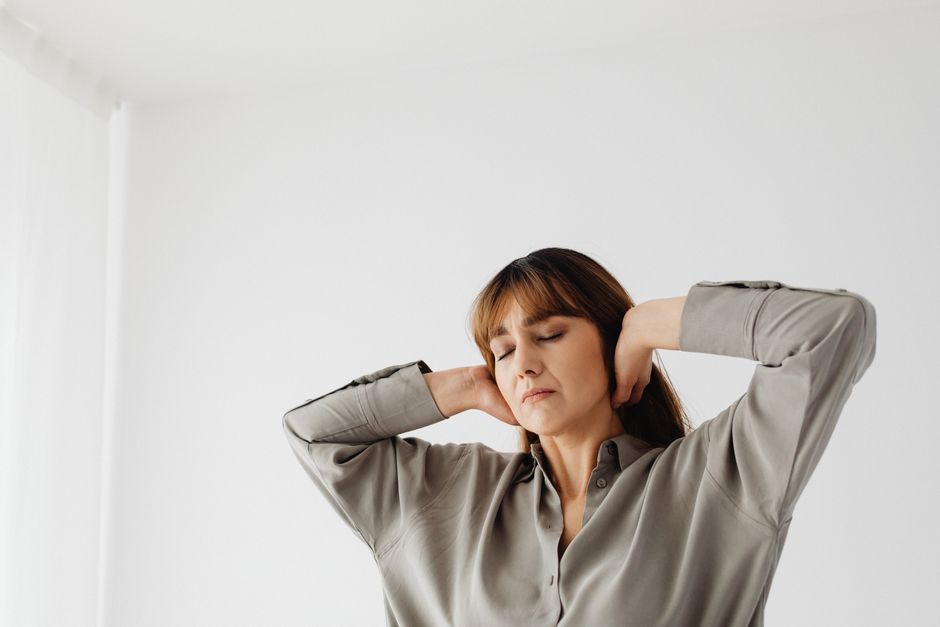
Relieving stress starts with slowing your body’s alarm system, then changing what your mind does with that calm. Breathe slowly through your nose, drop your shoulders, and name what you are feeling. Next, move your body, protect your sleep, and talk to someone you trust. Then look at what keeps the stress coming back. For women, that often means workload, caregiving, and hormones that shift across the month and across life stages.
None of this is exotic. It is the same handful of steps that research and clinical practice keep pointing back to. The trick is doing them in order and repeating them, not waiting for the perfect moment.
How To Relieve Stress For A Woman Step By Step
The clearest path is a sequence. Each step builds on the one before it. Skip the early steps and the later ones rarely hold.
Step 1: Calm your nervous system first. Stress floods your body with adrenaline and cortisol. Your heart speeds up, breathing gets shallow, muscles tighten. Slow, steady breathing through your nose can nudge your body back toward its resting state. Try breathing in for a count of four, then out for a count of six, for a few minutes. The long exhale is the part that matters most.
Step 2: Name the feeling. Putting a word to an emotion can lower its intensity. “I am overwhelmed” or “I am angry” is enough. This is not about fixing anything yet. It is about stepping back from the wave so you can see it.
Step 3: Move your body. Physical activity lowers stress hormones and helps clear the nervous energy that builds up. A brisk walk counts. So does dancing in your kitchen. You do not need a gym.
Step 4: Protect your sleep. Sleep and stress feed each other. A short night makes the next day feel harder, which makes the following night worse. Going to bed and waking at roughly the same time helps break that loop.
Step 5: Connect with someone. Talking to a friend, partner, or family member lowers the sense of carrying things alone. This is one of the most reliable buffers against stress.
Step 6: Look at the source. Once you are calmer, you can see what keeps setting you off. Is it a job that never ends? A schedule with no gaps? A relationship that drains you? Naming the source is the first move toward changing it.
Why Stress Can Feel Different For Women
Stress is not a women’s problem. But the shape of it often is. Women are more likely to carry caregiving duties, manage the household, and hold paid work at the same time. That stacking effect is real and well documented.
Hormones add another layer. Estrogen and progesterone shift across the menstrual cycle, during pregnancy, after childbirth, and through perimenopause and menopause. These shifts can change how sensitive you are to stress and how your mood responds to it. Some women notice that the same problem feels heavier in the days before their period.
None of this means women are weaker under pressure. It means the load and the biology are different, and a plan that ignores both will fall short.
What Happens In Your Body When You Are Stressed
When your brain senses a threat, it signals your adrenal glands to release adrenaline and cortisol. Adrenaline acts fast. Your heart rate climbs, breathing speeds up, and blood flows to your muscles. Cortisol acts more slowly and keeps you on alert.
This system is built to switch on and then switch off. The problem is when it stays on. Chronic stress keeps cortisol levels elevated, and over time that can affect sleep, digestion, immune function, and blood pressure.
Here is a point worth knowing: the stress response does not care whether the threat is a bear or an unpaid bill. Your body reacts the same way. That is why a breathing exercise can help with a problem that has nothing to do with breathing.




Quick Techniques You Can Use In The Moment
These work in minutes and need no equipment. They are best used as soon as you notice tension building.
- Extended exhale breathing. Breathe in through your nose for four counts and out for six. Repeat for a few minutes.
- Grounding with your senses. Name five things you can see, four you can touch, three you can hear, two you can smell, and one you can taste.
- Progressive muscle relaxation. Tense a muscle group for a few seconds, then release. Work from your feet up to your face.
- A short walk. Even a few minutes outdoors can shift your mood and lower tension.
- Cold water on your wrists or face. This can help reset your breathing and heart rate.
These are tools, not treatments. They buy you space. The deeper work happens in the steps that follow.
Daily Habits That Lower Stress Over Time
Moment-to-moment tricks help in a crisis. Daily habits change your baseline. The goal is to make stress less likely to pile up in the first place.
Sleep. Most adults need seven or more hours a night. A consistent bedtime and a dark, cool room help. So does keeping screens out of the last part of your evening.
Movement. Federal guidelines recommend at least 150 minutes of moderate activity a week for adults, plus muscle-strengthening on two days. That can be broken into short blocks. Ten minutes here and there adds up.
Food and drink. Caffeine and alcohol can both worsen anxiety and disturb sleep. You do not have to quit either. Noticing how they affect you is a good start.
Boundaries. Saying no is a skill. So is leaving work at work. Small limits protect your energy more than grand plans do.
Connection. Regular time with people who support you is one of the strongest buffers against stress. It is easy to drop when you are busy. That is exactly when it helps most.
When To Get Professional Help
Self-care has limits, and knowing where they are matters. If stress is affecting your sleep, appetite, work, or relationships for weeks, that is a signal to talk to a doctor or mental health professional.
Seek help promptly if you notice any of the following:
- Persistent low mood, hopelessness, or loss of interest in things you used to enjoy
- Anxiety that interferes with daily life
- Trouble sleeping that does not improve
- Using alcohol or other substances to cope
- Any thoughts of harming yourself
If you are having thoughts of suicide, contact the 988 Suicide and Crisis Lifeline by calling or texting 988 in the US. This is available 24 hours a day.
Effective treatments exist for stress-related conditions, including talk therapy and, in some cases, medication. Reaching out is not a sign of weakness. It is the same logic as seeing a doctor for a persistent physical symptom.
How Stress Affects Women Across Life Stages
The stress response is the same at every age. What changes is what triggers it and what your body is doing at the time.
During the reproductive years, hormonal shifts across the menstrual cycle can change mood and stress sensitivity. Some women notice more irritability or anxiety in the days before their period.
Pregnancy and the postpartum period bring major hormonal and life changes at once. Stress during this time is common. Support from a partner, family, and healthcare providers matters. If you are pregnant or breastfeeding and struggling with stress or mood, talk to your healthcare provider. Guidance for medications and treatments during pregnancy and breastfeeding should come from a clinician, not from general advice.
Perimenopause and menopause bring shifts in estrogen and progesterone that can affect mood, sleep, and how you handle stress. Some women find these years harder emotionally. Others do not. Both are normal.
How To Make A Stress Plan That Actually Sticks
Most stress plans fail for the same reason. They are too big. A plan that fits your real life is more likely to last.
Pick one small action for each of the six steps above. Write them down. Put them where you will see them. Then track how it goes for a week.
Expect setbacks. Stress does not disappear because you made a plan. The goal is not zero stress. It is a shorter recovery time and more control over how you respond.
If a step is not working, change it. If it is working, keep it. Over time, these small moves add up to a different baseline.
Frequently Asked Questions
What is the fastest way to relieve stress?
Slow breathing with a longer exhale is one of the quickest ways to calm your body’s stress response. Try breathing in for four counts and out for six for a few minutes.
How can a woman relieve stress at home?
Simple habits like a short walk, stretching, talking to a friend, and protecting your sleep can lower stress at home. Doing them regularly matters more than doing them perfectly.
When should I see a doctor about stress?
See a doctor if stress is affecting your sleep, mood, work, or relationships for weeks, or if you are using alcohol or other substances to cope. If you have thoughts of harming yourself, contact the 988 Suicide and Crisis Lifeline right away.
Does exercise really help with stress?
Yes. Regular physical activity is one of the most reliable ways to lower stress and improve mood. Federal guidelines recommend at least 150 minutes of moderate activity a week for adults.
