
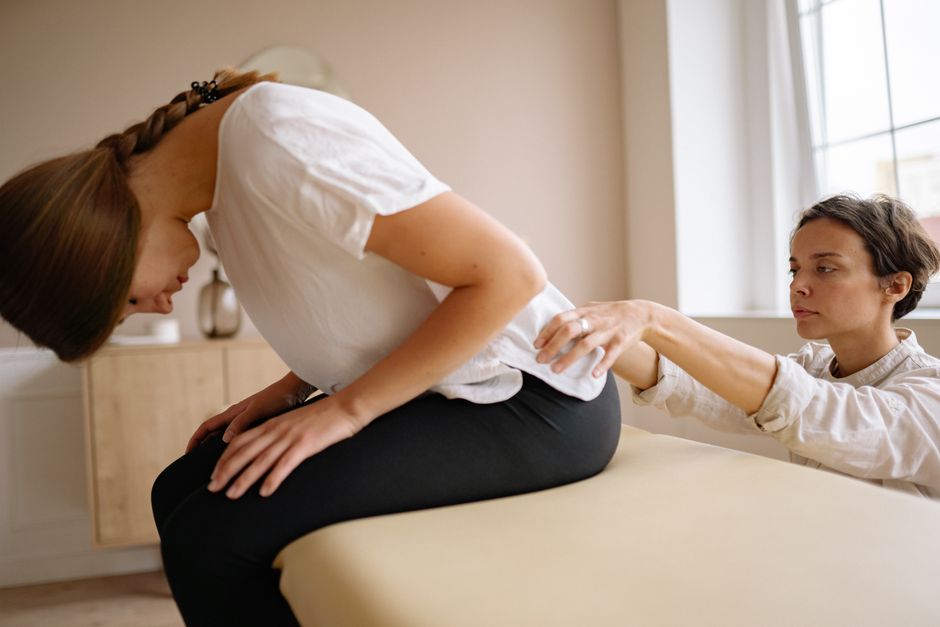
Lower back and hip pain often travel together, and the relief strategies overlap. The most reliable starting points are gentle movement rather than bed rest, targeted strengthening of the hips and core, attention to how you sit and lift, and simple pain relief for flare-ups. Most episodes improve within a few weeks without surgery. When pain persists, worsens, or comes with weakness or numbness, a medical assessment matters more than any home tip.
What follows is an honest look at what helps, what the evidence actually supports, and where the marketing runs ahead of the science.
Why Do Lower Back and Hip Pain Often Happen Together?
The lower back and the hip are mechanically connected. They share muscles, nerves, and movement patterns, so a problem in one area frequently shows up as pain in the other.
The hip joint sits deep in the pelvis. Several strong muscles cross from the pelvis to the thigh and also attach along the lower spine. The glutes, the deep hip rotators, and the hip flexors all influence how the lower back bears load. When the hip loses range of motion, the lower back often compensates. Over time, that compensation can become a source of irritation.
The nerves add another layer. The sciatic nerve runs from the lower spine through the buttock and down the leg. Pressure or irritation anywhere along that path can produce pain that feels like it belongs to the hip, the back, or both.
This overlap is why treating only one area often disappoints. A hip that cannot rotate properly will keep loading the spine in the same way no matter how much you stretch your back.
It also means the source can be genuinely hard to pin down. Pain in the buttock could come from the hip joint, the spine, the sacroiliac joint, or the muscles themselves. A clinician uses the pattern of symptoms, physical tests, and sometimes imaging to sort this out. Self-diagnosis from internet descriptions is unreliable here.
What Actually Helps Relieve Lower Back and Hip Pain?
Staying active is the single most consistent recommendation in clinical guidance for ordinary lower back pain. Prolonged bed rest slows recovery and makes muscles stiffer.
The evidence for staying active is strong. The evidence for any one specific exercise being superior to another is much weaker. What matters most is that you move in ways you can tolerate and keep doing.
Practical approaches that hold up:
- Walk regularly. Short, frequent walks keep the hips and spine moving without loading them heavily. Start with what feels manageable and build gradually.
- Use heat for stiffness. Heat packs can ease muscle tightness. Some people find cold packs better for sharp, recent pain. Both are low-risk comfort measures.
- Try over-the-counter pain relievers. Medications like ibuprofen or acetaminophen can take the edge off enough to keep moving. Follow label directions, and check with a pharmacist or doctor if you take other medicines or have stomach, kidney, or heart conditions.
- Keep a gentle daily routine. A few minutes of hip and back movement each day beats an intense session once a week.
One clarification worth making: pain during movement is not automatically a sign of damage. Mild discomfort that settles as you warm up is common and generally not a reason to stop. Sharp, escalating, or nerve-type pain is different and deserves attention.
Which Exercises Help Most for Back and Hip Pain?
Exercises that build strength and control around the hips and trunk have the best support. The specific program matters less than consistency and gradual progression.
Movements commonly used in physical therapy include:
- Glute bridges. Lie on your back, knees bent, and lift the hips. This works the glutes, which support the lower back.
- Clamshells. Lie on your side with knees bent and open the top knee against resistance. This targets the hip abductors.
- Bird-dog. On hands and knees, extend the opposite arm and leg while keeping the spine steady. This trains control of the trunk.
- Hip flexor and piriformis stretches. Gentle stretching can help if tightness is limiting your movement. Hold without forcing.
- Sit-to-stand. Rising from a chair repeatedly builds leg and hip strength in a functional pattern.
Start with a small number of repetitions and add gradually over weeks, not days. Soreness that fades within a day or two is normal. Pain that builds and persists is a signal to ease off.
If pain has lasted more than a few weeks, a physical therapist can assess which movements are safe for your specific situation. That assessment is more valuable than a generic exercise list, because the right program depends on what is actually driving your pain.





How Should You Sit, Stand, and Lift to Protect Your Back and Hips?
There is no single perfect posture. The more useful principle is variety. Staying in any one position for a long time tends to aggravate both the back and the hips.
Change position roughly every half hour when sitting. Stand, walk a few steps, or shift your weight. A chair with good support and feet flat on the floor helps, but no chair cancels out hours of stillness.
For lifting, the mechanics that reduce strain are well established:
- Hold the load close to your body.
- Bend at the knees and hips rather than folding at the waist.
- Avoid twisting while carrying something heavy.
- Ask for help with loads that feel beyond your comfortable limit.
Sleep position matters for some people. Side sleepers often do better with a pillow between the knees to keep the hips level. Back sleepers may benefit from a pillow under the knees. These are comfort measures, not proven treatments, but they cost nothing to try.
When Is Lower Back and Hip Pain a Reason to See a Doctor?
Most lower back pain improves on its own within a few weeks. Some patterns are different and need prompt medical attention.
Seek care quickly if you have:
- Loss of bladder or bowel control
- Numbness in the groin or inner thighs
- Weakness in one or both legs that is getting worse
- Pain after a significant fall or injury
- Fever along with back pain
- Unexplained weight loss alongside the pain
- Pain that is severe and steadily worsening rather than fluctuating
These signs can point to nerve compression or other conditions that need assessment. They are uncommon, but they are the reason a medical evaluation matters when they appear.
For pain that lingers beyond a few weeks without those warning signs, a routine visit is still reasonable. Imaging is not always needed and is often unhelpful early on, because many people without any pain show disc changes on scans. A clinician can decide whether further testing adds value.
What About Supplements and Other Products for Back and Hip Pain?
Most supplements marketed for joint and back pain have weak or absent evidence behind them. That is the honest position, and it applies to a crowded shelf of products.
Glucosamine and chondroitin have been studied extensively for joint pain. Results have been mixed, and major trials have not shown clear benefit for most people. Turmeric and other anti-inflammatory supplements have some early research, but the studies are generally small and the quality varies. No large human trial has confirmed that these products relieve lower back or hip pain reliably.
Topical creams containing menthol or capsaicin can provide temporary comfort. Some people find them useful for getting through a flare-up. They do not address the underlying cause.
Be cautious with products that promise a cure. Chronic musculoskeletal pain is usually managed, not cured. That framing is less exciting than marketing copy, but it is accurate.
If you take other medications or have health conditions, check with a pharmacist before adding any supplement. Interactions are real, and supplements are not held to the same standards as prescription drugs.
What Realistic Recovery Looks Like
Most episodes of ordinary lower back pain improve within a few weeks, often faster. Hip-related pain can take longer, especially when it is tied to joint changes or long-standing muscle patterns.
Progress is rarely a straight line. Good days and bad days are normal. What matters is the trend over weeks, not the fluctuation over hours.
The habits that help most are unglamorous: keep moving, build strength gradually, change position often, and get assessed when something does not fit the usual pattern. None of these is a quick fix. Together they are what the evidence supports.
Frequently Asked Questions
Should I rest or keep moving with lower back and hip pain?
Keep moving gently. Clinical guidance consistently recommends staying active over prolonged bed rest, which tends to slow recovery and increase stiffness.
How long does lower back and hip pain usually last?
Most ordinary lower back pain improves within a few weeks. Hip-related pain can last longer, and persistent or worsening pain should be assessed by a clinician.
Can stretching alone relieve lower back and hip pain?
Stretching can help when tightness limits movement, but strength and control around the hips and trunk matter more for lasting relief. A combination of both is generally more effective than stretching alone.
When should I worry about hip and back pain?
Get medical attention for loss of bladder or bowel control, groin numbness, worsening leg weakness, fever, or pain after a fall. These signs can indicate nerve compression or another condition that needs prompt assessment.
