
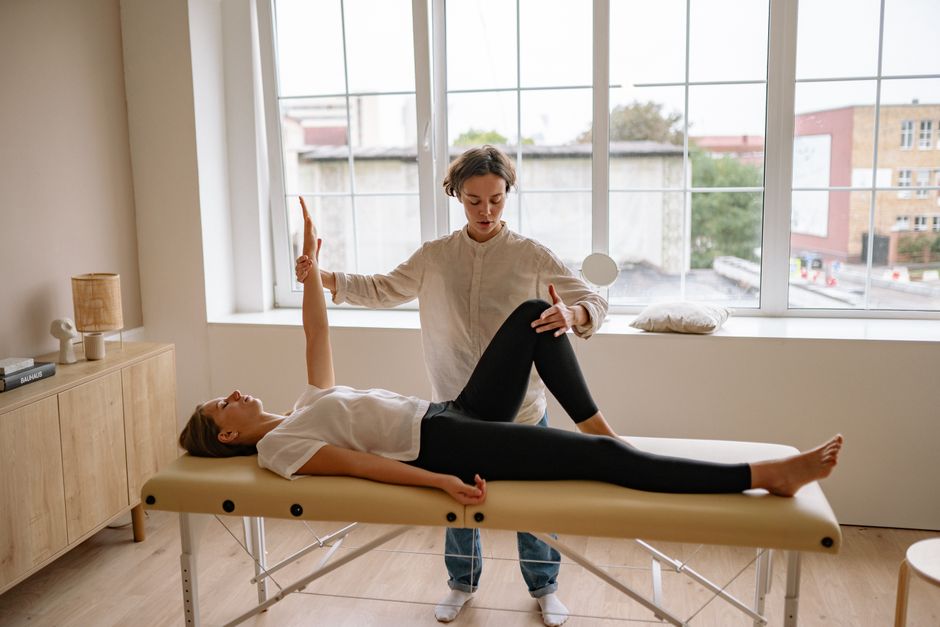
Coccyx pain, also called coccydynia, is pain at the very bottom of your spine — the small triangular bone you feel when you sit down. Most cases improve with conservative care: a cushion that keeps pressure off the bone, stretches that ease the muscles and ligaments pulling on it, and time. Surgery is rarely needed. For most people, the first line of relief is changing how you sit, not treating the bone itself.
What Is the Coccyx and Why Does It Hurt?
The coccyx is a small bone at the base of the spine. It is made of three to five fused vertebrae and sits below the sacrum. It is not useless. It serves as an attachment point for several muscles, tendons, and ligaments, including part of the gluteus maximus and the pelvic floor.
Pain in this area can come from several sources. The bone itself can be bruised or fractured. The joints between the coccyx and sacrum can become inflamed. The surrounding muscles and ligaments can tighten or spasm. In many cases, more than one of these is happening at once.
Common triggers include:
- Falling backward onto a hard surface
- Childbirth, especially vaginal delivery
- Prolonged sitting on hard or narrow surfaces
- Repetitive strain from cycling or rowing
- Being underweight, which reduces natural padding
- Being overweight, which increases pressure on the bone when sitting
One non-obvious point: the coccyx moves when you sit. It shifts slightly backward. If that movement is excessive or the bone is misaligned, the surrounding structures get irritated. This is why posture and seating matter so much.
How To Relieve Coccyx Pain Stretches Cushions More?
Two approaches do most of the work: reducing direct pressure on the bone and releasing the muscles and ligaments that pull on it. A coccyx cushion does the first. Stretches do the second. Used together, they address both the pressure and the tension that keep the pain going.
A proper coccyx cushion has a cutout or wedge at the back. This keeps the tailbone suspended rather than pressed against a seat. The result is less direct irritation every time you sit.
Stretches target the muscles that attach to or near the coccyx. When these are tight, they tug on the bone and surrounding tissue. Gentle stretching can reduce that pull. It will not fix a fracture, but it can ease muscular causes of pain.
Neither approach works overnight. Soft tissue changes take time. Most people notice gradual improvement over days to weeks, not hours.
Which Stretches Help Coccyx Pain?
Stretches for coccyx pain focus on the pelvic floor, glutes, and lower back. Move slowly. Stop if any stretch increases your pain.
Knee-to-Chest Stretch
Lie on your back. Pull one knee toward your chest, then the other. Hold for a few seconds and release. This gently lengthens the lower back and gluteal muscles. It is one of the safest starting points.
Figure-Four Stretch
Lie on your back with knees bent. Cross one ankle over the opposite knee. Pull the uncrossed leg toward your chest. You will feel this in the glute and hip. Tight glutes can pull on the coccyx area.
Pelvic Tilt
Lie on your back with knees bent and feet flat. Flatten your lower back against the floor by tightening your abdominal muscles. Hold briefly, then relax. This builds awareness of pelvic position, which affects how you sit.
Child’s Pose
Kneel and sit back on your heels, then fold forward with arms extended. This stretches the lower back and hips. If sitting back on your heels is uncomfortable, place a cushion between your calves and thighs.
Cat-Cow
On hands and knees, alternate between arching and rounding your spine. This improves mobility through the lower back and pelvis. It is gentle enough for most people with coccyx pain.
Pelvic floor physical therapy is worth mentioning here. A trained therapist can assess whether your pelvic floor muscles are contributing to the pain and teach targeted release techniques. Some clinicians recommend this when basic stretches are not enough. The evidence for pelvic floor therapy in coccydynia is growing but not yet extensive.
How Do Coccyx Cushions Work?
A coccyx cushion works by removing pressure from the tailbone. Standard seats press directly on the coccyx. A cutout or wedge design suspends the bone over empty space so it does not bear your body weight.
There are two main types:
- Cutout cushions have a notch or hole at the back. The tailbone sits over the gap.
- Wedge cushions tilt your pelvis forward. This shifts pressure from the coccyx to the thighs and buttocks.
Some cushions combine both features. Memory foam and gel options are common. The right choice depends on your body and how you sit.
A cushion is not a cure. It is a tool that reduces daily irritation. Think of it as removing a repeated insult so the tissue has a chance to calm down. If you keep sitting on a hard surface without one, the irritation continues and other treatments have less chance to work.
One practical detail: not all “donut” cushions help. A full ring cushion can actually increase pressure on the coccyx in some people because the back of the ring pushes up against the bone. A cushion with a true cutout at the rear is usually the better design for coccyx pain.
What Else Helps Besides Stretches and Cushions?
Several other measures can support recovery. None of them replace reducing pressure and releasing tension, but they can help.
Posture changes. Sit with your weight evenly distributed. Avoid leaning back onto the tailbone. When possible, shift your weight from side to side rather than staying in one position for long periods.
Standing breaks. Get up every 30 minutes or so if you can. Prolonged sitting is the main aggravator for most people with coccydynia.
Heat or cold. A warm compress can relax tight muscles. An ice pack can reduce inflammation after an injury. Some people alternate between the two.
Over-the-counter pain relievers. Nonsteroidal anti-inflammatory drugs such as ibuprofen can reduce pain and inflammation. Follow the label directions. If you have stomach, kidney, or heart conditions, or take blood thinners, talk to a doctor or pharmacist first.
Activity modification. Avoid activities that put direct pressure on the coccyx, such as cycling or rowing, until the pain settles. Walking and swimming are usually better choices.
For persistent cases, some clinicians use injections of a local anesthetic and steroid into the coccyx area. This is a medical procedure, not a home remedy. Evidence for its effectiveness is mixed. It is generally considered when conservative measures have not worked after a reasonable period.
When Should You See a Doctor?
See a doctor if the pain is severe, does not improve after several weeks of home care, or follows a fall or injury. Imaging may be needed to check for a fracture or other structural problem.
Seek care sooner if you have:
- Numbness or tingling in the legs or groin
- Loss of bowel or bladder control
- Pain that is getting worse rather than better
- Fever along with the pain
- Unexplained weight loss
Those last few signs can point to something more serious than coccydynia, and they need prompt evaluation.
Most people with coccyx pain get better without surgery. Conservative treatment — cushions, stretches, posture changes, and time — is the standard first approach. Surgery to remove part or all of the coccyx is reserved for cases that do not respond to everything else, and it carries real risks. It is not a first-line option.
Frequently Asked Questions
How long does coccyx pain usually last?
Many cases improve within weeks to a few months with conservative care. Some people have lingering discomfort that lasts longer, especially after a fracture or childbirth.
Can I sit normally with a coccyx cushion?
Yes. A cushion with a rear cutout lets you sit while keeping pressure off the tailbone. It is meant to be used during normal sitting, not just for short periods.
Are stretches safe if my coccyx is fractured?
Gentle stretches are often fine, but a fracture needs medical evaluation first. Ask a doctor before starting any stretching routine if you have had a recent fall or injury.
Does walking make coccyx pain worse?
Walking is usually easier on the coccyx than sitting because it does not press the bone against a surface. If walking hurts, mention it to a doctor so other causes can be checked.
