
A back spasm is your spinal muscles contracting hard and involuntarily, often without warning. For most people, home care works: ice in the first 24 to 48 hours to calm acute inflammation, then heat to relax the muscle and ease stiffness. Gentle movement, not bed rest, helps most people recover faster. Red flags like loss of bladder control, saddle numbness, or weakness in both legs mean you need medical care right away, not home treatment.
What Is Actually Happening During a Back Spasm?
A spasm is a sustained, involuntary contraction of the muscles that run along your spine. The muscle fibers lock down and will not release on their own. This is different from a dull ache or general soreness. It is a distinct event with a clear beginning and, usually, a clear end.
The mechanism is not fully understood, but the leading explanation involves a protective reflex. When something irritates a structure in your back — a joint, a disc, a nerve root, or the muscle itself — the nervous system responds by tightening the surrounding muscles. The intent is to splint and protect the area. The result is pain and stiffness that can be worse than the original trigger.
This reflex explains something important: the muscle is not the problem. It is responding to a problem. That is why treatment focuses on calming both the muscle and the underlying irritation.
Most episodes are not caused by a single dramatic injury. Lifting something awkwardly, twisting while reaching, or simply bending over can set one off. Sometimes there is no clear trigger at all. Underlying contributors include weak core muscles, prolonged sitting, poor sleep, and high stress — all of which affect how the nervous system regulates muscle tone.
Should You Use Ice or Heat for a Back Spasm?
Ice first, then heat. That is the general approach most clinicians recommend for an acute spasm. Ice reduces blood flow to the area and dampens the inflammatory response that follows tissue irritation. Heat increases blood flow and helps the muscle fibers relax.
The timing matters more than most people realize. Ice is most useful in the first 24 to 48 hours after a spasm starts. After that window, heat tends to be more helpful.
How to apply ice
Use a cold pack, a bag of frozen vegetables wrapped in a thin cloth, or an ice massage cup. Never place ice directly on bare skin — it can cause a cold burn. Apply for up to 15 to 20 minutes at a time, then remove it and let the skin return to normal temperature before reapplying. A barrier between the ice and your skin is not optional.
How to apply heat
Heating pads, warm showers, and hot water bottles all work. The same time limit applies: 15 to 20 minutes per session. Heating pads with automatic shutoff are safer than ones without, because falling asleep on a heating pad is a common cause of burns. Moist heat — a warm damp towel or a hot shower — often feels more soothing than dry heat for muscle spasms.
If you are unsure which to use, the practical rule is simple: if the area feels hot, swollen, or newly injured, use ice. If it feels tight, stiff, and achy, use heat.
What Else Helps Beyond Ice and Heat?
Ice and heat address symptoms. These measures address the spasm itself and support recovery.
- Gentle movement. Bed rest beyond a day or two tends to make back pain worse, not better. Short walks, slow gentle stretching, and changing positions regularly help. The goal is movement within a pain-free range, not pushing through pain.
- Over-the-counter pain relievers. Nonsteroidal anti-inflammatory drugs like ibuprofen and naproxen are commonly used for acute back pain. Acetaminophen may help with pain but does not reduce inflammation. Follow package directions and check with a pharmacist or doctor if you take other medications or have kidney, stomach, or heart conditions.
- Topical analgesics. Creams and patches containing menthol, camphor, or lidocaine are widely available and generally low-risk. Evidence for their effectiveness in back spasm specifically is limited, but many people find them helpful for surface pain.
- Sleep position. Side sleeping with a pillow between your knees, or back sleeping with a pillow under your knees, reduces strain on the lower back.
- Muscle relaxants. These require a prescription. They are sometimes used for short periods in acute spasm. They cause drowsiness and are not appropriate for everyone. This is a conversation to have with a clinician, not a self-treatment option.
One point that gets lost: the evidence for most individual home remedies for back spasm is modest. What has the strongest support is staying active, avoiding prolonged bed rest, and giving the episode time. Most acute back spasms improve within a few days to a few weeks.





How Long Does a Back Spasm Usually Last?
Most acute episodes ease within a few days. Full resolution often takes one to four weeks, depending on the cause and your overall health. The severe, locked-up phase typically does not last more than a few days.
Recovery is rarely linear. You may feel significantly better one day and worse the next. That pattern is normal and does not mean you reinjured yourself. It usually reflects fluctuations in muscle tone, inflammation, and activity level.
If pain is not improving after a few weeks, or if it keeps returning, that is a signal to get evaluated. Recurrent spasms often point to an underlying issue — a disc problem, spinal stenosis, or chronic muscle imbalance — that home care will not resolve.
When Should You See a Doctor for a Back Spasm?
Most back spasms can be managed at home. Some cannot. Seek medical care promptly if you have any of the following:
- Loss of bladder or bowel control
- Numbness in the groin or inner thigh area — sometimes called saddle numbness
- Progressive weakness in one or both legs
- Severe pain that is not improving or is getting worse despite home care
- Fever, chills, or unexplained weight loss along with back pain
- A history of cancer, recent serious infection, or significant trauma
- Back pain following a fall or accident
The combination of saddle numbness and loss of bladder or bowel control is a medical emergency. It can indicate cauda equina syndrome, a rare but serious condition where nerves at the base of the spinal cord are compressed. This requires immediate evaluation. Do not wait to see if it improves.
You should also see a doctor if this is your first episode of severe back pain after age 50, or if you have osteoporosis, long-term steroid use, or a history of fractures. These factors raise the chance of a compression fracture rather than a simple muscle spasm.
Can You Prevent Back Spasms From Coming Back?
Recurrence is common, but there are steps that reduce the odds. The evidence for prevention is stronger for exercise and activity than for most other interventions.
Strengthening the muscles that support your spine — the core, glutes, and back extensors — helps. So does regular aerobic activity like walking or swimming. Both improve muscle endurance and reduce the likelihood that a minor strain triggers a full spasm.
Ergonomics matter, though the evidence is less clear than it is for exercise. If you sit for long stretches, stand and move every 30 to 45 minutes. Adjust your chair so your feet are flat and your lower back is supported. If you lift regularly, learn to lift with your legs and keep the load close to your body.
Sleep and stress are underappreciated factors. Poor sleep and high stress both increase muscle tension and lower pain tolerance. Addressing these is not a cure, but it changes the conditions that make a spasm more likely.
One non-obvious point: stretching alone is not a proven prevention strategy. It feels good and can improve short-term flexibility, but the evidence that it prevents future spasms is weak. Strength and regular movement have better support.
What About Massage, Foam Rolling, and Other Approaches?
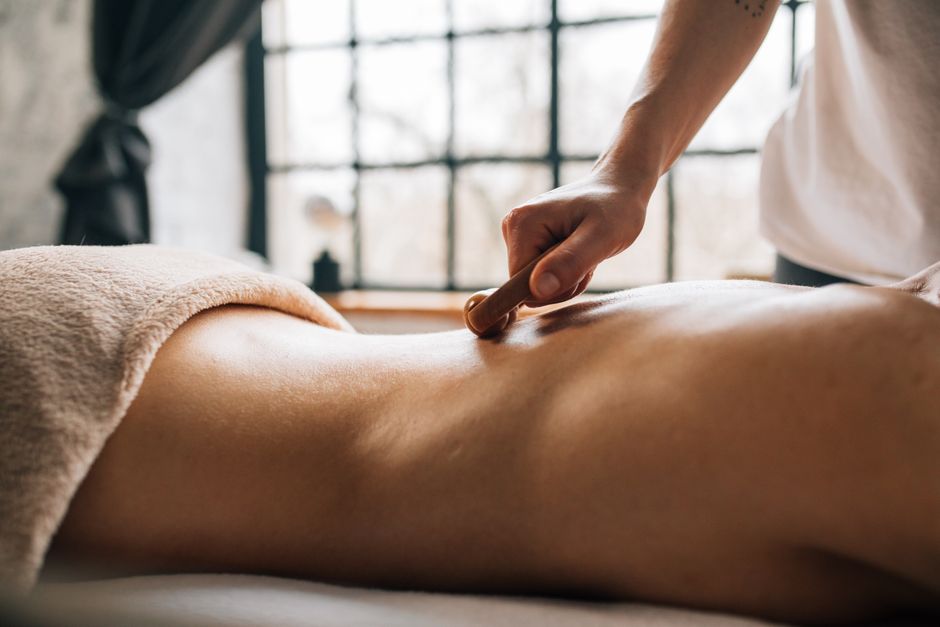
Massage can ease muscle tightness and reduce pain in the short term. The evidence for it in acute back spasm specifically is limited, but it is generally low-risk. A gentle massage is reasonable. Deep tissue work during an acute spasm can make things worse — the muscle is already guarding, and aggressive pressure can increase the reflex contraction.
Foam rolling is popular but has little direct evidence for back spasm. It may help with general muscle tightness. Avoid rolling directly over the spine or an acutely painful area.
Chiropractic adjustment is used by many people for back pain. Some studies suggest it can help with short-term pain relief for certain types of back pain, but evidence specifically for acute muscle spasm is limited. If you pursue it, choose a licensed practitioner and stop if symptoms worsen.
What does not have good evidence: traction devices marketed for home use, inversion tables for acute spasm, and most “back support” belts for long-term use. These are not harmful for everyone, but the claims made about them often outrun the evidence.
Frequently Asked Questions
Is ice or heat better for a back spasm?
Ice is generally better in the first 24 to 48 hours, and heat is generally better after that. If the area feels hot or newly injured, use ice; if it feels tight and achy, use heat.
How long should you leave ice on a back spasm?
Apply ice for up to 15 to 20 minutes at a time, always with a cloth barrier between the ice and your skin. Wait until the skin returns to normal temperature before reapplying.
Should you rest or move with a back spasm?
Gentle movement is generally better than prolonged bed rest. Short walks and slow stretching within a pain-free range help most people recover faster than staying still.
When is a back spasm an emergency?
Loss of bladder or bowel control, numbness in the groin or inner thighs, or progressive leg weakness are emergency signs that need immediate medical evaluation. Do not wait to see if these improve on their own.
