
Sleeping during pregnancy is hard enough without back pain waking you up every few hours. The good news is that most pregnancy-related back pain can be reduced with the right sleeping position and a few simple adjustments. The most effective approach is to sleep on your side with a pillow between your knees and another supporting your belly, which keeps your spine aligned and takes pressure off your lower back. Combining this with a firm mattress, a warm compress before bed, and gentle stretching can make a significant difference in how you feel each morning.
Why Does Pregnancy Cause Back Pain at Night?
Your body changes a lot during pregnancy, and those changes directly affect your spine. As your baby grows, your uterus expands and shifts your center of gravity forward. This causes you to arch your lower back more than usual, which strains the muscles and ligaments there.
Hormones also play a major role. Your body releases a hormone called relaxin during pregnancy. Relaxin loosens the ligaments in your pelvis so your body can prepare for childbirth. But it also loosens the ligaments around your spine, making your back less stable and more prone to strain.
At night, these factors combine. You are lying still for hours, often in a position that puts extra pressure on your spine. Without the movement and support you have during the day, the pain can build up and disrupt your sleep.
The Best Sleeping Position for Pregnancy Back Pain
Sleeping on your side is the most recommended position during pregnancy, especially in the second and third trimesters. Left-side sleeping is often suggested because it improves blood flow to your heart and your baby. But for back pain specifically, the key is proper alignment.
To get the right alignment, place a firm pillow between your knees. This keeps your hips level and prevents your top leg from pulling your pelvis out of alignment. Place another pillow under your belly for support. This prevents your uterus from pulling your spine forward and reduces strain on your lower back.
Some women find relief by using a full-body pregnancy pillow. These long pillows support your back, belly, and knees all at once. They can feel awkward at first, but many women say they make a real difference in sleep quality. If you try one, give it a few nights before deciding if it works for you.
How To Relieve Back Pain During Pregnancy While Sleeping: Position Adjustments
If you wake up in pain during the night, your first instinct might be to switch positions quickly. Instead, make slow, deliberate movements. Rolling over too fast can twist your spine and make the pain worse.
When you need to change sides, bend your knees, tighten your abdominal muscles, and roll as a unit. Keep your shoulders and hips moving together. This reduces twisting and protects your lower back.
Placing a rolled-up towel or small pillow in the curve of your lower back can also help. This fills the gap between your back and the mattress, giving your muscles something to rest against. Some women find this alone reduces morning stiffness significantly.
If you are still uncomfortable, try elevating your upper body slightly. Some women find that a slight incline, like using a wedge pillow under your shoulders, takes pressure off the lower back. This is not the same as sleeping propped up in a chair, which can strain your neck. A small incline of about 15 to 20 degrees is usually enough.




Mattress Firmness and Support During Pregnancy
A mattress that is too soft can make pregnancy back pain worse. When your mattress sinks in the middle, your spine curves unnaturally and your muscles work harder to keep you in place. A medium-firm to firm mattress generally provides better support for a growing belly.
If you cannot replace your mattress, consider a firm mattress topper. These are much cheaper than a new bed and can provide the extra support you need. Look for a topper made of high-density foam or latex, not a soft feather topper, which will not offer enough support.
Some women find that placing a board under a soft mattress helps. This is a practical option if you are staying somewhere temporarily or cannot afford a new bed. The goal is simply to prevent your spine from sinking into an unnatural curve.
Pre-Sleep Habits That Reduce Nighttime Back Pain
What you do in the hour before bed matters as much as your sleeping position. A warm compress or heating pad on your lower back for 15 to 20 minutes before bed can relax tense muscles. Use the lowest setting and place a cloth between the pad and your skin. Do not sleep with a heating pad on, as this can cause burns.
Gentle stretching can also help. Pelvic tilts are a safe and effective stretch during pregnancy. Get on your hands and knees, then gently tuck your pelvis under and round your back like a cat. Hold for a few seconds, then release. Repeat this five to ten times before bed.
A warm bath can be very soothing, but be careful about water temperature. Your core body temperature should not rise above 102°F. Keep the bath warm, not hot, and limit it to 15 minutes. If you are not sure about the temperature, check with your prenatal care provider.
Your sleep environment matters too. A cool, dark room promotes deeper sleep, and deeper sleep means your muscles have more time to recover. Try to keep your bedroom around 65 to 68°F and use blackout curtains if morning light wakes you early.
What To Do When You Wake Up in Pain During the Night
Waking up in pain is frustrating, but there are steps you can take that do not involve getting fully out of bed. First, change your position slowly using the roll technique described earlier. Sometimes simply shifting from one side to the other relieves pressure on a specific spot.
If changing position does not help, get out of bed carefully and walk for a minute or two. Gentle movement can release muscle tension that built up while you were still. Walk to the bathroom and back, then try a few pelvic tilts before getting back into bed.
A quick massage can help. Have your partner gently press along the muscles beside your lower spine. Use firm but gentle pressure. Avoid pressing directly on your spine or your belly. If you are alone, a tennis ball pressed against the wall and rolled along your lower back can provide similar relief.
If the pain is severe and does not improve with position changes or movement, contact your healthcare provider. Sharp, shooting pain, pain that radiates down your legs, or pain accompanied by fever or contractions needs medical attention.
When To Talk to Your Doctor About Pregnancy Back Pain
Some back pain during pregnancy is normal, but not all pain should be ignored. You should contact your healthcare provider if the pain is severe, if it comes on suddenly, or if it does not improve with rest and position changes.
Pain that radiates down your leg, especially past the knee, can be a sign of sciatica or a pinched nerve. Numbness or tingling in your legs or feet also warrants a call to your doctor. These issues often improve with the same positioning strategies, but you should have them evaluated.
Back pain accompanied by vaginal bleeding, fever, burning during urination, or contractions could be a sign of a more serious condition. Preterm labor can sometimes feel like lower back pain. If you have any of these symptoms, call your provider immediately.
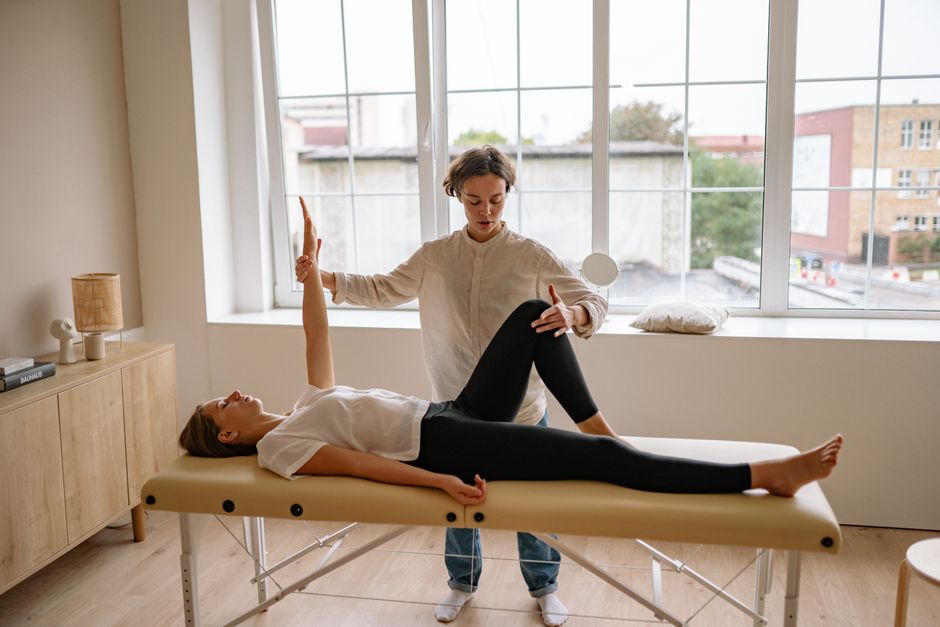
Physical therapy is a safe and effective option during pregnancy. A physical therapist who specializes in prenatal care can teach you specific exercises to strengthen your core and stabilize your pelvis. Many women find that a few sessions with a physical therapist provide more relief than weeks of trying different pillows and positions on their own.
Frequently Asked Questions
Frequently Asked Questions
Is it safe to sleep on my back during pregnancy?
Sleeping on your back is not recommended after about 20 weeks of pregnancy. The weight of your uterus can press on a major blood vessel and reduce blood flow to you and your baby.
What type of pillow is best for pregnancy back pain?
A firm pillow between your knees and another under your belly provides the most targeted support. Full-body pregnancy pillows can work well but take a few nights to get used to.
Can I use a heating pad for pregnancy back pain at night?
Yes, but only for 15 to 20 minutes before bed on the lowest setting. Do not sleep with a heating pad on, as this can cause burns.
When should I call my doctor about pregnancy back pain?
Call your doctor if the pain is severe, sudden, or accompanied by fever, bleeding, or contractions. Pain that radiates down your leg past the knee also needs evaluation.
