
If you have dealt with hamstring tightness for months or years, you know the feeling. You stretch and stretch, but the tightness comes back within days. The reason is simple: most people treat the symptom, not the cause. To release hamstring tightness for good, you need to stop relying on stretching alone and start addressing the real drivers — muscle imbalances, weak glutes, poor posture, and sometimes nerve tension. This article explains what actually works based on anatomy and clinical evidence.
Why Do Your Hamstrings Keep Getting Tight?
The hamstrings are three muscles running down the back of your thigh. They bend your knee and extend your hip. When they feel tight, the cause is often not that the muscles are short. True muscle shortening is less common than people think. More often, tightness is a protective response from your nervous system.
Common reasons include:
- Prolonged sitting. Sitting keeps your hips flexed and your hamstrings shortened for hours. Over time, your brain adapts to that position. When you stand, the hamstrings feel stretched even though they are at a normal length.
- Weak glutes. Your gluteal muscles are the primary hip extensors. If they are weak, your hamstrings take over that job. They become overworked and chronically tight.
- Anterior pelvic tilt. A forward-tilted pelvis places the hamstrings under constant passive tension. Stretching them while the pelvis stays tilted will never produce lasting relief.
- Neural tension. The sciatic nerve runs through or near the hamstrings. If the nerve is irritated or restricted, moving your leg into a stretch can pull on the nerve, causing a sensation of tightness that is really nerve tension, not muscle tightness.
- Previous injury. Scar tissue or altered movement patterns after a hamstring strain can cause persistent tightness.
Understanding which factor applies to you is the first step to fixing it for good.
How To Release Hamstring Tightness For Good
Lasting release requires a combination of approaches. No single stretch or tool works for everyone. Here are the methods with the strongest evidence.
Eccentric strengthening
Eccentric exercises — lengthening the muscle under load — are the most effective treatment for chronic hamstring tightness and tendinopathy. The Nordic hamstring curl is the best-studied example. Lower yourself slowly from a kneeling position while a partner holds your ankles. Research consistently shows that eccentric training reduces injury risk and improves flexibility more than stretching alone.
Soft tissue work with caution
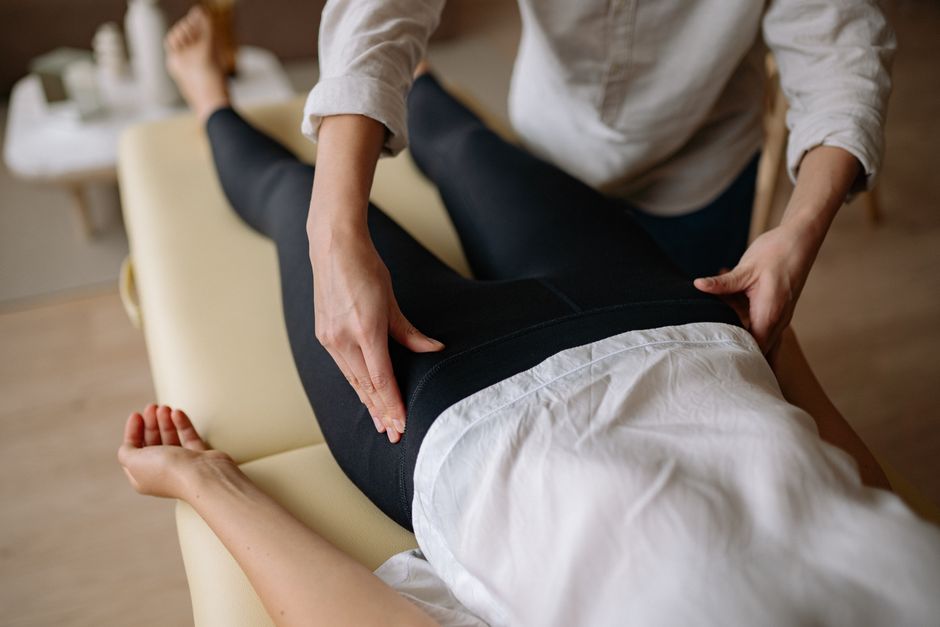
Foam rolling, massage guns, and manual therapy can temporarily reduce muscle tone. The effect lasts a few hours to a day. Use these after exercise, not before. Do not dig into sharp pain — that can aggravate the muscle or nerve. Self-massage is a useful short-term tool but is not a permanent solution.
Address pelvic position
If you have an anterior pelvic tilt, stretching your hamstrings without correcting the tilt will not help. Strengthen your core and glutes to bring the pelvis into a neutral position. Exercises like dead bugs, glute bridges, and planks are foundational. Once your pelvis is stable, hamstring stretches become more effective.
Neural flossing
If you suspect nerve tension (tightness that is sharp or radiates), nerve gliding exercises may help more than muscle stretches. A simple example is the seated nerve glide: sit tall, straighten one leg, flex your foot, and gently tuck your chin toward your chest. Hold a few seconds, then release. Repeat without forcing. Nerve glides are gentle movements that encourage the nerve to slide freely inside its sheath.
Consistency over intensity
Doing these exercises two to three times per week for at least six to eight weeks is typical before seeing lasting change. Sporadic stretching or one intense session rarely works.
Does Stretching Actually Help?
Static stretching — holding a stretch for 30 seconds or longer — temporarily increases range of motion. However, the effect is short-lived. A 2015 review of studies found that static stretching alone does not prevent injuries or reduce chronic tightness in the long term.
Dynamic stretching (controlled movements through a range, like leg swings) before activity is better for preparing muscles. Static stretching after exercise may feel good but does not address underlying causes. If you enjoy stretching, keep doing it — but do not expect it to fix the problem by itself.
One reason stretching fails is that it does not change muscle length permanently. The feeling of release comes from your nervous system allowing a longer range, not from the muscle physically lengthening. That is why tightness returns so quickly if the triggers (weak glutes, poor posture, nerve tension) remain.





The Role of Hip and Core Strength
Your hamstrings do not work alone. They are part of a chain that includes your glutes, hips, and core. When your glutes are weak, your hamstrings have to work harder every time you walk, run, or stand up. That extra workload keeps them tight.
Strengthening your glutes is one of the most evidence-backed ways to reduce hamstring tightness. Exercises like hip thrusts, single-leg bridges, and step-ups target the glutes directly. A 2019 study in the Journal of Orthopaedic & Sports Physical Therapy showed that runners with hamstring injuries had significantly weaker glutes compared to uninjured runners.
Core strength matters too. A weak core allows your pelvis to tilt forward, which pulls on the hamstrings. Planks, side planks, and dead bugs help stabilize the pelvis. When the pelvis is neutral, the hamstrings are no longer under constant tension.
Neural Tension vs. Muscle Tightness
Many people with chronic hamstring tightness actually have nerve-related tightness, not muscle tightness. The sciatic nerve runs from your lower back down the back of your leg. If the nerve is compressed or irritated — often from sitting, disk issues, or piriformis syndrome — moving your leg into a hamstring stretch pulls on the nerve and produces a sensation of tightness, burning, or tingling.
How can you tell the difference? A simple test: sit on the edge of a chair, straighten one leg in front of you, and point your toe toward your nose. Then slouch your head and shoulders forward. If the tightness increases when you slouch, nerve tension is likely involved. If the tightness does not change, it is probably muscle.
For nerve tension, traditional hamstring stretches can actually make things worse. Nerve gliding exercises, as described earlier, are a safer alternative. If you have persistent nerve symptoms — numbness, tingling, or pain radiating below the knee — see a healthcare provider before continuing any self-treatment.
When to See a Professional
Most cases of hamstring tightness respond to the self-care strategies above within several weeks. However, see a physical therapist or sports medicine provider if:
- You have sharp pain during activity or at rest
- The tightness is accompanied by numbness, tingling, or burning
- You have a history of hamstring tears or strains
- Self-care has not helped after six to eight weeks
- You cannot bear weight on the leg or have visible bruising
A professional can perform a full assessment to identify the exact cause — whether it is muscle, nerve, or joint related — and design a program specific to your needs. Imaging like ultrasound or MRI is rarely needed for simple tightness but may be used if a tear is suspected.
Frequently Asked Questions
How long does it take to release tight hamstrings for good?
With consistent strengthening and postural correction, most people notice improvement within four to eight weeks.
Can sitting cause tight hamstrings?
Yes, prolonged sitting keeps the hamstrings shortened and can also contribute to anterior pelvic tilt and weak glutes, which perpetuate tightness.
Should I stretch a pulled hamstring?
No, avoid stretching a pulled (strained) hamstring in the acute phase, as it can worsen the injury. Rest, ice, and gentle movement within pain-free limits are recommended initially.
Are hamstring stretches safe if I have lower back pain?
Not always; some stretches can increase stress on the lower back or aggravate nerve symptoms. A physical therapist can recommend safe alternatives.
