
A tight tensor fasciae latae (TFL) can create a sharp, nagging pain on the outside of your hip that gets worse with walking, stairs, or lying on that side. Releasing it starts with calming the muscle itself, then retraining the way you stand and move so it stops overworking. The most reliable tools are targeted soft tissue work, specific stretches, and strengthening the muscles that should be doing the TFL’s job.
What Is The TFL And Why Does It Get Tight?
The tensor fasciae latae is a small muscle at the front and outside of your hip. It is roughly the size of your palm. It starts on the front of your pelvis and runs down to join a thick band of connective tissue called the iliotibial (IT) band, which continues down the outside of your thigh to just below the knee.
The TFL has two jobs. It helps flex your hip (lift your knee forward) and it helps rotate your leg inward and pull it out to the side. It also adds tension to the IT band, which helps stabilize your pelvis when you stand on one leg.
Here is the non-obvious part. The TFL is not really designed to be a major postural muscle. It is a small, fast-twitch muscle built for quick movements. When it becomes your main stabilizer during standing and walking, it works far harder than it is built for. That overuse is what most people feel as “tightness.”
Several things push the TFL into that overworked role:
- Weak gluteal muscles, especially the gluteus medius, which should do most of the pelvis-stabilizing work
- Prolonged sitting, which keeps the hip flexors short and the glutes inactive
- Running or walking with poor hip control, so the pelvis drops with each step
- A sudden increase in activity, especially hills, stairs, or running distance
Worth being clear about: true “tightness” in the sense of a shortened, inelastic muscle is not always what is happening. A muscle can feel tight because it is overworked, guarding, or fatigued. It can also feel tight after prolonged sitting even when its actual resting length has not changed much. This matters because stretching a muscle that is already overstretched or fatigued can make symptoms worse, not better.
How To Release A Tight Tfl For Hip Pain Relief
Effective release combines three things: reducing the muscle’s resting tension, restoring normal hip motion, and teaching the surrounding muscles to share the load. Doing only one of these rarely holds up.
Step 1: Soft tissue release
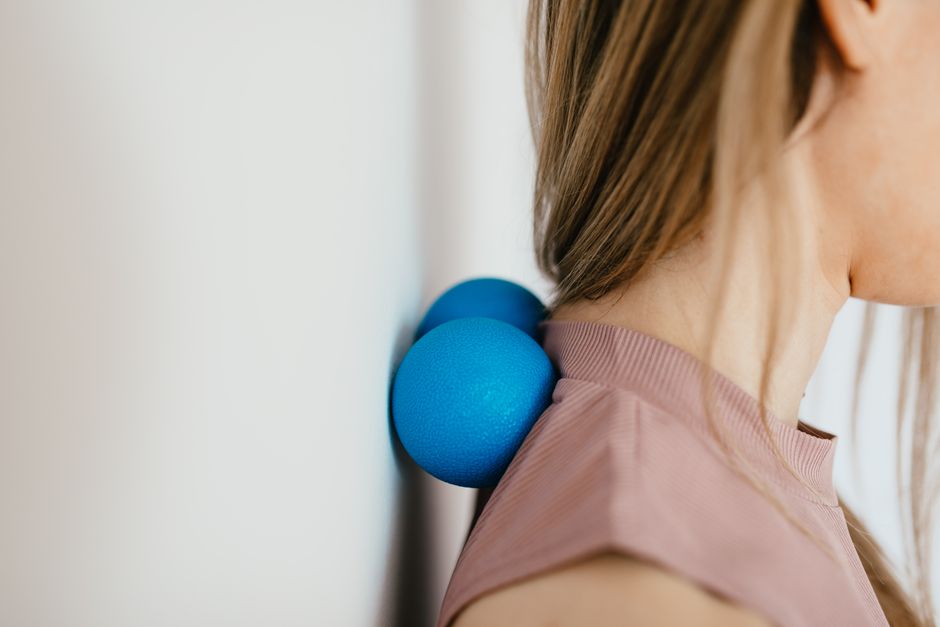
Self-massage can temporarily reduce muscle tension and improve how the tissue feels. Use a massage ball or your thumbs on the TFL itself, which sits just below and slightly forward of the bony point on the outside of your hip.
Press into the muscle and hold steady pressure for 30 to 60 seconds while breathing slowly. Small, slow circles work too. Keep the pressure at a level that feels like a strong but tolerable stretch, not sharp pain. Work on the muscle belly, not directly on the bony hip point or on the IT band itself, which is dense connective tissue and does not respond to pressure the way muscle does.
Be realistic about what this does. Massage and foam rolling reduce how tight a muscle feels. Evidence that they permanently lengthen tissue or “break up” adhesions is limited. Think of it as a short-term window of relief that makes movement easier, not a fix on its own.
Step 2: Stretch the hip flexors, not just the TFL
Directly stretching the TFL is awkward and often not the most useful move. A half-kneeling hip flexor stretch with a slight backward lean and a gentle tilt of the pelvis tends to be more productive. Hold for 20 to 30 seconds, repeat two to three times per side, and keep it pain-free.
Some people find a side-lying stretch helpful. Lie on your side with your top leg bent and the knee supported, then gently lower the knee toward the surface in front of you until you feel a stretch at the front-outside of the hip. Stop before anything pinches.
Step 3: Strengthen the glutes
This is the step most people skip, and it is the one that matters most for lasting relief. If the TFL is overworking, the fix is to give the job to stronger muscles.
Side-lying leg raises, standing hip abduction, and side steps with a resistance band all target the gluteus medius. Bridges and single-leg bridges target the gluteus maximus. Start with two to three sets of 8 to 12 controlled repetitions and build from there. Quality matters more than quantity. If you feel the TFL burning or cramping during these exercises, the glutes are not doing the work yet. Reduce the resistance and slow down.
Step 4: Change the daily habits feeding the problem
Stand up every 30 to 45 minutes if you sit for long stretches. When you stand, shift weight evenly rather than parking on one hip. During walks, think about pushing off through the whole foot instead of rolling inward at the ankle.
Should You Foam Roll The IT Band?
Foam rolling directly on the IT band is very common and mostly ineffective for the reason people do it. The IT band is a thick band of connective tissue. Research has not shown that foam rolling lengthens it or changes its structure.
What foam rolling can do is reduce pain perception and improve how the surrounding muscles feel. Some studies suggest rolling the outer thigh and glute area can temporarily ease discomfort. If it feels good and does not cause sharp pain, it is reasonable to include. If it is intensely painful or leaves you bruised, back off. Pain during rolling is not a sign it is working.
Roll the muscle tissue around the hip and outer glute, not the bony hip point or the knee. Keep each pass slow and spend no more than about a minute on any one spot.
When Is Hip Pain Not The TFL?
Pain on the outside of the hip has several possible causes, and they are easy to confuse. The TFL is only one of them.
Greater trochanteric pain syndrome, which involves the bursa or the gluteal tendons at the outer hip, is a common cause of the same kind of pain. It typically hurts more when lying on the affected side or pressing on the outer hip bone. Gluteal tendinopathy causes similar pain and often worsens with standing on one leg or climbing stairs.
Hip joint problems, referred pain from the lower back, and nerve irritation can also produce outer hip pain. A pinching sensation at the front of the hip, especially with deep squatting or sitting, points more toward the hip joint itself than the TFL.
See a clinician if any of these apply:
- Pain that is severe, getting worse, or waking you at night
- Weakness, numbness, or tingling in the leg
- Pain after a fall or injury
- Pain that does not improve after several weeks of consistent self-care
- Difficulty bearing weight
These signs do not confirm a specific diagnosis. They are reasons to get an assessment rather than guess.
How Long Does It Take To Feel Better?
Many people notice some easing of symptoms within a few days of consistent soft tissue work and stretching. Lasting change usually takes longer, often several weeks, because the strength and movement pattern changes are what hold the result in place.
Consistency matters more than intensity. Five to ten minutes of targeted work most days beats one long session per week. If symptoms are not improving after four to six weeks of steady effort, or if they are worsening, that is a signal to get a proper assessment rather than push harder.
What Makes TFL Tightness Come Back?
Relief that fades is usually a sign the underlying cause was never addressed. If the glutes stay weak and the sitting habits stay the same, the TFL will return to overworking. The muscle is not the problem so much as the demand placed on it.
The people who keep their results tend to keep the strengthening going even after pain resolves. Two short sessions a week is often enough to maintain glute strength. Stretching and rolling can become occasional tools rather than daily requirements.
It also helps to look at your training. Big jumps in running volume, added hill work, or a new workout class can overload the hip before the muscles adapt. Building gradually gives the glutes time to take on more of the load.
Frequently Asked Questions
How do you release a tight TFL?
Apply steady pressure with a massage ball to the muscle just below and forward of the outer hip bone for 30 to 60 seconds, then follow with hip flexor stretching and glute strengthening. The strengthening is what keeps the muscle from tightening again.
Should you stretch a tight TFL?
Gentle stretching can help, but the bigger priority is strengthening the glutes so the TFL stops overworking. Aggressive stretching of an already overworked muscle can increase irritation rather than relieve it.
Does foam rolling help TFL pain?
Foam rolling may temporarily reduce how tight the area feels, but research has not shown it lengthens the IT band or changes its structure. Use it as a short-term comfort tool, not a standalone fix.
How long does TFL pain take to go away?
Many people notice some relief within days of consistent self-care, while lasting improvement usually takes several weeks. See a clinician if pain is not improving after four to six weeks or is getting worse.
