
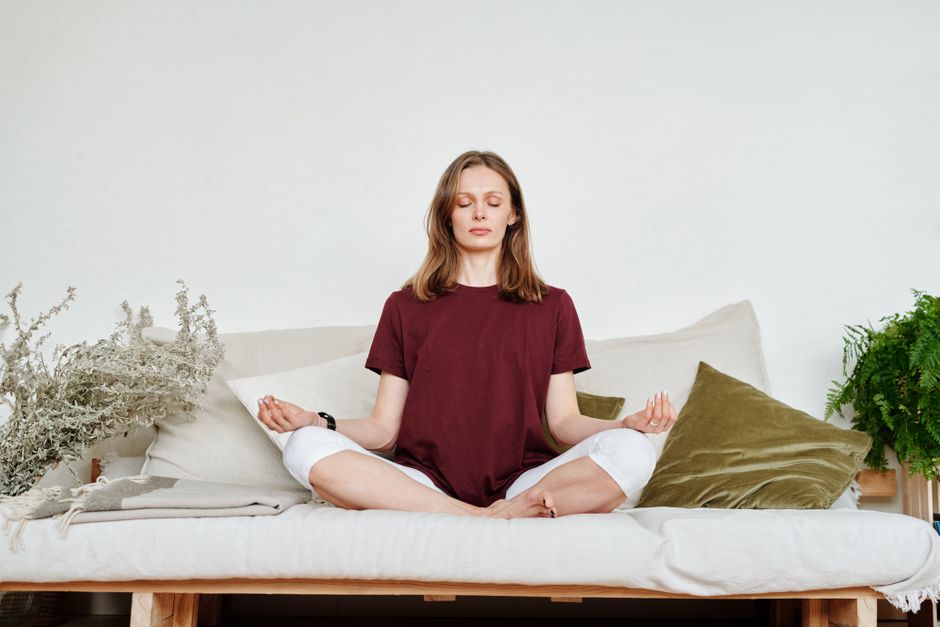
Anxiety is a full-body state, not just a feeling in your head. When your brain senses a threat, it releases stress hormones that speed up your heart, tighten your muscles, and quicken your breathing. You can relax your mind and body by using slow breathing, grounding techniques, gentle movement, and gradual exposure to what you fear — the same methods that quiet the body’s alarm system and help the mind follow.
That answer sounds simple, and the skills themselves are. Using them well takes practice, and for some people, professional support. This guide explains what is actually happening in your body during anxiety, what the evidence supports, and how to build a routine that works for you.
What Happens In Your Body During Anxiety?
Anxiety triggers the same stress response your ancestors relied on to escape danger. Your brain’s alarm center, a small region called the amygdala, signals the release of adrenaline and cortisol. These hormones prepare you to act.
Your heart rate climbs. Breathing gets faster and shallower. Muscles tense. Blood flow shifts toward your limbs. Digestion slows. Pupils widen. All of this happens whether the threat is a bear or a difficult email.
The problem is that this system was built for short bursts. When anxiety stays switched on for weeks or months, the body pays a price. Chronic muscle tension can cause headaches and jaw pain. Faster breathing can make you feel dizzy or short of breath, which then feeds more anxiety. Poor sleep makes everything worse.
Understanding this helps because it explains why relaxation is not just a mental exercise. You are working with a physical system, and the body responds to physical signals.
How To Relax Your Mind And Body From Anxiety Using Breathing
Slow, controlled breathing is one of the most direct ways to calm the nervous system. It works because breathing is one of the few body functions you can control on purpose, and it connects to the part of your nervous system that slows your heart rate.
The key is to make your exhale longer than your inhale. Try breathing in for a count of four and out for a count of six. Some people prefer a box pattern: in for four, hold for four, out for four, hold for four. Both are widely taught by clinicians, and both are easy to do anywhere.
A few practical points help:
- Breathe from your belly, not your chest. Place a hand on your stomach and feel it rise.
- Keep the pace comfortable. If you feel lightheaded, you are breathing too fast or too deeply.
- Practice when you are calm, not only when anxious. Skills learned in calm moments are easier to use under stress.
Physiological sighing is another option. It means taking two quick inhales through the nose and one long exhale through the mouth. Some research suggests this pattern may calm the body quickly, though the evidence base is still growing. It is simple, free, and worth trying.
Why Does Grounding Help During An Anxiety Spike?
Grounding pulls your attention out of the spiral of anxious thoughts and into the present moment. Anxiety lives in the future — what might happen, what could go wrong. Grounding brings you back to what is actually here right now.
The 5-4-3-2-1 technique is a common approach. Name five things you can see, four you can touch, three you can hear, two you can smell, and one you can taste. It works because it gives your mind a specific task and uses your senses, which are hard to ignore.
Other grounding methods include:
- Pressing your feet firmly into the floor and noticing the pressure.
- Holding something cold, like an ice cube or a chilled glass.
- Naming objects in the room out loud.
- Splashing cold water on your face.
Grounding does not remove the anxious feeling. It gives you a foothold so the feeling does not take over. For many people, that is enough to ride out the peak.




Can Movement And Muscle Relaxation Calm Anxiety?
Yes, and the effect is well documented. Physical activity reduces stress hormones and triggers the release of endorphins, the body’s natural pain and mood regulators. Regular movement also improves sleep, which is closely tied to anxiety levels.
You do not need intense exercise. A brisk walk, a swim, or a session of stretching can help. The goal is consistency more than intensity. Even a short walk around the block can shift your state.
Progressive muscle relaxation is another established technique. You tense a muscle group for about five seconds, then release it and notice the difference. You work through the body from your feet to your face. The contrast between tension and release teaches your body what relaxed actually feels like, which many people with chronic anxiety have forgotten.
Gentle yoga combines movement, breathing, and attention to the body. Some studies suggest it can reduce anxiety symptoms, though results vary and more research is needed. It is a reasonable option, especially if you enjoy it enough to keep doing it.
How Do Thoughts And Lifestyle Affect Anxiety?
Your body and mind feed each other. A tense body makes anxious thoughts more likely, and anxious thoughts tighten the body. Working on both at once tends to work better than focusing on just one.
Certain thought patterns keep anxiety alive. Catastrophizing means expecting the worst outcome. Rumination means replaying the same worry over and over. Noticing these patterns is the first step. Some people find it helpful to write the worry down and ask whether the evidence actually supports it.
Lifestyle factors matter more than many people expect:
- Sleep. Poor sleep and anxiety reinforce each other. Keeping a consistent sleep schedule helps both.
- Caffeine. Caffeine can mimic and worsen anxiety symptoms, including a racing heart and jitteriness. Cutting back is often worth trying.
- Alcohol. Alcohol may feel calming at first, but it disrupts sleep and can increase anxiety the next day.
- Connection. Talking with someone you trust can lower stress. Isolation tends to make anxiety worse.
None of these is a cure on its own. Together, they shape the baseline your nervous system operates from.
When Should You Get Professional Help For Anxiety?
Self-help strategies help many people, but they are not enough for everyone. Anxiety disorders are common and treatable, and reaching out is not a sign of weakness.
Consider talking to a doctor or mental health professional if:
- Anxiety interferes with work, relationships, or daily tasks.
- You avoid situations that matter to you because of fear.
- You have panic attacks, which are sudden surges of intense fear with physical symptoms.
- You feel anxious most days for months at a time.
- You are using alcohol or other substances to cope.
- You have thoughts of harming yourself. This needs immediate help — contact a crisis line or emergency services right away.
Two approaches have strong evidence behind them. Cognitive behavioral therapy, often called CBT, helps people change the thought and behavior patterns that maintain anxiety. Certain medications, including selective serotonin reuptake inhibitors, are also well established for anxiety disorders. A doctor can explain the options and what to expect.
Some clinicians also recommend gradual exposure — slowly and repeatedly facing what you fear, rather than avoiding it. Avoidance brings short-term relief but teaches your brain that the feared situation is dangerous. Facing it in small steps, ideally with guidance, weakens that lesson over time.
How Do You Build A Routine That Actually Works?
Pick two or three techniques and practice them daily when you are calm. Breathing and grounding are good starting points because they are quick and portable. Add movement or progressive muscle relaxation if you have more time.
Do not wait for a crisis to use these skills. The goal is to make them automatic, so they are available when you need them most. Think of it like training a muscle — the reps you do on easy days are what carry you on hard ones.
Track what helps. Anxiety is individual, and the technique that works for a friend may not work for you. Give each one a fair trial before deciding.
And if self-help is not enough, that is not a failure. It is information. It means your anxiety may need more support than breathing exercises can provide, and that support exists.
Frequently Asked Questions
What is the fastest way to calm anxiety?
Slow breathing with a longer exhale is one of the quickest methods and can be done anywhere. Splashing cold water on your face or using the 5-4-3-2-1 grounding technique can also help within minutes.
Can anxiety be cured without medication?
Many people manage anxiety well with therapy, lifestyle changes, and relaxation skills, and some do not need medication. Others benefit from medication alongside therapy, so the right path depends on the person and should be discussed with a doctor.
Does exercise really reduce anxiety?
Research consistently shows that regular physical activity reduces anxiety symptoms and improves mood. Even short bouts of movement, like a brisk walk, can help, and consistency matters more than intensity.
When should I see a doctor for anxiety?
See a doctor if anxiety interferes with your daily life, if you avoid things that matter to you, or if you feel anxious most days for months. Seek immediate help if you have thoughts of harming yourself.
