
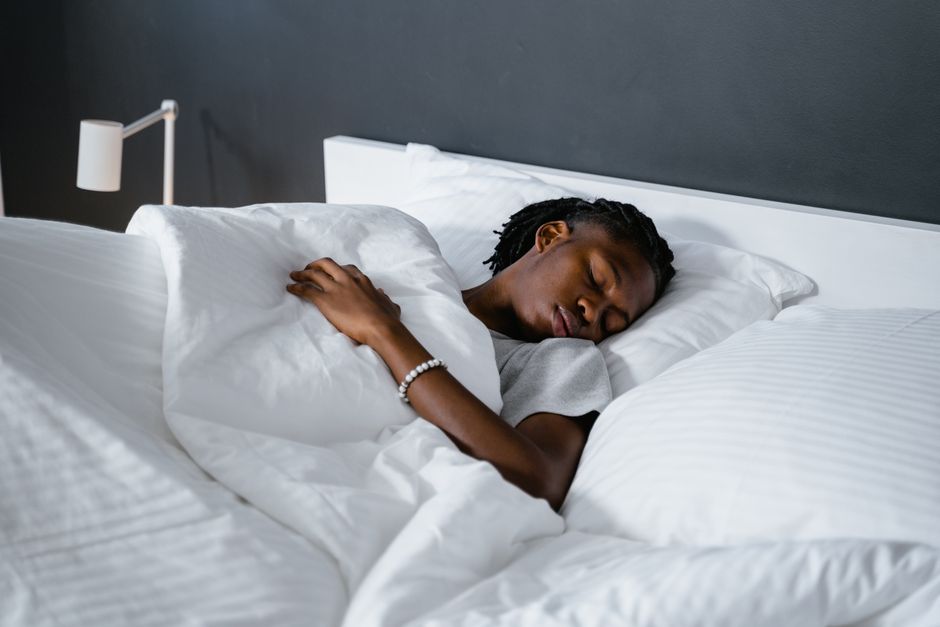
A clenched jaw at night is common, and it usually has more to do with your daytime habits, stress load, and sleep position than with anything happening in your mouth. To relax your jaw when sleeping naturally, you first need to stop the muscles from staying switched on all day, then set up conditions at night that let them release. The most effective steps combine daytime jaw awareness, a supportive sleep position, and a wind-down routine that lowers overall muscle tension. For many people, that means the fix starts hours before bedtime, not in bed.
Why Does Your Jaw Clench at Night?
Clenching and grinding during sleep — clinicians call it sleep bruxism — is not a simple habit you can decide to stop. It happens mostly during lighter stages of sleep and is often tied to brief arousals, the same mini-wakeups that happen throughout the night.
Several things raise the odds of it happening:
- Daytime stress and anxiety, which keep the jaw muscles in a low-grade “on” state
- Sleep apnea and other sleep-disordered breathing, which trigger arousals that can come with jaw activity
- Some medications, including certain antidepressants and stimulants
- Alcohol and caffeine, especially close to bedtime
- Smoking and other nicotine use
There is a common belief that clenching is caused by a bad bite or crooked teeth. The evidence for that is weak. Research has generally not supported the idea that fixing your bite stops the grinding. That matters, because it means expensive dental work aimed only at your bite is unlikely to solve a nighttime clenching problem on its own.
One thing worth knowing: sleep bruxism and daytime clenching are different. Daytime clenching is largely voluntary and much more responsive to awareness and habit change. Nighttime grinding is largely involuntary. That is why the strategies below focus heavily on what you do while awake.
How Do You Relax Your Jaw During the Day So It Stays Relaxed at Night?
Your jaw muscles cannot stay tense all day and instantly go slack at night. Daytime tension carries into sleep. Reducing it during waking hours is one of the most practical things you can do.
Start with awareness. For a few days, notice where your teeth are. If your upper and lower teeth are touching when you are not eating or talking, that is a clench. Resting jaw position is teeth apart, lips together, tongue resting lightly on the roof of your mouth. This is sometimes called the “lips together, teeth apart” position.
Try this simple reset, several times a day:
- Let your jaw drop slightly so your teeth separate
- Rest the tip of your tongue just behind your top front teeth, on the roof of your mouth
- Let your shoulders drop and unclench your hands
- Hold for a few breaths, then carry on
The tongue position matters. When the tongue rests forward and up, the jaw naturally hangs looser. When it pulls back, the jaw tends to tighten.
Stress is the biggest lever most people have. That does not mean you need to eliminate stress — that is not realistic. It means giving your nervous system regular chances to come down. Brief breathing exercises, a short walk, or even a few minutes of quiet between tasks can lower the muscle tension that builds through the day.
If you notice you clench hardest during focused work or driving, that is useful information. Set a reminder or attach the check to something you already do — every time you check your phone, check your jaw.
What Sleep Position Helps Relax the Jaw?
Sleeping on your back with your head and neck supported is generally the easiest position for the jaw to stay relaxed. On your back, gravity is not pulling your lower jaw back or to one side, and your airway tends to stay more open.
Stomach sleeping is the hardest position for the jaw. Your head is turned to one side for hours, which puts uneven pull on the jaw muscles and can press the lower jaw backward. If you sleep on your side, a pillow that keeps your head and neck in a straight line — not propped too high — helps.
Pillow height matters more than most people realize. A pillow that is too thick pushes your chin toward your chest, which can narrow the airway and encourage clenching. A pillow that is too flat lets the head tilt back. The goal is a neutral neck.
If you have signs of sleep apnea — loud snoring, gasping, waking unrefreshed, or daytime sleepiness — position alone will not fix it. That needs proper evaluation. Sleep-disordered breathing and bruxism often travel together, and treating the breathing problem sometimes reduces the clenching.





Does a Night Guard Stop Jaw Clenching?
A night guard protects your teeth. It does not stop the clenching itself. This distinction is important because many people expect the guard to end the habit, and it usually does not.
What a well-fitted guard can do is reduce wear on tooth enamel and cushion the joint and muscles from the force of grinding. Some people also find it reduces morning jaw soreness. Others find it makes no difference to how they feel, and a poorly fitted one can even make things worse.
There are two broad types:
- Custom guards made by a dentist, which fit precisely and are generally more comfortable
- Over-the-counter guards, which are cheaper but often bulkier and may not fit well
If you are considering a guard, it is worth having a dentist assess your situation. Some clinicians recommend a specific type based on whether your main issue is grinding, clenching, or jaw joint pain. The evidence on which type works best for symptoms — as opposed to tooth protection — is not strong, so expect some variation in what different dentists advise.
One caution: a guard should not be used as a substitute for addressing sleep apnea. If you have breathing symptoms, get those checked first.
What Bedtime Routine Helps Your Jaw Let Go?
The hour before bed sets the tone for the muscles you will carry into sleep. A wind-down routine that lowers nervous system arousal tends to reduce jaw tension too.
Things that help:
- Cut caffeine after early afternoon — it stays in your system for hours
- Limit alcohol in the evening, since it fragments sleep and can increase grinding
- Keep a consistent sleep and wake time
- Dim lights and step away from screens in the last stretch before bed
- Try a few minutes of slow breathing or gentle stretching
Gentle jaw stretches can help if your muscles feel tight. Open your mouth slowly and comfortably — not to the point of strain — and hold briefly. Move your jaw side to side gently. Stop if anything hurts. These are not a cure, but they can ease the feeling of tightness.
A warm compress on the jaw muscles for a few minutes before bed can help them feel looser. Heat relaxes muscle tissue, though the effect is temporary and mainly about comfort.
What tends to backfire: trying hard to force your jaw to relax. Focusing intensely on not clenching can create its own tension. The aim is to set up conditions, then let go of the effort.
When Should You See a Doctor or Dentist?
Occasional clenching is common and usually not a medical concern on its own. It is worth getting help when it starts causing problems.
See a dentist or doctor if you have:
- Persistent jaw pain, especially in the morning
- Clicking, popping, or locking of the jaw joint
- Headaches that cluster around the temples or jaw
- Noticeable tooth wear, cracked teeth, or loose teeth
- Difficulty opening your mouth fully
- Loud snoring, gasping during sleep, or heavy daytime sleepiness
That last group matters. If sleep apnea is behind your clenching, no amount of jaw relaxation will address the root problem, and untreated sleep apnea carries real health risks. This is one situation where the jaw symptom is a clue to something bigger.
For jaw joint pain, some clinicians recommend physical therapy, bite splints, or in some cases Botox injections into the jaw muscles. The evidence for Botox is mixed — it can reduce muscle activity, but it is not a first-line treatment and comes with its own considerations. Discuss it with a qualified clinician rather than seeking it out on your own.
Can Natural Methods Actually Stop Nighttime Clenching?
Natural methods can meaningfully reduce jaw tension for many people, but “stop” is a strong word. Sleep bruxism is often a long-term pattern, and it tends to come and go with stress and sleep quality.
What the evidence supports reasonably well: stress reduction, good sleep habits, limiting alcohol and caffeine, and addressing sleep-disordered breathing. What the evidence supports less clearly: bite correction as a cure, and most supplements marketed for jaw tension. No clinical evidence currently confirms that supplements marketed for jaw clenching work.
A realistic goal is fewer symptoms and less morning tightness, not necessarily a permanent end to clenching. For some people, the pattern fades when their stress and sleep improve. For others, it is something to manage over time. Both are normal.
Frequently Asked Questions
How do I stop clenching my jaw at night naturally?
Focus on daytime jaw awareness, stress reduction, and good sleep habits, since nighttime clenching is largely involuntary and tied to arousals. A neutral sleep position and limiting evening alcohol and caffeine can also help reduce it.
Does a night guard stop jaw clenching?
A night guard protects your teeth from grinding but does not stop the clenching itself. Many people still clench while wearing one, though it can reduce tooth wear and morning soreness.
What sleep position is best for a relaxed jaw?
Sleeping on your back with your neck in a neutral position is generally easiest on the jaw. Stomach sleeping is hardest, because your head stays turned to one side for hours.
Can stress cause jaw clenching at night?
Stress and anxiety are among the most common factors linked to clenching, because they keep the jaw muscles in a low-grade tense state that carries into sleep. Reducing daytime tension often lowers nighttime clenching.
