
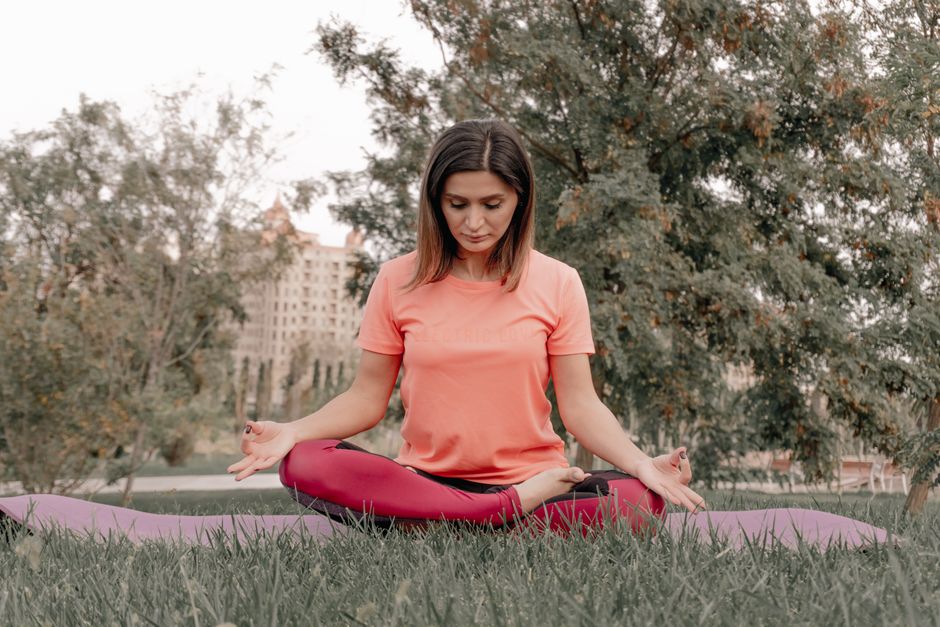
Anxiety does not live only in your thoughts. It shows up in your body — tight shoulders, a racing heart, shallow breathing, a churning stomach. Learning how to relax your body from anxiety means working directly with these physical signals, not just trying to think your way calm. The eight techniques below are grounded in how the nervous system actually responds to stress, and each one gives your body a concrete way to shift out of a threat response and back toward a calmer state.
What Happens in Your Body During Anxiety?
When your brain perceives a threat, it activates the sympathetic nervous system. This is the branch of your nervous system that prepares you to fight or flee. Your adrenal glands release hormones including adrenaline and cortisol. Your heart rate climbs, breathing speeds up, muscles tense, and blood flow shifts toward your limbs and away from digestion.
That response is useful if you are actually in danger. It becomes a problem when it fires repeatedly in situations that are not physically threatening — a work email, a crowded room, a worry you cannot stop replaying. Over time, a nervous system stuck in this mode can leave you feeling wired, exhausted, and physically tense even when nothing is wrong.
The counterweight is the parasympathetic nervous system, sometimes called the “rest and digest” branch. Relaxation techniques work largely by activating this system. One key player is the vagus nerve, a long nerve that runs from your brainstem to your abdomen and helps regulate heart rate and breathing. Many of the methods below gently stimulate it.
How To Relax Your Body From Anxiety: 8 Techniques
These techniques range from things you can do in thirty seconds to practices that build calm over weeks. You do not need all eight. Most people find two or three that fit their life and use them consistently.
1. Slow, Diaphragmatic Breathing
This is the foundation. When you are anxious, you tend to breathe from your chest in short, quick pulls. Diaphragmatic breathing means breathing from your belly instead, using the large muscle just below your lungs.
Put one hand on your chest and one on your belly. Breathe in slowly through your nose so the hand on your belly rises more than the hand on your chest. Exhale slowly, often longer than you inhaled. A common approach is to make the exhale longer than the inhale, because a longer exhale tends to nudge the parasympathetic system into gear.
You do not need a specific count to benefit. Slowing your breathing to a comfortable, steady rhythm is the goal. Even a minute of this can lower the physical edge of anxiety for many people.
2. The Physiological Sigh
This is one of the fastest ways to calm down, and it takes about two breaths. It works by mimicking the natural sigh your body already uses to reset your breathing.
Take a normal inhale through your nose. Then, without exhaling, take a second short inhale on top of it to fully inflate your lungs. Then exhale slowly and completely through your mouth. Repeat once or twice.
The double inhale opens tiny air sacs in your lungs called alveoli, and the long exhale helps offload carbon dioxide and slow your heart rate. Some research suggests this pattern is more effective at reducing arousal than a single slow breath, though the evidence base is still growing. It is easy to try and costs nothing.
3. Progressive Muscle Relaxation
Anxiety keeps muscles tense, often without you noticing. Progressive muscle relaxation teaches you to feel that tension and then release it, one body part at a time.
Start with your feet. Tense the muscles for about five seconds, then release for ten to fifteen seconds and notice the difference. Work your way up — calves, thighs, belly, hands, arms, shoulders, face. The whole sequence takes around ten to fifteen minutes.
This method has been studied for decades as a tool for stress and sleep, and it is often included in cognitive behavioral therapy programs. The point is not to force relaxation but to learn what “relaxed” actually feels like in your body.
4. Grounding Through Your Senses
Anxiety pulls your attention into the future or into your own head. Grounding brings it back to the present through your five senses.
A common version is the 5-4-3-2-1 method. Name five things you can see, four you can touch, three you can hear, two you can smell, and one you can taste. Say them silently or out loud.
The specifics matter less than the act of deliberately directing attention to physical sensation. Cold water on your hands or face, holding an ice cube, or pressing your feet firmly into the floor all work on the same principle. This is a widely used technique in trauma-informed care and anxiety treatment.
5. Gentle Movement
Anxiety floods your body with stress hormones and physical energy. Movement gives that energy somewhere to go.
It does not need to be intense. A ten-minute walk, stretching, yoga, or even shaking out your arms and legs can help discharge the built-up tension. Regular physical activity is one of the more consistently supported ways to reduce anxiety over time, though the effect varies from person to person.
For an acute moment of panic, sometimes slow movement works better than vigorous exercise, which can temporarily mimic anxiety symptoms like a pounding heart. Match the intensity to what your body needs right then.
6. Warmth and Physical Comfort
Warmth signals safety to the nervous system. A warm bath, a heating pad on your shoulders, or holding a warm mug can ease physical tension.
Some people find that a weighted blanket helps them feel calmer, though the research on weighted blankets for anxiety is mixed and mostly small. If it helps you, that is reasonable. If it does not, there is no rule that says it should.
A warm drink also encourages slower breathing and gives your hands something to do, which can interrupt anxious fidgeting.
7. Reducing Stimulants
Caffeine and nicotine both stimulate the sympathetic nervous system. That is the same system already overactive during anxiety. For some people, cutting back on caffeine noticeably reduces baseline jitteriness, a racing heart, and trouble sleeping.
Alcohol is worth mentioning too. It can feel calming in the moment, but it disrupts sleep and can worsen anxiety the following day. This is not a moral point — it is a physiological one.
You do not have to quit anything to try this. Just notice whether your anxiety feels different on days you have less caffeine, and adjust from there.
8. Sleep and Rest
Anxiety and poor sleep feed each other. A tired brain is more reactive, and a reactive brain has a harder time settling at night.
Basic sleep habits matter here. Going to bed and waking at roughly the same time, keeping the room cool and dark, and winding down before bed all support the nervous system. If racing thoughts keep you awake, a slow breathing practice in bed can help.
Persistent insomnia along with anxiety is worth discussing with a doctor or mental health professional. It is common and treatable, and it is not something you have to manage alone.
Which Technique Should You Try First?
If you want a single starting point, begin with slow breathing. It is free, fast, and works in almost any setting. From there, add whichever technique fits your situation.
- In the middle of a spike: physiological sigh, grounding, or cold water.
- At home, with time: progressive muscle relaxation or a warm bath.
- Building long-term calm: regular movement, sleep habits, and less caffeine.
- Racing thoughts at night: slow breathing in bed or progressive muscle relaxation.
Consistency matters more than intensity. A technique you actually use beats a perfect one you never get around to.




When Should You Get Professional Help?
These techniques can ease physical anxiety, but they are not a substitute for treatment when anxiety is persistent or disruptive. Consider talking to a doctor or mental health professional if anxiety interferes with work, relationships, or sleep, if it lasts for months, or if you avoid things you used to do because of it.
Seek help promptly if you have thoughts of harming yourself. That is a medical emergency, and support is available right away.
Effective treatments exist, including therapy such as cognitive behavioral therapy and, for some people, medication. Relaxation techniques often work well alongside these, not instead of them. There is no weakness in getting help — anxiety is a common and treatable condition.
Frequently Asked Questions
What is the fastest way to calm anxiety in your body?
The physiological sigh — a double inhale through the nose followed by a long exhale through the mouth — can calm the body in about two breaths. Slow, belly-focused breathing is a close second and works in almost any setting.
Does deep breathing actually work for anxiety?
Yes, slowing your breathing tends to activate the parasympathetic nervous system, which counteracts the stress response. It is one of the most widely used and well-supported relaxation methods.
Can anxiety cause physical symptoms even when I feel fine mentally?
Yes, anxiety often shows up physically first — as muscle tension, a racing heart, stomach upset, or fatigue — even when you do not feel worried. The body can stay in a stress state without obvious anxious thoughts.
How long does it take for relaxation techniques to help?
Some techniques, like slow breathing or grounding, can ease tension within minutes. Building a calmer baseline usually takes consistent practice over weeks, and results vary from person to person.
