
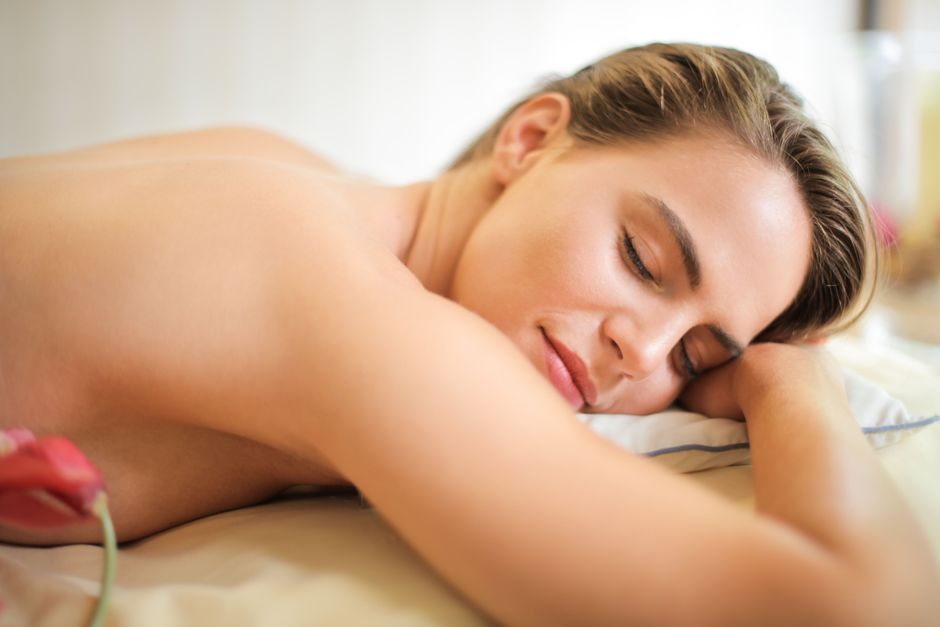
Relaxing before sleep and falling asleep faster requires preparing your body and mind for rest. The most effective approach is to create a consistent wind-down routine starting 30 to 60 minutes before bed. This includes dimming lights, avoiding screens, and practicing a relaxation technique such as deep breathing or progressive muscle relaxation. Keeping your bedroom cool, dark, and quiet also helps signal your body that it’s time to sleep.
Why Is It Hard to Relax Before Sleep?
Many people struggle to relax at night because their brain remains in an alert state. Stress, work worries, and unfinished tasks can keep your mind active. Your body also needs a drop in core temperature and a rise in melatonin to begin sleep. If you are exposed to bright light or doing stimulating activities close to bedtime, those natural signals get blocked. Your body stays in a “daytime” mode instead of shifting into sleep mode.
Some medications, caffeine, and even evening exercise can also interfere. These factors raise heart rate and cortisol levels, making it harder to wind down.
What Is the Best Wind-Down Routine for Better Sleep?
A good wind-down routine prepares you for sleep gradually. The goal is to lower mental and physical arousal. Start by putting away work and electronic devices at least 30 minutes before bed. Then choose a calming activity you can do every night. Examples include reading a physical book, taking a warm bath, gentle stretching, or listening to quiet music. The key is consistency. Doing the same sequence each night trains your brain to recognize that it is time to sleep.
Some evidence suggests that taking a warm bath 1 to 2 hours before bed helps. The rapid cooling afterward can trigger a drop in core body temperature, which promotes sleep onset. Keep the bath warm, not hot, and aim for about 20 minutes.
How Does Light Affect Your Ability to Fall Asleep?
Light is the strongest signal for your internal clock, or circadian rhythm. Bright light, especially blue light from screens, tells your brain it is still daytime. This suppresses melatonin, the hormone that helps you feel sleepy. Even dim light from a phone or tablet can delay sleep.
To improve your ability to fall asleep, dim the lights in your home for the hour before bed. Use low-wattage lamps or candles if you prefer. Avoid screens entirely during that time. If you must use a device, activate a night mode setting that reduces blue light. However, the most effective step is simply turning screens off.





What Breathing Techniques Help You Fall Asleep Faster?
Controlled breathing can activate your parasympathetic nervous system, which is responsible for rest and digestion. This helps lower heart rate and blood pressure, making it easier to fall asleep. Two techniques have the most research support: the 4-7-8 method and box breathing.
The 4-7-8 method involves inhaling through your nose for a count of 4, holding your breath for 7 counts, and exhaling slowly through your mouth for 8 counts. Some studies indicate this can reduce anxiety and help people fall asleep faster. Box breathing is simpler: inhale for 4 counts, hold for 4, exhale for 4, hold for 4. Repeat for several minutes. Both are safe for most people, but if you feel dizzy, stop and breathe normally.
No large clinical trials have confirmed these techniques as guaranteed sleep aids, but they are low-risk and many people find them helpful. You can try them while lying in bed.
How To Relax Before Sleep And Fall Asleep Faster?
The most direct answer is to combine several strategies into one nightly routine. Choose a set bedtime that allows for 7 to 9 hours of sleep. Starting 45 to 60 minutes before that bedtime, do the following: dim the lights, put away all screens, and do a short relaxation exercise. This could be deep breathing, progressive muscle relaxation (tensing and relaxing each muscle group), or a body scan meditation. Keep your bedroom temperature on the cool side, around 65 to 68°F (18 to 20°C). Use curtains or an eye mask to block light, and earplugs or a white noise machine if noise is a problem.
This combination works because it addresses the main obstacles: light exposure, mental stimulation, and room environment. There is no magic bullet. Sleep improvement usually requires consistent practice for several weeks.
Does Temperature Affect How Quickly You Fall Asleep?
Yes, temperature plays a direct role in sleep initiation. Your core body temperature naturally drops by about 1 to 2 degrees Fahrenheit (0.5 to 1°C) as you prepare for sleep. A cooler bedroom helps facilitate that drop. Research consistently shows that people fall asleep faster and sleep more deeply in a room kept between 65 and 68°F (18 to 20°C).
If your room is too warm, your body struggles to release heat, which can delay sleep onset. Too cold can also be disruptive. The same principle applies to bedding. Choose breathable fabrics like cotton or linen, and use layers so you can adjust warmth without turning up the thermostat.
How Does Stress Affect Sleep and What Can You Do?
Stress raises levels of cortisol, a hormone that keeps you alert. High cortisol at bedtime interferes with melatonin release and makes it harder to fall asleep. Worrying about sleep itself can also create anxiety, making the problem worse.
To reduce stress before bed, try a simple mental technique called “cognitive shuffling.” This involves thinking of random words or images to distract your mind from worries. Some apps are designed for this, but you can do it on your own. Another approach is writing down your thoughts in a notebook — often called a “brain dump” — so you do not have to mentally hold onto them. These methods help shift your brain away from anxiety toward relaxation. No large trials confirm one single technique works for everyone, but these are safe and many people report benefit.
Frequently Asked Questions
Does drinking warm milk help you sleep?
Some small studies suggest warm milk may have a mild sleep-promoting effect due to tryptophan and comfort associations, but evidence is not strong enough to recommend it as a reliable treatment.
Is it bad to exercise right before bed?
Vigorous exercise within one hour of bed can raise heart rate and body temperature, making it harder to fall asleep for some people. Gentle stretching or yoga is generally fine.
How long should a wind-down routine be?
Most sleep experts recommend 30 to 60 minutes. The exact length matters less than consistency — doing the same calming steps each night helps your brain shift into sleep mode.
Can white noise help you fall asleep faster?
White noise can mask disruptive sounds and may help some people fall asleep faster, but the effect varies. If you find it soothing, it is safe to use at a low volume throughout the night.
