
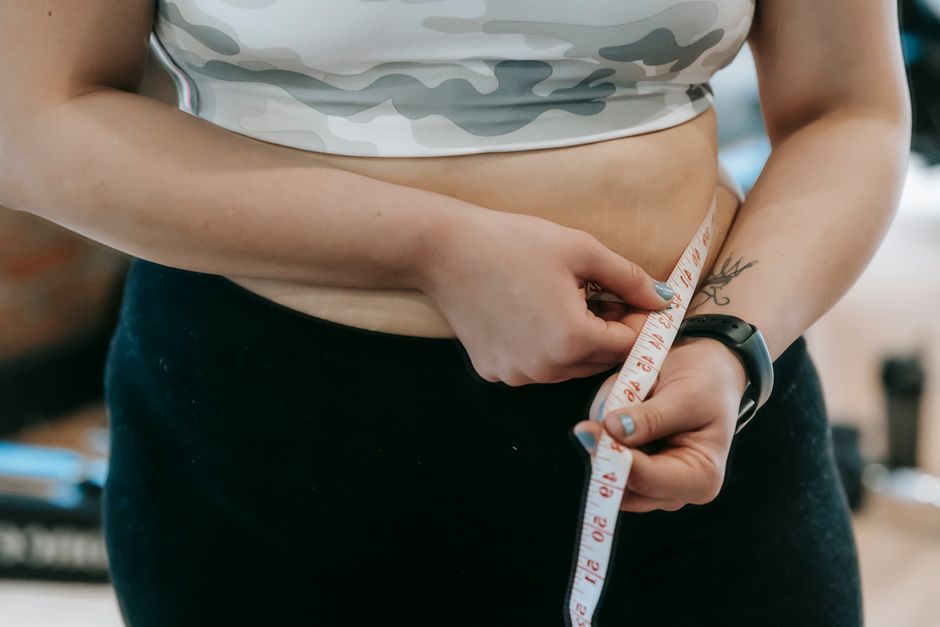
You cannot target belly fat directly, but you can reduce it without exercise by changing what and how much you eat. Belly fat responds to a sustained calorie deficit, to the quality of your diet, and to sleep and stress. Exercise helps, but it is not the only lever. In fact, for many people, diet changes move belly fat more than workouts do.
Here is the honest part: no food, tea, wrap, or supplement burns fat from your waist. Spot reduction is not a real physiological process. What works is lowering overall body fat, and where you store fat shifts as that happens. This guide explains what the evidence actually supports, what is uncertain, and what to ignore.
Why Is Belly Fat Different From Other Fat?
Not all fat behaves the same way. The fat under your skin (subcutaneous fat) and the fat packed around your organs (visceral fat) are different tissues with different health effects.
Visceral fat sits deep in the abdomen around the liver, intestines, and other organs. It is metabolically active. It releases inflammatory signals and fatty acids directly into the bloodstream, which is one reason a larger waistline is linked to higher risk of type 2 diabetes and heart disease. Subcutaneous belly fat is the softer layer you can pinch. It is less harmful, though it still counts toward overall body fat.
This distinction matters because visceral fat tends to respond to diet and lifestyle changes. Some research suggests visceral fat is more sensitive to calorie restriction and to sleep and stress hormones than subcutaneous fat. That is encouraging, but it does not mean you can choose where fat comes off. Your body decides that.
What Actually Drives Belly Fat?
Belly fat accumulates when you consistently take in more energy than you use. That is the core mechanism, and it holds regardless of which foods you eat. But several factors shape where fat is stored and how much of it is visceral.
- Calorie surplus over time. The single biggest driver. Small daily excesses add up over months and years.
- Genetics. Where your body prefers to store fat is partly inherited. Some people carry more in the abdomen.
- Age. Fat distribution shifts with age, and muscle mass tends to decline, which lowers resting calorie burn.
- Hormones. Changes around menopause are associated with more abdominal fat storage in women. Cortisol, a stress hormone, is linked to visceral fat, though the picture is more complex than “stress makes you fat.”
- Sleep and stress. Short sleep and chronic stress are associated with weight gain and abdominal fat in observational studies.
- Alcohol. Heavy drinking is linked to abdominal fat accumulation. The “beer belly” idea has some basis, though total calories matter too.
Notice that exercise is not on that list. It is a tool for creating a calorie deficit and preserving muscle, not a requirement for losing fat.
How Do You Reduce the Belly Fat Without Exercise?
You create a calorie deficit through food and protect your metabolism by keeping protein high and sleep solid. That is the whole strategy. Everything else is detail.
A calorie deficit means eating fewer calories than your body uses. When that happens, your body draws on stored fat for energy. You do not need to count every calorie, but you do need some awareness of intake. Most people underestimate how much they eat.
Protein deserves special mention. Higher protein intake helps preserve muscle mass during weight loss and tends to increase fullness. Preserving muscle matters because muscle burns more calories at rest than fat does. Some studies suggest protein also has a modest effect on how many calories you burn digesting food, though the size of that effect is small.
A practical approach many clinicians suggest: build meals around a protein source, plenty of vegetables, and a moderate portion of whole grains or starchy foods. Cut back on sugary drinks, refined snacks, and alcohol. These changes lower calories without requiring hunger.
One clarification worth knowing: you cannot “burn” belly fat by eating certain foods. Celery, grapefruit, apple cider vinegar, and green tea are sometimes marketed this way. No clinical evidence confirms that any food selectively removes abdominal fat. Some may slightly affect appetite or metabolism, but the effect is minor compared to overall calorie balance.
Does Diet Quality Matter Beyond Calories?
Yes, though calories still come first. Two people can eat the same number of calories and end up with different body composition and different visceral fat levels.
Diets high in refined carbohydrates and added sugars are associated with more visceral fat in observational research. Diets rich in fiber, vegetables, legumes, and whole grains are associated with less. The evidence is strongest for the general pattern, not for any single food.
Fiber is a quiet workhorse. It slows digestion, increases fullness, and feeds gut bacteria. Most US adults eat well below the recommended amount. The USDA Dietary Guidelines recommend about 25 to 38 grams per day for adults, depending on age and sex. Getting there means more beans, vegetables, fruit, and whole grains.
The evidence on specific diets is mixed. Low-carb, low-fat, Mediterranean, and intermittent fasting approaches have all produced weight loss in trials. What matters most is whether you can stick with it. No single diet has been shown to be superior for belly fat specifically.
What About Sleep, Stress, and Alcohol?
These three factors affect belly fat in ways that go beyond calories. Ignoring them can stall progress even when your diet is solid.
Short sleep is consistently linked to weight gain and higher abdominal fat in observational studies. The mechanism is partly hormonal. Sleep deprivation raises ghrelin, a hunger hormone, and lowers leptin, a fullness hormone. It also tends to increase cravings for high-calorie foods. Most adults need seven to nine hours, according to sleep medicine guidance.
Chronic stress raises cortisol. Cortisol is associated with visceral fat storage, though the relationship is not simple. Stress also drives eating for reasons other than hunger. Managing stress does not mean it has to be perfect. It means having some outlet that is not food.
Alcohol is calorie-dense and offers no nutritional value. Heavy drinking is linked to abdominal fat. Moderate drinking is a grayer area, and the evidence on health effects has shifted in recent years toward less is better. If belly fat is your goal, cutting back is one of the highest-yield changes you can make.
What Does Not Work for Belly Fat?
Most of what is sold for belly fat does not work. Knowing this saves money and disappointment.
- Fat-burning supplements. No supplement has been shown in large human trials to produce meaningful fat loss. Some carry risks.
- Waist trainers and wraps. These compress tissue temporarily. They do not burn fat.
- Detox teas and cleanses. Your liver and kidneys already handle detoxification. These products mostly cause temporary water loss or digestive upset.
- Spot-reduction gadgets. Ab stimulators and similar devices do not reduce fat. Electrical stimulation can contract muscle but does not burn meaningful fat.
- “Metabolism-boosting” foods. Some foods slightly raise calorie burn, but the effect is trivial compared to overall intake.
None of these have clinical evidence supporting fat loss. If a product promises fast belly fat loss without diet changes, that is a marketing claim, not a medical one.
How Long Does It Take and What Should You Expect?
Fat loss is slow and non-linear. That is normal, not failure.
A reasonable and often-cited rate of weight loss is roughly one to two pounds per week, though this varies with starting weight and how large the calorie deficit is. The evidence does not support faster loss being better. Rapid loss often includes muscle and water, and it is harder to sustain.
Belly fat specifically may not be the first place you notice change. Your body decides the order. Some people see it in the face or waistband first, others later. Visceral fat can respond relatively early to diet changes, but you will not see that on a scale or mirror right away.
Measure your waist occasionally rather than daily. Waist circumference is a more direct indicator of abdominal fat than weight alone. A waist measurement above certain thresholds is associated with higher health risk, though exact cutoffs vary by population and guideline. Your clinician can interpret yours in context.
Plateaus happen. They usually mean your body has adapted to a lower calorie intake or that your tracking has drifted. They are not a sign that diet no longer works.
Do You Need Exercise at All?
No, but it helps in ways diet does not. Exercise preserves muscle during weight loss, supports heart health, and improves sleep and mood. It also helps with weight maintenance after loss, which is where most people struggle.
The honest position: you can lose belly fat without exercise, but combining diet with some activity tends to produce better long-term results. Resistance training in particular helps preserve muscle. If exercise is not possible for you right now, diet changes still work. They are simply not the whole picture for everyone.
Frequently Asked Questions
Can you lose belly fat without exercise?
Yes. A sustained calorie deficit from diet changes reduces overall body fat, including belly fat. Exercise helps but is not required for fat loss.
What is the fastest way to reduce belly fat without exercise?
Cutting calories from sugary drinks, alcohol, and refined snacks is usually the fastest practical start. There is no shortcut that bypasses a calorie deficit.
Do belly fat supplements work?
No supplement has been shown in large human trials to produce meaningful belly fat loss. Some carry health risks, so talk to a clinician before using any.
How long does it take to see belly fat loss without exercise?
Most people notice changes over weeks to months, not days. A reasonable rate of weight loss is about one to two pounds per week, though this varies.
