
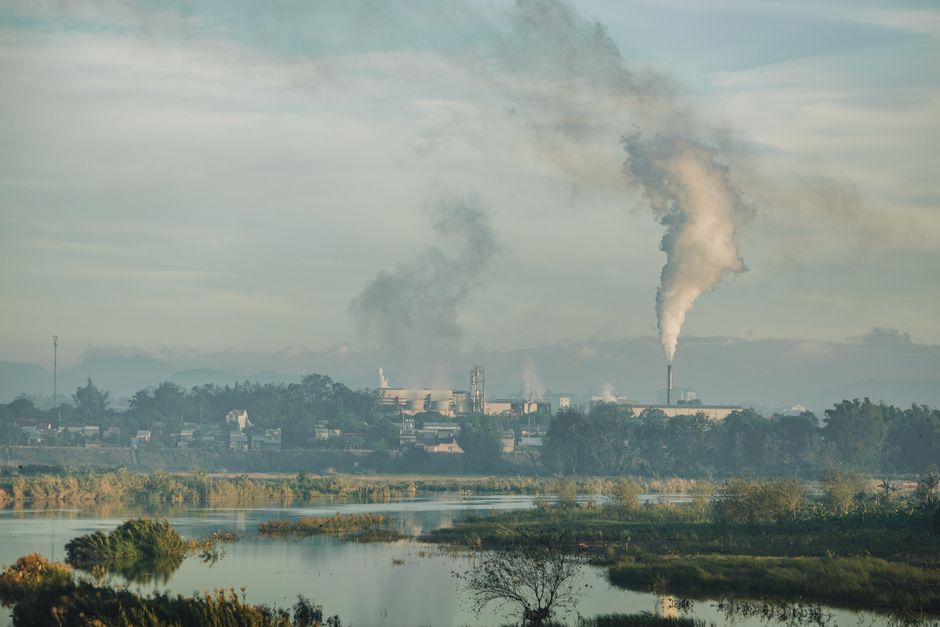
Industrial air pollution is one of the largest environmental contributors to respiratory and cardiovascular disease worldwide. Reducing it works best through a layered approach: cleaner production processes, effective filtration and scrubbing at the source, cleaner fuels, and strong enforcement of emission limits. No single method fixes the problem on its own.
How To Reduce Industrial Air Pollution Methods That Work
Industrial facilities release pollutants through three main routes: smokestacks, fugitive leaks from equipment and pipes, and dust from material handling. Each route needs a different control method.
For smokestack emissions, the most established controls include electrostatic precipitators, fabric filters (baghouses), and wet scrubbers. These capture particulate matter before it leaves the stack. For gases like sulfur dioxide and nitrogen oxides, flue gas desulfurization and selective catalytic reduction are widely used in power plants and large industrial boilers. These are not experimental technologies. They have been standard equipment in many industries for decades.
Fugitive emissions — the leaks you cannot see — are harder to control. Regular leak detection and repair programs, sealed equipment, and vapor recovery systems address these. The EPA has documented that fugitive emissions from valves, pumps, and flanges can account for a substantial share of a facility’s total volatile organic compound output.
Process changes often work better than end-of-pipe controls. Switching to low-sulfur fuels, electrifying process heat, or changing raw materials can reduce pollution at its source rather than capturing it after the fact. This is sometimes called pollution prevention or source reduction, and regulators generally treat it as the preferred first step.
What Types of Industrial Pollution Can Be Controlled
Not all industrial pollution responds to the same methods. Understanding the categories helps clarify what actually works.
- Particulate matter (PM) — solid particles and liquid droplets. Controlled by filters, precipitators, and scrubbers.
- Sulfur dioxide (SO2) — mainly from burning sulfur-containing fuels. Controlled by fuel switching and flue gas desulfurization.
- Nitrogen oxides (NOx) — from high-temperature combustion. Controlled by low-NOx burners and selective catalytic reduction.
- Volatile organic compounds (VOCs) — from solvents, coatings, and chemical processes. Controlled by vapor recovery, incineration, and process changes.
- Heavy metals — mercury, lead, and others. Captured by activated carbon injection and particulate controls.
- Carbon dioxide (CO2) — a greenhouse gas, not a conventional air pollutant. Reduced by energy efficiency, fuel switching, and carbon capture.
The distinction matters because a control that works well for particulate matter may do nothing for NOx. Effective reduction plans match the method to the pollutant.
Do Emission Controls Actually Improve Health Outcomes?
Yes. This is one of the better-documented findings in environmental health.
When large industrial sources shut down or install controls, nearby communities show measurable health improvements. Studies of coal plant closures in the United States have found reductions in preterm births and improvements in cardiovascular markers among people living nearby. Research on the closure of a large steel mill in Utah found fewer hospital admissions for respiratory and cardiovascular conditions in the surrounding area.
The evidence is strongest for particulate matter. Fine particles (PM2.5) penetrate deep into the lungs and can enter the bloodstream. Reducing PM2.5 concentrations consistently correlates with lower rates of asthma attacks, heart attacks, and premature death in exposed populations.
What remains less certain is the exact size of the benefit from any single control technology at any single facility. Real-world results depend on how well equipment is maintained, how consistently it operates, and what else is in the local air. A scrubber that runs at 60% efficiency because of poor maintenance delivers far less benefit than its design specifications suggest.





What Role Do Regulations Play?
Regulation is the mechanism that makes industrial pollution control happen at scale. Without enforceable limits, voluntary reduction tends to be inconsistent.
In the United States, the Clean Air Act sets national ambient air quality standards for six criteria pollutants: carbon monoxide, lead, nitrogen dioxide, ozone, particulate matter, and sulfur dioxide. The EPA establishes these standards, and states implement plans to meet them. Facilities must obtain permits that specify emission limits and required control technologies.
The results have been substantial. National emissions of the six criteria pollutants have fallen significantly since 1970, even as economic output grew. This decoupling of emissions from economic growth is one of the clearer successes in environmental policy.
Enforcement matters as much as the rules themselves. A permit limit that is not monitored or enforced has limited effect. Continuous emission monitoring systems, stack testing, and regular inspections are what turn a regulation on paper into cleaner air.
Some researchers argue that current standards for particulate matter may still be too lenient to fully protect cardiovascular health, and the evidence on that question continues to develop.
Technology vs. Process Change: Which Works Better?
Both matter, but they operate differently.
End-of-pipe controls capture pollutants after they form. They are proven, well-understood, and can be retrofitted to existing facilities. Their main drawbacks are cost, energy use, and the fact that they generate waste streams that must themselves be managed.
Process changes prevent pollution from forming in the first place. Examples include using electric furnaces instead of coal-fired ones, switching to water-based solvents instead of organic ones, and improving combustion efficiency so less fuel is needed. These changes often reduce multiple pollutants at once.
In practice, most facilities use a combination. A cement plant might switch to a lower-carbon fuel, install a baghouse for dust, and add selective non-catalytic reduction for NOx. Each addresses a different part of the problem.
Source reduction is generally preferred by regulators and environmental engineers because it avoids the transfer of pollution from air to water or solid waste. But it is not always technically or economically feasible, particularly for older facilities with fixed process designs.
What Can Communities and Individuals Do?
Industrial pollution is primarily a regulatory and engineering problem. Individual actions have limited direct effect on a factory’s emissions. But communities do influence outcomes in several concrete ways.
- Participate in permit processes. Industrial facilities must renew air permits periodically, and public comment periods are a formal opportunity to raise concerns.
- Support monitoring networks. Community air monitoring can document pollution levels that regulators might otherwise miss.
- Track enforcement records. Public databases show which facilities have violations and whether penalties were issued.
- Advocate for stricter local standards. Some states and localities set requirements beyond federal minimums.
Personal exposure reduction is a separate matter. If you live near a large industrial source, paying attention to local air quality alerts and limiting outdoor exertion on high-pollution days can reduce your exposure. Indoor air filtration has been shown to reduce indoor particulate levels, though its direct effect on long-term health outcomes is less well established.
Frequently Asked Questions
What is the most effective method to reduce industrial air pollution?
There is no single most effective method because different industries release different pollutants. Source reduction through cleaner processes and fuels generally delivers the broadest benefit, while end-of-pipe controls like scrubbers and filters are essential for capturing what remains.
Do scrubbers and filters really work?
Yes, these are established technologies with decades of documented use in power plants, cement kilns, and chemical facilities. Their real-world performance depends heavily on proper sizing, operation, and maintenance.
How long does it take for air quality to improve after a factory installs controls?
Particulate levels can drop within days to weeks of a control system becoming operational. Improvements in health outcomes at the population level typically take longer to measure and depend on many factors beyond the facility itself.
Can individuals reduce industrial air pollution?
Not directly, since industrial emissions are governed by permits and regulations rather than consumer choices. Individuals can influence outcomes by participating in public comment periods, supporting community monitoring, and advocating for stronger local enforcement.
