
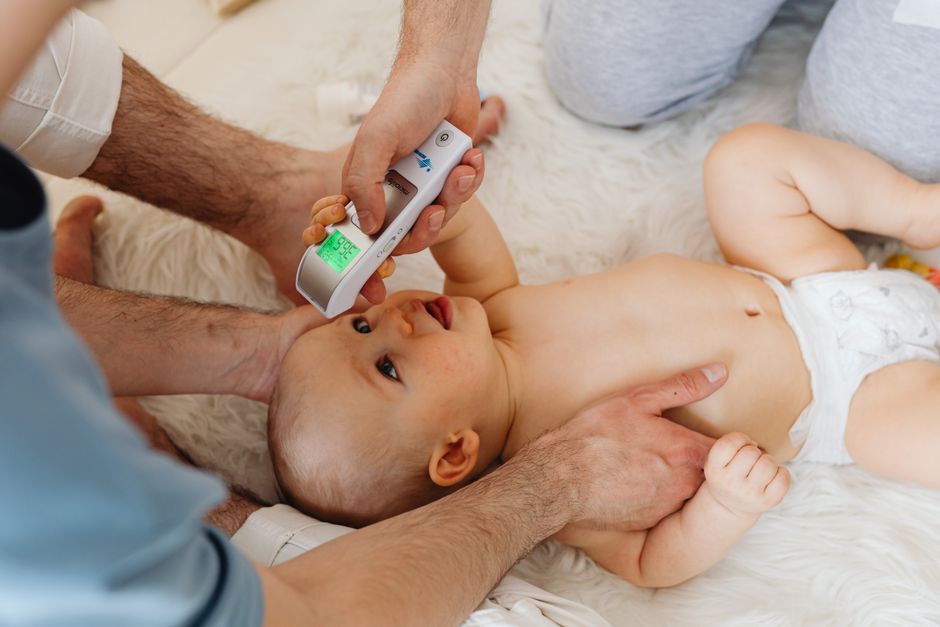
A fever is one of the most common reasons parents call a doctor or rush to an emergency room. It is also one of the most misunderstood. Here is the honest answer: the safest way to reduce a fever in a baby is to keep them hydrated, dress them lightly, keep the room comfortable, and give fever-reducing medicine only at the correct weight-based dose when your baby is clearly uncomfortable. Sponging, cold baths, alcohol rubs, and most home remedies either do not work or can cause harm. Fever itself is not the enemy. It is a normal immune response, and in most cases the goal is to keep your baby comfortable, not to force the number on the thermometer down to normal.
What Counts as a Fever in a Baby?
A normal body temperature in babies and children is around 98.6°F (37°C), though it moves up and down during the day. A rectal temperature of 100.4°F (38°C) or higher is generally considered a fever.
How you measure matters. Rectal thermometers give the most accurate reading in babies under 3 months. Forehead and ear thermometers are convenient but less reliable in this age group, especially in newborns. If you get a high reading with a non-rectal method and your baby is very young, confirm it rectally before deciding what to do.
Fever is a symptom, not a disease. It usually means the body is fighting an infection, most often a virus. The number on the thermometer does not reliably tell you how sick your child is. A baby with a temperature of 101°F who is drinking and alert may be less concerning than one with 100.4°F who is limp and refusing fluids.
Which Babies Need a Doctor Instead of Home Care?
Age is the single most important factor. A fever in a baby under 3 months old is a medical emergency. Call your doctor or go to an emergency room right away. Do not try to manage it at home first.
This is not an overreaction. Young infants have immature immune systems, and serious bacterial infections can look mild at first. Guidelines from pediatric organizations recommend that any infant under 3 months with a rectal temperature of 100.4°F (38°C) or higher be evaluated by a clinician.
For babies older than 3 months, call your doctor if any of these apply:
- The fever is 104°F (40°C) or higher
- Your baby is under 3 months with any fever
- Fever lasts more than 3 days
- Your baby is very fussy, limp, or hard to wake
- There are signs of dehydration — few wet diapers, no tears, dry mouth, sunken soft spot
- Rash, trouble breathing, stiff neck, or repeated vomiting
- Your baby has a weakened immune system or a serious chronic condition
Trust your instincts. If something feels wrong, call. You will never be criticized for checking.
How To Reduce Fever In Baby Naturally Safe Tips
These steps are the ones that are genuinely supported and genuinely safe for babies older than 3 months. None of them require medication.
Offer fluids often
Fever increases fluid loss through sweating and faster breathing. Dehydration is the real danger of a fever, not the temperature itself. For breastfed babies, nurse more frequently. For formula-fed babies, offer formula more often. Babies over 6 months can also be offered small amounts of water between feeds. Watch diaper output — if wet diapers drop noticeably, that is a sign to call your doctor.
Dress your baby lightly
Remove heavy blankets, hats, and extra layers. Overdressing traps heat and can push a temperature higher. A single light layer of clothing is usually enough. Keep the room at a comfortable temperature, not hot and not cold.
Skip the cold bath and the alcohol rub
Cold water and alcohol rubs are two of the most common home fever remedies, and both are unsafe. Cold water causes shivering, which raises the body’s core temperature and makes things worse. Alcohol absorbs through a baby’s skin and can cause serious harm, including poisoning. Neither is recommended.
Use a lukewarm sponge bath only if it helps comfort
If your baby is uncomfortable and the room is warm, a lukewarm sponge bath may help them feel better. It will not lower a fever meaningfully on its own, and it should never be cold. Stop if your baby shivers.
Let them rest
Sleep is when the body does much of its immune work. Do not wake a sleeping baby to check a temperature unless your doctor has told you to. Rest matters more than frequent checks.




When and How to Use Fever Medicine Safely
Fever medicine is not required for every fever. The goal is comfort, not a specific number. If your baby is drinking, sleeping, and reasonably content, medicine may not be needed at all.
When your baby is clearly uncomfortable, two options are used in infants:
- Acetaminophen — approved for babies, dosed by weight
- Ibuprofen — approved for babies 6 months and older, dosed by weight
Ibuprofen is not given to babies under 6 months because of kidney-related concerns. Aspirin is never given to children or babies because of the risk of Reye syndrome, a rare but serious condition.
Dosing must be based on your baby’s current weight, not age, and not a guess. Ask your pediatrician or pharmacist for the correct dose in milliliters for your baby’s weight. Do not use kitchen spoons. Use the dosing syringe or cup that comes with the medicine.
Do not alternate acetaminophen and ibuprofen on your own unless a clinician has given you a specific schedule. Alternating is common in practice, but it increases the risk of dosing errors and is not necessary for most fevers.
Do Home Remedies Like Cold Compresses or Herbs Work?
Most natural fever remedies marketed for babies have no clinical evidence behind them. That does not mean they are all dangerous, but it does mean you should not rely on them.
Cold compresses placed on the forehead do not lower core body temperature. They may feel soothing, and that is a reasonable reason to use them, but they are not a treatment for fever.
Herbal teas, essential oils, and supplements marketed for infant fever should be avoided. Babies have different drug and toxin processing than adults. Essential oils in particular can cause breathing problems when applied to a baby’s chest or face, and none are approved for infant fever. No clinical guidelines support their use.
The one non-medication approach with real evidence behind it is simple: fluids, light clothing, a comfortable room, and rest. That is not exciting, but it is what works.
What About Febrile Seizures?
A febrile seizure is a convulsion triggered by a fever, most often in children between 6 months and 5 years old. They can be frightening to watch, but most are brief and do not cause lasting harm.
If your baby has a seizure:
- Place them on their side on a safe surface
- Do not put anything in their mouth
- Do not restrain them
- Time the seizure
- Call emergency services if it lasts more than 5 minutes or if it is their first one
Reducing a fever with medicine does not reliably prevent febrile seizures. This is a common misconception. The fever itself is not the direct cause in a simple way, and treating the number does not stop the seizure from happening. If your child has had one, talk to your doctor about what to watch for.
What Not to Do
Some fever practices are common but wrong. Avoid all of these:
- Alcohol rubs — absorbed through skin, can cause poisoning
- Cold baths or ice packs — cause shivering and raise core temperature
- Aspirin — risk of Reye syndrome in children
- Ibuprofen in babies under 6 months
- Adult fever medicines or adult doses
- Essential oils on the chest or face of a baby
- Waking a comfortable sleeping baby just to recheck a temperature
If you are unsure whether something is safe, ask a pharmacist or call your pediatrician. That call takes minutes and can prevent a serious problem.
Frequently Asked Questions
What is the fastest way to reduce a fever in a baby?
The fastest safe method is a correct weight-based dose of acetaminophen or, for babies 6 months and older, ibuprofen, combined with fluids and light clothing. There is no safe way to force a fever down quickly, and trying to do so can cause harm.
Can I give my baby a cold bath to bring down a fever?
No. Cold baths cause shivering, which raises the core body temperature and can make a fever worse. A lukewarm sponge bath may comfort your baby but will not meaningfully lower the fever.
When should I take my baby to the doctor for a fever?
Any baby under 3 months with a rectal temperature of 100.4°F (38°C) or higher needs immediate medical evaluation. For older babies, call your doctor if the fever reaches 104°F (40°C), lasts more than 3 days, or comes with signs of dehydration or unusual behavior.
Do natural remedies like herbs or essential oils reduce fever in babies?
No clinical evidence supports using herbs, teas, or essential oils to reduce fever in babies, and some can be harmful. Fluids, light clothing, a comfortable room, and rest are the only natural measures with real support.
Fever is a signal, not a diagnosis. In babies over 3 months, the focus should be on comfort and hydration rather than chasing a number on a thermometer. In babies under 3 months, any fever is a reason to call a doctor right away. Keep it simple, skip the risky home remedies, and trust your instincts when something feels off.
