
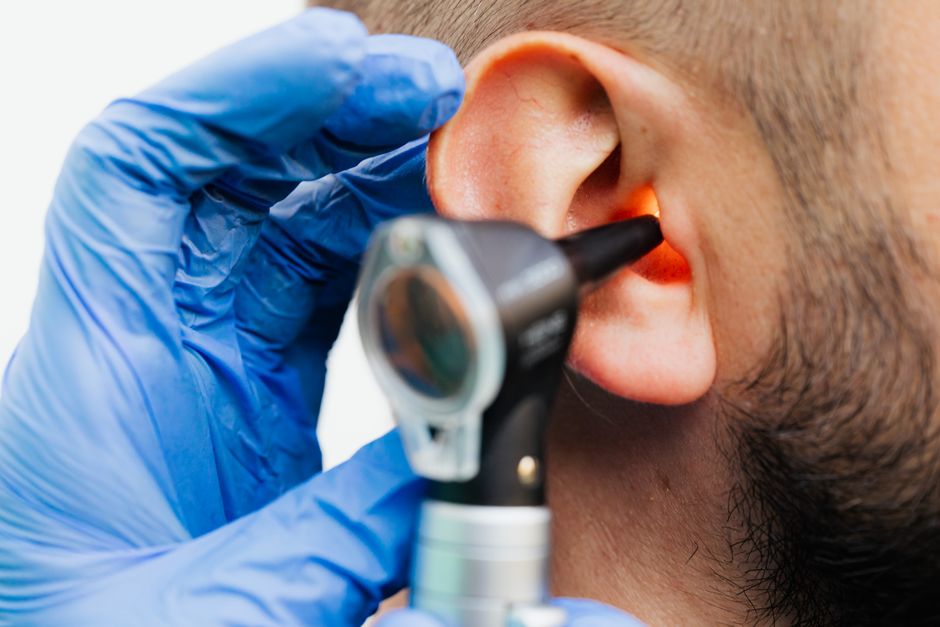
That plugged, full feeling in your ear after a cold or a flight has a name and a cause. The eustachian tube is a narrow passage that connects your middle ear to the back of your throat. When its lining swells, it can’t open properly, and pressure builds up. The most effective home measures are simple: swallow and yawn often, try a gentle Valsalva maneuver, use a saline nasal spray or rinse, and apply a warm compress. Avoid forceful nose blowing and keep your head elevated. These steps help most mild cases ease within a few days to a week.
There is one thing worth knowing before you try anything. The eustachian tube is not a passive tube. It is normally closed and opens briefly when you swallow or yawn. Swelling narrows it further, so the goal is not to “drain” it but to help it open and to reduce the tissue swelling around it.
What Causes Eustachian Tube Swelling?
Swelling in the eustachian tube almost always comes from inflammation of the tissue lining it. The most common trigger is a viral upper respiratory infection. The same inflammation that stuffs up your nose affects the tube, because the two are lined with similar tissue and connected.
Allergies are another frequent cause. Airborne allergens inflame the nasal passages and the tube opening. Changes in air pressure, such as during flights or scuba diving, can force the tube to work harder and cause irritation. Acid reflux is a less obvious contributor. Stomach acid that reaches the back of the throat can irritate the tube opening, and some ear, nose, and throat specialists consider this when symptoms are persistent.
Less common causes include sinus infections, structural issues such as enlarged adenoids, and, in adults, smoking or exposure to smoke, which irritates the airway lining. In children, the tube is shorter and more horizontal, which is why ear problems are more common in young kids.
How To Reduce Eustachian Tube Swelling At Home
The home strategies below target the two things that matter: helping the tube open and calming the tissue around it. None of them require a prescription. Most are supported by general clinical practice rather than large trials, so treat them as reasonable comfort measures rather than proven treatments.
Swallow and yawn deliberately
Every swallow and yawn pulls on the small muscle that opens the eustachian tube. Chewing gum, sucking on hard candy, or sipping water gives you more chances to swallow. This is the simplest and safest thing you can do. It is also why flight attendants hand out gum.
Try a gentle Valsalva maneuver
To do this, pinch your nostrils closed, close your mouth, and blow gently as if blowing your nose. You should feel a small pop as pressure equalizes. Keep it gentle. Forceful blowing can push infected mucus into the middle ear, which is the opposite of what you want. If you have a cold or active infection, skip this and stick to swallowing.
Use saline, not just decongestants
Saline nasal spray or a saline rinse moistens the nasal passages and thins mucus. It is safe to use as often as needed and does not cause rebound congestion. Over-the-counter decongestant sprays can reduce swelling quickly, but using them for more than a few days in a row can cause rebound congestion, where the nose gets more blocked when you stop. Follow the label and do not exceed the stated duration.
Apply a warm compress
A warm, damp cloth held against the outside of the ear for a few minutes can ease discomfort. It does not open the tube, but warmth can relax the muscles around the jaw and ear and make the pressure feel less bothersome. This is a comfort measure, not a treatment.
Keep your head elevated
Sleeping with your head propped up can help fluid drain and reduce pressure overnight. A couple of extra pillows is enough. This matters most in the first few days when swelling is at its peak.
What To Avoid When Your Ear Feels Blocked
Some common habits make eustachian tube swelling worse. Forceful nose blowing is the big one. Blowing hard sends pressure and nasal secretions up the tube toward the middle ear. If you need to blow, do it gently, one nostril at a time.
Avoid flying or diving while you have an active cold if you can. If you must fly, use saline spray before takeoff and landing and swallow frequently during the descent. Chewing gum helps here too.
Do not insert cotton swabs or anything else into the ear canal. The eustachian tube is on the inside of the eardrum, so nothing you put in the outer ear can reach it. Cotton swabs can pack wax in or scratch the canal.
Be cautious with over-the-counter oral decongestants if you have high blood pressure, heart disease, or prostate problems. Talk to a pharmacist or your doctor before using them.
How Long Does It Take To Clear?
Most cases linked to a cold clear within a few days to a week as the underlying infection settles. Mild pressure that lingers a little longer is common. The tube can stay slightly narrowed even after other cold symptoms fade.
If symptoms last longer than two weeks, or if you have pain, hearing loss, fever, or discharge from the ear, see a doctor. Persistent blockage can sometimes lead to fluid build-up in the middle ear, which needs medical evaluation. In adults, one-sided eustachian tube symptoms that do not resolve deserve a closer look.
When Home Care Is Not Enough
Home measures work for mild, short-lived swelling. They are not a substitute for medical care when something more is going on. See a clinician if you have severe ear pain, a fever, sudden hearing loss, dizziness, or symptoms that keep coming back.
Doctors have other options. A clinician may recommend prescription nasal steroid sprays to reduce inflammation over time, or evaluate for allergies, reflux, or structural problems. In some cases, procedures such as inserting a small tube in the eardrum or balloon dilation of the eustachian tube are considered. These are not first-line home measures, and their use depends on the specific cause.
One clarification worth making: popping your ears does not “cure” the swelling. It temporarily equalizes pressure. The underlying inflammation still has to settle, which is why time and reducing the trigger matter as much as any single technique.
Can You Prevent Eustachian Tube Swelling?
You cannot always prevent it, especially when a cold is going around. But you can lower the odds. Treat allergies so the nasal lining stays calmer. Avoid smoke and other irritants. Stay hydrated, because thin mucus moves better than thick mucus.
During flights, use saline spray and swallow often on the way down. If you are prone to ear problems with colds, consider postponing air travel when you are congested. For people with reflux, avoiding large meals close to bedtime may help reduce irritation at the back of the throat.
Frequently Asked Questions
How do you unclog a eustachian tube fast?
Swallow, yawn, or chew gum to trigger the muscle that opens the tube, and try a gentle Valsalva maneuver by pinching your nose and blowing softly. These can equalize pressure within minutes, though the underlying swelling still takes time to settle.
Does steam help eustachian tube swelling?
Steam may ease nasal congestion and make you feel more comfortable, but there is no strong evidence it directly reduces eustachian tube swelling. It is a reasonable comfort measure as long as you avoid burns from hot water.
Should I use decongestant spray for a blocked ear?
Decongestant sprays can reduce nasal swelling briefly, but using them for more than a few days in a row can cause rebound congestion. Follow the label and do not exceed the stated duration.
When should I see a doctor for a blocked ear?
See a doctor if symptoms last more than two weeks, or if you have pain, fever, hearing loss, dizziness, or fluid draining from the ear. One-sided symptoms in adults that do not resolve also warrant evaluation.
