
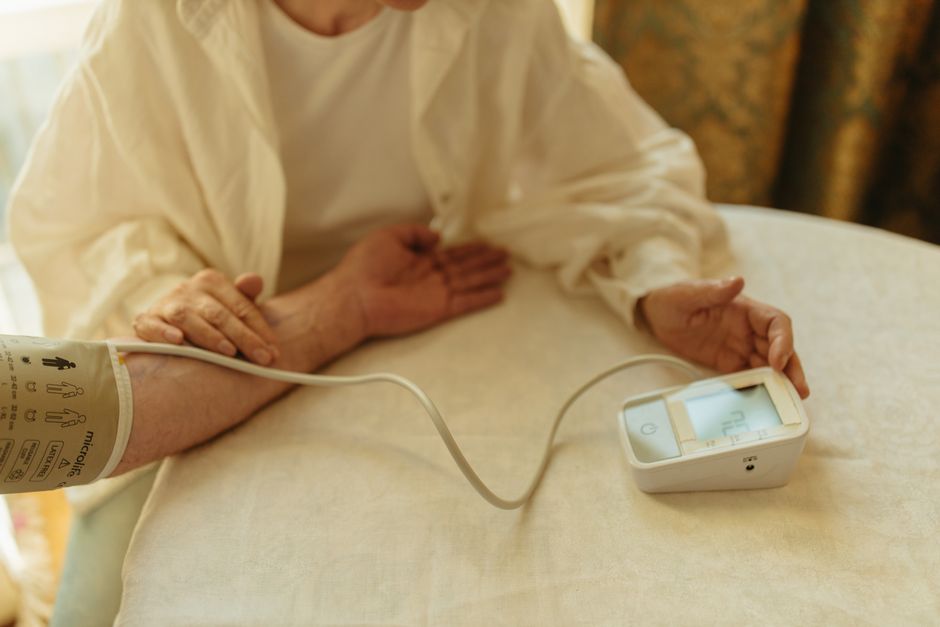
Reading a blood pressure monitor comes down to two numbers and which one sits on top. The top number is systolic pressure, the force against your artery walls when your heart beats. The bottom number is diastolic pressure, the pressure between beats when your heart rests. A reading of 120/80 means a systolic of 120 and a diastolic of 80, and both numbers are measured in millimeters of mercury, written as mm Hg.
That much is simple. The harder part is knowing what the numbers mean, when to trust the machine, and what to do with a reading that looks off. This guide walks through all of it.
What Do the Two Numbers on a Blood Pressure Monitor Actually Mean?
Systolic pressure reflects the peak force your heart generates when it pushes blood out. Diastolic pressure reflects the resting pressure in your arteries between beats.
Both matter. For most adults, systolic pressure tends to rise with age as arteries stiffen, while diastolic pressure often levels off or even falls later in life. That is why a doctor looks at the two numbers together rather than treating one as the “real” reading.
You will see the reading written as systolic over diastolic — 118/76, for example. Some monitors also display a third number: your pulse, or heart rate. That is separate from blood pressure. A normal resting heart rate for adults is generally 60 to 100 beats per minute, though well-trained athletes are often lower.
One clarification worth knowing: a single high reading does not mean you have high blood pressure. Diagnoses are based on patterns over time, not one measurement.
What Is a Normal Blood Pressure Reading?
For most adults, a normal blood pressure reading is below 120/80 mm Hg. This is the standard used across major clinical guidelines.
Here is how the ranges break down:
| Category | Systolic (mm Hg) | Diastolic (mm Hg) |
|---|---|---|
| Normal | Below 120 | Below 80 |
| Elevated | 120–129 | Below 80 |
| Stage 1 hypertension | 130–139 | 80–89 |
| Stage 2 hypertension | 140 or higher | 90 or higher |
| Hypertensive crisis | Higher than 180 | Higher than 120 |
A reading falls into a category based on whichever number is higher. So 118/86 is classified as stage 1 hypertension, because the diastolic number crosses into that range even though the systolic looks fine.
A hypertensive crisis reading above 180/120 is a medical emergency. If you get a reading that high, wait five minutes and test again. If it is still that high, seek emergency care immediately, especially if you have chest pain, shortness of breath, numbness, weakness, or trouble seeing or speaking.
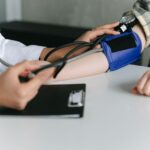
How Do You Take a Blood Pressure Reading Correctly at Home?
Most home readings are wrong for the same handful of reasons. Position, timing, and technique all shift the numbers — sometimes by 10 to 20 mm Hg.
Follow these steps for a reading you can trust:
- Sit quietly for five minutes before measuring. Do not measure right after exercise, caffeine, or smoking.
- Sit with your back supported and both feet flat on the floor. Do not cross your legs.
- Rest your arm on a table so the cuff is at heart level. An arm that hangs low or sits too high will skew the reading.
- Wrap the cuff on bare skin, not over a sleeve, and make sure the bottom edge sits about one inch above the bend of your elbow.
- Stay still and do not talk during the measurement.
- Take two or three readings one minute apart and average them.
Time of day matters too. Blood pressure typically follows a daily rhythm, running lower at night and rising in the early morning. Measuring at roughly the same time each day makes your readings easier to compare.
A cuff that does not fit properly is one of the most common sources of error. Too small a cuff reads high. Too large a cuff reads low. If the cuff does not fit your arm well, your numbers may be off no matter how carefully you measure.

Why Is My Blood Pressure Different Every Time I Check?
Blood pressure is not a fixed number. It changes minute to minute with activity, stress, posture, temperature, and even whether you just had a full bladder.
This natural variation is why one high reading is not a diagnosis. It is also why doctors look at averages over days and weeks rather than a single measurement.
Some of the most common reasons a reading runs high at home include:
- Talking or moving during the measurement
- A full bladder
- Caffeine or nicotine within the past 30 minutes
- Stress or anxiety about the reading itself
- A cuff that is too small
- Arm positioned below heart level
There is a well-documented pattern called white coat hypertension, where blood pressure reads higher in a clinic than at home. The opposite also happens — masked hypertension, where readings look normal in a clinic but run high at home. Both are reasons home monitoring can give a fuller picture than a single office visit.
When Should You Worry About a Blood Pressure Reading?
One high reading is not a reason to panic. A pattern of high readings is.
If your home readings are consistently at or above 130/80 mm Hg, that is worth a conversation with a doctor. Bring your log of readings with you. Multiple measurements over time tell a far better story than one number.
Seek emergency care right away if a reading is above 180/120 and stays there on a repeat measurement after five minutes of rest. Emergency warning signs to watch for include chest pain, shortness of breath, severe headache, vision changes, numbness or weakness on one side, or difficulty speaking.
On the other end, a reading that is unusually low — generally below 90/60 mm Hg — is not always a problem. For some people it is normal. It becomes a concern if it comes with dizziness, fainting, confusion, or blurred vision. If those symptoms appear, get medical attention.
Do Home Blood Pressure Monitors Give Accurate Readings?
Upper-arm monitors with a cuff give accurate readings when used correctly. They are the type most clinical guidance recommends for home use.
Wrist and finger monitors are less reliable. They are more sensitive to position, and a wrist that is not held exactly at heart level can throw the reading off. If you use one, follow the instructions carefully and bring it to a doctor’s visit to check it against a clinical reading.
Validation matters. Not every device sold online has been tested against a clinical standard. Some monitors are independently validated and some are not, and the packaging does not always make this clear. If you are unsure whether your monitor is accurate, bring it to your next appointment and compare its reading to the one taken in the office.
Take your monitor with you. It is one of the simplest ways to confirm the numbers you are seeing at home match reality.
How Do You Track Blood Pressure Readings Over Time?
Tracking turns scattered numbers into a pattern a doctor can actually use. A single reading is a snapshot. A log is a trend.
Write down the date, time, systolic and diastolic numbers, and pulse for each reading. Note anything unusual — a stressful day, a missed medication, a workout, or a poor night’s sleep. Those notes help explain outliers.
Take readings at the same times each day, usually morning and evening. Average them weekly rather than reacting to any single number. Bring the log to appointments so your doctor can see how your pressure behaves over time, not just in the office.
If you are on blood pressure medication, home monitoring can help show whether it is working. Do not change or stop medication based on home readings alone. That decision belongs with your doctor.
Frequently Asked Questions
What is a normal blood pressure reading?
For most adults, normal is below 120/80 mm Hg. A reading is classified by whichever number is higher, so 118/86 counts as elevated because the diastolic number is high.
Which number is more important, systolic or diastolic?
Both matter, and neither should be ignored. Systolic pressure tends to carry more weight for older adults, while diastolic pressure matters more for younger adults, but doctors look at the two together.
Can I trust a wrist blood pressure monitor?
Wrist monitors are generally less accurate than upper-arm cuffs because they are more sensitive to arm position. If you use one, hold your wrist exactly at heart level and check it against a clinical reading.
When should I go to the emergency room for high blood pressure?
Go to the emergency room if a reading is above 180/120 and stays there after five minutes of rest, or if you have chest pain, shortness of breath, vision changes, or weakness on one side. Call emergency services rather than driving yourself.
