
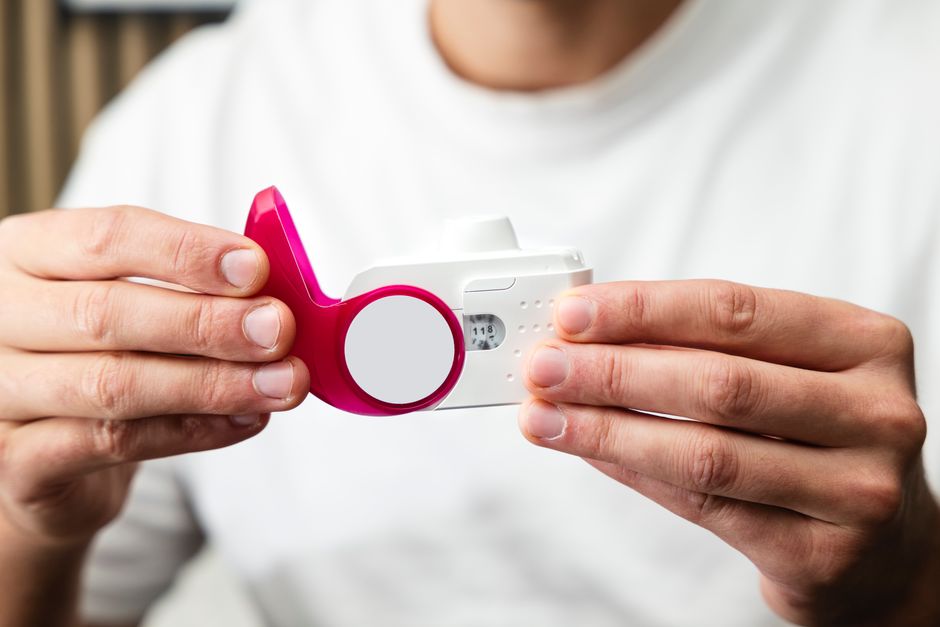
A spirometer measures how much air your lungs can hold and how quickly you can move it out. You read the results by comparing two key numbers — FEV1 and FVC — against predicted values based on your age, height, sex, and ethnicity. The ratio between them tells your doctor whether airflow is blocked, whether lungs are restricted, or whether everything falls within a normal range.
If you have asthma, COPD, or a chronic cough, you may have used one of these devices. The numbers it produces can look like a foreign language at first. This guide breaks down what each value means, what the ratios suggest, and where the limits of home testing lie.
What Does A Spirometer Actually Measure?
A spirometer measures two things: how much air you can breathe out and how fast you can do it. That is the whole job. Everything else on the report is calculated from those two measurements.
The test works by having you take the deepest breath you can, then blow out as hard and as long as possible into a mouthpiece. The device records the volume of air and the speed of the exhale over several seconds. A full effort usually lasts at least six seconds, though some people finish sooner.
Two numbers come out of this:
- FVC (forced vital capacity) — the total amount of air you can forcefully blow out after a full breath
- FEV1 (forced expiratory volume in one second) — the amount of air you can blow out in that first second
From these, the device calculates the FEV1/FVC ratio, which is often the single most useful number on the report. The ratio shows what percentage of your total breath you can push out in one second. In healthy lungs, that percentage is high because airways are open and air moves freely.
Some spirometers also report peak expiratory flow (PEF), which is the fastest speed you reach during the exhale. PEF is more commonly tracked with a small handheld peak flow meter, which is a different device that measures only that one value.
How To Read A Spirometer And Understand Your Results?
Your results are read by comparing your measured values to predicted values. Predicted values are based on large population studies and adjusted for your age, height, sex, and ethnicity. As you get older, predicted lung volumes decrease. Taller people have larger predicted volumes. These are well-established patterns in respiratory medicine.
Your report will usually show three columns: your measured value, the predicted value for someone like you, and a percentage. The percentage is your measured value divided by the predicted value, multiplied by 100.
Here is a general framework for interpreting those percentages. These thresholds come from standard respiratory guidelines, though your doctor will interpret them alongside your symptoms and history.
| Result | What It Generally Means |
|---|---|
| FEV1 or FVC 80% or more of predicted | Within the normal range for most people |
| FEV1 or FVC 70–79% of predicted | Mildly reduced — may still be normal depending on the person |
| FEV1 or FVC 60–69% of predicted | Moderately reduced |
| FEV1 or FVC 50–59% of predicted | Moderately severe reduction |
| FEV1 or FVC below 50% of predicted | Severe reduction |
The FEV1/FVC ratio is interpreted separately. A ratio below 0.70 (or 70%) after a bronchodilator is the standard threshold used to identify airflow obstruction, which is the hallmark of conditions like COPD. In asthma, the ratio may be normal between attacks and drop during one.
One important clarification: a single spirometry reading is not a diagnosis. The test requires a good effort, and results vary between attempts. Most clinics repeat the test at least three times and use the best acceptable effort. If your technique is off — lips not sealed, not blowing hard enough, stopping too early — the numbers will be lower than your lungs actually are.
What Is The Difference Between Obstructive And Restrictive Patterns?
Spirometry can suggest two broad patterns: obstruction and restriction. They point to different types of lung problems.
Obstruction means air has trouble getting out. The airways are narrowed or blocked. The FEV1 drops more than the FVC, so the FEV1/FVC ratio falls below 0.70. This pattern is typical of COPD, asthma, and chronic bronchitis. The lungs may hold a normal or even increased total volume, but they empty slowly.
Restriction means the lungs cannot fully expand. Both FEV1 and FVC are reduced, but the ratio often stays normal or even rises. This happens when the lungs are stiff, the chest wall cannot move well, or there is muscle weakness. Conditions like pulmonary fibrosis, obesity, and some neuromuscular diseases can produce this pattern.
Spirometry alone cannot confirm restriction. That requires measuring total lung capacity, which spirometry does not do. A restrictive pattern on spirometry is a signal to investigate further, not a final answer.
Some people have a mix of both patterns. This is called a mixed obstructive-restrictive pattern, and it can be harder to interpret without additional testing.





What Does A Bronchodilator Test Add?
A bronchodilator test checks whether your airways open up after you inhale a medication that relaxes the muscles around them. You do the spirometry test, inhale the medication, wait, then do it again.
If your FEV1 improves significantly after the medication, your airways were partly constricted by muscle tightening. This is called reversibility. Reversibility is more common in asthma than in COPD, though it can occur in both. In COPD, the improvement is usually smaller and less complete.
The exact threshold for what counts as a significant improvement is defined in clinical guidelines and involves both a percentage and an absolute volume change. Your doctor applies these criteria to your specific numbers.
A lack of reversibility does not mean treatment will not help. It means the narrowing is less responsive to that particular type of medication. Inhaled corticosteroids, for example, work differently and take weeks to show their effect.
Can Home Spirometers Give Reliable Results?
Home spirometers are becoming more common, and some are reasonably accurate for tracking trends over time. But they have real limitations.
Accuracy depends heavily on technique. Even small errors — a slight leak around the mouthpiece or a less forceful effort — can change the numbers. In a clinic, a trained technician watches you and coaches your effort. At home, you are on your own.
Home devices are most useful for tracking your own baseline. If your FEV1 drops by a certain amount from your usual reading, that may be a sign of a flare-up worth acting on. Your doctor can tell you what change should prompt a call.
What home spirometers are not good at: diagnosing a condition, distinguishing between obstruction and restriction, or replacing a clinic test. If you use one at home, bring the readings to your appointments. Trends over weeks and months carry more meaning than any single reading.
Why Do The Numbers Change From Visit To Visit?
Lung function naturally varies. Time of day, recent illness, allergies, air quality, and even how tired you are can shift the numbers. This is normal and expected.
Some variation comes from the test itself. Effort varies between attempts. Different devices and different reference equations can produce slightly different predicted values. This is one reason your doctor looks at the pattern over time rather than reacting to one result.
Certain things reliably lower your numbers on test day: a recent respiratory infection, active allergies, smoking within a few hours of the test, a full stomach, or not taking your regular inhaler as prescribed. Tell the technician about any of these before you test.
A meaningful change is usually one that persists across multiple tests and shows up alongside symptoms. A single lower reading, especially if you felt you did not blow well, often means little on its own.
Frequently Asked Questions
What is a normal FEV1/FVC ratio?
A ratio of 0.70 or higher is generally considered normal in adults. A ratio below 0.70 after a bronchodilator is the standard threshold for identifying airflow obstruction.
Can I diagnose COPD with a spirometer at home?
No. Diagnosis requires a clinic-based spirometry test interpreted by a doctor alongside your symptoms and history. Home devices can track trends but are not designed for diagnosis.
What does it mean if my FVC is low but my ratio is normal?
This pattern may suggest restriction, meaning your lungs cannot fully expand. Spirometry alone cannot confirm restriction — it requires additional testing to measure total lung capacity.
How often should I have spirometry done?
Frequency depends on your condition and your doctor’s judgment. Some people are tested yearly, while others are tested more often during flares or medication changes. There is no single schedule that fits everyone.
