
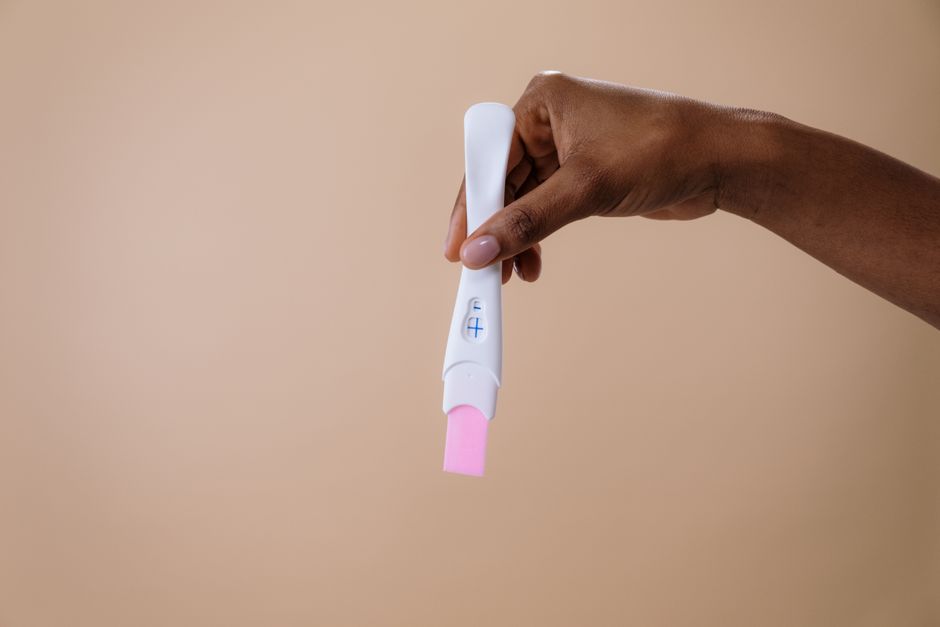
A home pregnancy test is one of the most common medical tests people run on themselves, and it is also one of the most misunderstood. The result comes down to a single line of chemistry: does your urine contain enough of a hormone called hCG for the test to detect it? A positive result means hCG was found. A negative result means it was not found at the time you tested. That is the whole answer at its core. Everything else — faint lines, evaporation lines, testing too early — is about whether the test did its job properly.
What Is A Home Pregnancy Test Actually Measuring?
It measures human chorionic gonadotropin, usually shortened to hCG. This hormone is produced by the cells that will eventually form the placenta. After a fertilized egg implants in the lining of the uterus, those cells begin releasing hCG into your bloodstream, and from there it passes into your urine.
Implantation is the key event. hCG does not appear before it happens. Most home tests are designed to detect hCG at concentrations around 20 to 25 milli-international units per milliliter (mIU/mL), which is a standard the industry has largely settled on. Some tests claim higher sensitivity, but the practical difference between brands is smaller than the marketing suggests.
Once implantation occurs, hCG levels roughly double every 48 to 72 hours in early pregnancy. This is why timing matters so much. Testing a day or two before your expected period is a very different situation from testing a week after it was due.
How To Read A Pregnancy Test Positive Vs Negative
A positive result shows two lines, or a plus sign, or the word “pregnant,” depending on the test design. A negative result shows one line, or a minus sign, or the word “not pregnant.” Two-line tests work like this: one line is the control line, which confirms the test worked. The second line is the test line, which appears only if hCG is present.
If only the control line appears, the result is negative. If both lines appear, the result is positive — even if the second line is faint. A faint line still means hCG was detected. The darkness of the line reflects how much hCG is in your urine, not whether you are pregnant.
Digital tests skip the line-reading entirely. They use the same underlying chemistry but display a word instead. This removes the guesswork, though digital tests are generally slightly less sensitive than the best line tests.
One important detail: read the result within the time window printed on the instructions, typically a few minutes. A line that shows up hours later, after the test has dried, is not a valid positive. That is an evaporation line, and it is a common source of confusion.
Why Does A Faint Line Still Count As Positive?
The test line works by binding hCG to antibodies embedded in the strip. More hCG means more binding, which means a darker line. A faint line means there was enough hCG to trigger a visible reaction but not enough to make it bold. It is still a detection.
Faint lines are common when testing very early, before hCG has had time to rise. They can also appear if urine is diluted, such as after drinking a lot of water. This is why many test instructions recommend using first-morning urine, which tends to be more concentrated.
If you get a faint positive, the sensible next step is to test again in two to three days. If hCG is rising normally, the line should get darker. A line that stays faint or fades over several days is worth discussing with a healthcare provider. It does not automatically mean something is wrong, but it is a pattern that deserves attention.





What Causes A False Negative Result?
False negatives are far more common than false positives. The usual reason is testing too early. If you test before implantation has occurred, or before hCG has risen enough to be detected, the test will correctly report that no hCG was found — because at that moment, there was none to find.
Other reasons include:
- Drinking large amounts of fluid before testing, which dilutes urine
- Using a test past its expiration date
- Storing the test improperly, such as in extreme heat
- Not following the instructions for how long to hold the strip in the urine
If you get a negative result but your period still does not arrive, waiting a few days and testing again is the standard approach. Most people who are pregnant will get a positive result within a week of a missed period.
What Causes A False Positive Result?
False positives are rare but they do happen. The most common cause is reading the test after the valid time window, when an evaporation line can appear and be mistaken for a positive. This is not a chemical false positive — it is a reading error.
Genuine false positives can occur in a few situations. Some medications that contain hCG, such as certain fertility treatments, can trigger a positive result. A very early miscarriage, sometimes called a chemical pregnancy, can also produce a brief positive followed by a negative. In these cases, the test was accurate — it detected hCG that was genuinely present — but the pregnancy did not continue.
Certain medical conditions, including some rare tumors, can produce hCG. This is uncommon and would typically be investigated by a doctor rather than discovered through a home test alone.
When Should You Test For The Most Accurate Result?
The most reliable time is the first day of a missed period. By that point, if you are pregnant, hCG has usually risen high enough to be detected by a standard home test. Testing earlier than that increases the chance of a false negative.
If your cycles are irregular, counting days is harder. In that case, testing about two weeks after you think you ovulated is a reasonable approach, though it is not a guarantee. Some people ovulate later than they expect, which pushes everything back.
First-morning urine is generally recommended because it is the most concentrated. If you cannot use first-morning urine, try to avoid drinking a lot of water for a couple of hours before testing.
Do Different Test Brands Give Different Results?
Most home pregnancy tests use similar antibody technology and detect hCG at comparable concentrations. The differences between brands are usually smaller than people assume. A test that claims to detect hCG at 10 mIU/mL may pick up a pregnancy a day or so earlier than one that detects at 25 mIU/mL, but in practice, the timing of implantation matters more than the brand.
What does vary is usability. Some tests are easier to read, some have clearer instructions, and some are more sensitive to user error. If you are testing early, a more sensitive test may be worth considering. If you are testing after a missed period, most standard tests will give you a clear answer.
What Should You Do After A Positive Or Negative Result?
A positive home test is generally reliable. The next step is to contact a healthcare provider to confirm the pregnancy and discuss what comes next. A negative test, if your period is still late, means testing again in a few days. If you get repeated negative results but your period remains absent, that is a reason to see a doctor. There are many reasons a period can be late that have nothing to do with pregnancy, including stress, illness, significant weight change, and hormonal conditions.
Home pregnancy tests are a screening tool, not a diagnosis. They are highly accurate when used correctly and at the right time, but they are not perfect. If anything about your result seems unclear or inconsistent with what your body is telling you, a healthcare provider can run a blood test, which is more sensitive and can measure the exact level of hCG.
Frequently Asked Questions
Can a pregnancy test be positive and then negative?
Yes, this can happen. It may mean the first test was read after the valid time window, or it can indicate a very early miscarriage where hCG rose briefly and then fell.
How soon after a missed period should I test?
Testing on the first day of a missed period gives the most reliable result. Testing earlier increases the chance of a false negative because hCG may not have risen high enough yet.
Does a faint line on a pregnancy test mean I am pregnant?
Yes, a faint line still counts as a positive result. It means hCG was detected, though the level may be low because you tested early.
Can drinking water before a pregnancy test affect the result?
Yes, drinking a lot of water can dilute your urine and make hCG harder to detect. Using first-morning urine reduces this risk.
